Introduction
Hi All,
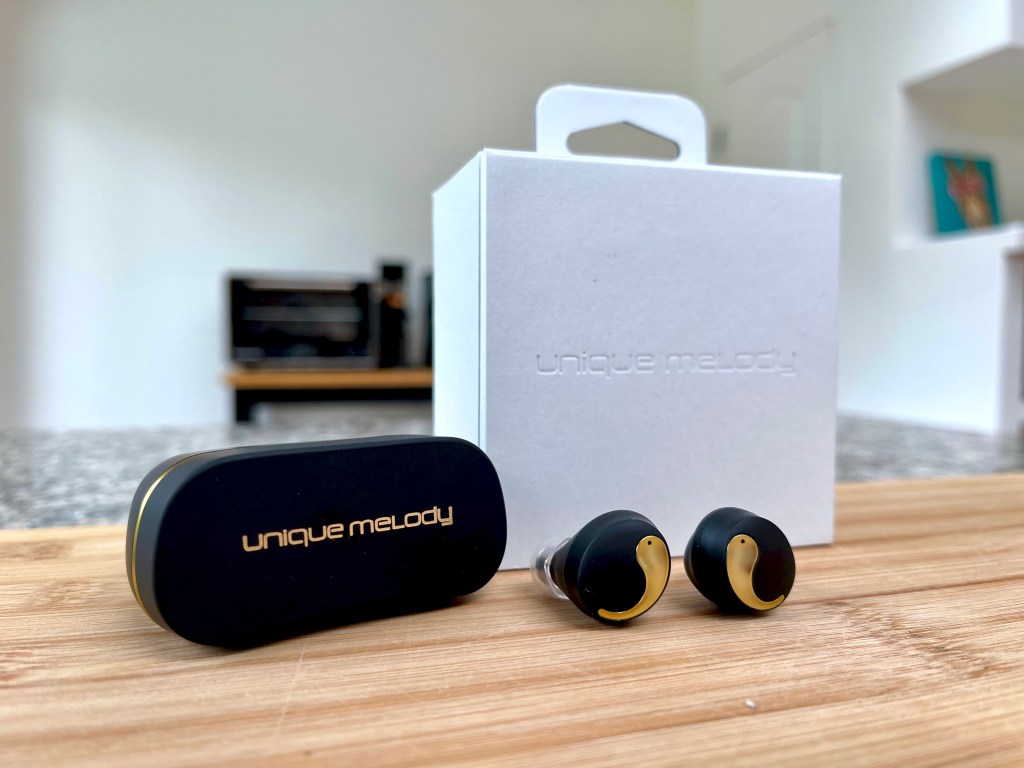
Today, we are taking a look at an item that is a bit of a change of pace compared to the type of stuff I usually review. A true wireless IEM, the UXUE, from Unique Melody. Unique Melody is a well-known IEM manufacturer based in China, and has products spanning a massive range of price points, all the way from the $299USD UXUE, to the flagship Mason (some variations) at $8500USD. Unique Melody also recently released a full-sized headphone called the Umbral, but I have not yet had a chance to hear it, so I can’t comment about their efforts in the full-size headphone space yet. I have, however, had the chance to hear one other IEM from Unique Melody, the MEST MK2. I really enjoyed the MEST MK2, so I was curious to hear what the Brand would do with a TWS pair of IEMs, and at a much lower price point.
One thing I should mention before getting into the review is that the UXUE looks exactly the same as the previous TWS model from UM, the U-Free. However, it does not feature active noise cancellation, and has a different tuning, whilst also being $100USD less than the U-Free at MSRP. This is worth keeping in mind, just in case you end up reading a U-Free review thinking it is covering the UXUE, as they are indeed different despite the same cosmetic look.
As far as the driver complement for the UXUE goes, it features a 10mm Carbon Nanotube dynamic driver, a single balanced armature, and a single bone conduction driver. UM was one of the first brands to widely use bone conduction drivers in their IEMS, and the MEST MK2 I enjoyed so much also used bone conduction, so I was looking forward to hearing the UXUE featuring the same technology. The UXUE ships with 3 pairs of vented tips (SML) and 3 pairs of non-vented tips (SML,) but I will speak about tip selection a bit later in the review. The shells are water-resistant, with a smooth matte finish. An interesting feature of the UXUE is the ability to switch between amplification types. You can choose either Class AB or Class D. This does require manually flashing the firmware between the two options however, and cannot be switched on the fly. Due to this, and the fact that the UXUE ship in class AB mode, that is what I chose to use for the review period. Supposedly, switching to class D can net you about an extra hour of run time from the battery, due to its much higher efficiency. In terms of battery life, UM says that in class AB mode, you can expect 5 hours of continuous run time, and up to 10 hours when combined with the charging case. In Class D mode, UM says you can expect about 6 hours of continuous run time, with about 12 hours when combined with the charging case. I ended up with a bit less than this, with about 4 hours of continuous run time in Class AB mode. I suppose this depends on the volume you are listening at, if you are using EQ, etc Overall, in terms of battery life, it’s not amazing, and there are definitely other options on the market that do much better in this area. I’m curious if it is due to the driver complement that the UXUE is using, which draws more power than something simpler, like a single dynamic driver-based TWS IEM. I had no issues overall, as my listening sessions are usually less than 4 hours, but it is something to be aware of if you need serious battery life performance from whatever TWS set of in-ears you end up choosing.
The UXUE left-hand side allows you to choose between three different modes of operation. You simply touch the faceplate of the IEM, wait about a second, and it will cycle through to the next mode. The three modes you can choose between are as follows. Hifi mode, ambient mode, and hearing mode. Hifi mode blocks out all sounds around you, and makes the UXUE function like a traditional IEM (just without wires.) Ambient mode allows you to hear what is going on around you, which is very helpful if you need to be aware of your surroundings or possibly speak to people on the move. Hearing mode prioritizes low-volume sounds and the vocal frequency range, helping you hear others speaking. The UXUE also features a microphone, allowing you to take calls and speak to someone without removing the IEMS and holding your phone up to your ear. The right-hand side also features touch control, with a single press either pausing or starting whatever music service you are using.
Tips
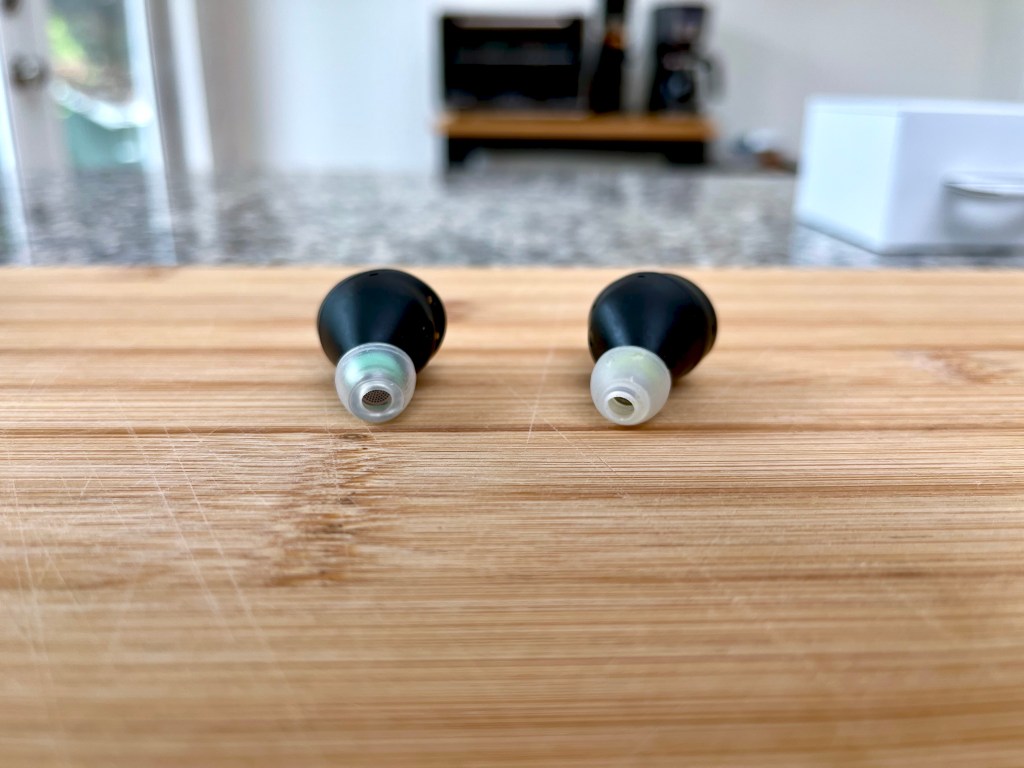
In terms of tips, I actually didn’t enjoy any of the stock tip selection. The vented tips, in particular, were not my favourite. Although the venting does give a sense of air and breath-ability, I found the lack of a real seal negatively impacted the low-end performance and tipped up the upper mids and highs too much in comparison. The sealed stock tips did fare much better than the vented ones, but they are incredibly open and sit flat against the nozzle itself with a very shallow insertion depth, whilst also not occluding the nozzle at all. Interestingly, this is usually my preference with other IEMS in terms of ear tips, but with the UXUE, something more traditional like SpinFits fared much better.
Even with the non-vented tips, I found their very wide and open nature on the nozzle caused there to be too much energy in the upper mid-range, and made the sound too nasal and too harsh. The one thing about the stock tips I liked was that, due to their very wide and open nature, they were the most detailed out of the options I tried, but I felt that even with tweaks via EQ, the UXUE sounded better with more traditional style tips. For the rest of the review, I’ll be speaking about the UXUE using SpinFits, as I preferred both their sound and comfort (due to their much deeper insertion depth and stability)
Tuning
Bass: The UXUE has a very healthy amount of low end, especially sub bass. The 10mm dynamic driver performs well, and whilst the low end isn’t as high-performance as something like the Sony IER-Z1R, it’s not fair to compare a $300USD TWS set of IEMs to Sony’s $2000USD flagship. I think that some people might find there to be too much mid bass, but I really enjoy a strong amount of bass in general, so I enjoyed and had no issues with the low end tuning of the UXUE. It’s fairly responsive and quick, hits decently hard, with good impact, and solidity. If you are a sub bass fan, you will enjoy UXUE’s sub bass tuning; it’s very well done and provides a good amount of rumble. I’m curious how the bone conduction driver contributes to the perception of the low end in IEMs, but I honestly don’t have enough experience with the driver type to know specifically what it is doing, and which areas of the Frequency response it is contributing to most. Hopefully, over time, I will get a chance to hear more models using bone conduction to get a better read on its overall contributions to the sound profile. Overall, the low-end performance of the UXUE is similar to a lot of dynamic drivers in the more affordable end of the IEM market, but it is very nice to have the quality it provides on a TWS pair of IEMs.
Midrange: The low mid-range of the UXUE is fairly warm, which wasn’t really what I was expecting prior to hearing them. I thought they would likely be much more aggressively V-shaped or U-Shaped. However, in the 200-400Hz range, there is a really nice warmth and increase over being entirely neutral. I always enjoy this sort of tuning with acoustic instruments, jazz, and things like that. Around the middle of the mid range, it is slightly pulled back, which is great for electronica and rock, but I never found it to sound hollowed out, as can happen if the tuning goes too far south in this area. The area I did have an issue with, even with the spinfit tips(and much worse with the stock tips, especially the vented type), was the upper mids, in the 2-3KHZ range. I just found the stock tuning to be too hot in this area, and I think it may have been made worse by the more pulled back middle of the midrange, and a lack of upper treble to balance things out. However, with a bit of EQ in this area, I was able to get things much more to my preferences (both using the UM APP and 3rd party options)
Treble: The low treble of the UXUE is fairly forward, right around 5khz. I usually don’t mind a very forward lower treble, but with the UXUE, combined with the more forward upper mid range and less forward upper treble, I found it a bit grating and harsh at times. With some music, it worked really well, but with some vocals, or some high-frequency instruments, and certain recordings, it just got a bit too much for me. The spinfit tips definitely helped in this area, and the issue was worse with the stock tips (again, especially with the vented type.) The upper treble was a surprising one for me. I found it to be a lot less forward than I expected. I think some people, especially those who are upper treble sensitive, will really enjoy the stock tuning and low upper treble presence. For me, I simply tweaked things by bringing down the 5khz peak, and using a high shelf to increase 8khz+. This worked really well, and overall helped bring things right in line with my preferences.
With the right tip selection and some tweaking via EQ, I really found I could enjoy the UXUE for hours at a time. A powerful sub-bass-focused low end, combined with great detail and technical performance for a TWS pair of IEMs at this price point, really made for a nice overall sonic package. Although the stock tuning was a bit too forward in the upper mids and lower treble for my personal preferences, I think some people will really enjoy this tuning in its stock form, especially for certain kinds of music.
Technical Performance
The technical performance of the UXUE is really its standout area in terms of its overall performance. I think this will be partly due to the fact that it’s not simply using a single dynamic driver, as many mass-produced TWS IEMs are, but also the balanced armature for the higher frequencies, as well as the bone conduction driver. Overall, the UXUE is the most detailed and technically accomplished TWS IEM I have heard thus far. I was very happy with the overall low-end speed and slam, and dynamic swings, both micro and macro, were quick and deftly handled. The sound staging and sense of air and space were also impressive, being much deeper and more open-sounding than some IEMs can be (especially more affordable TWS ones). Obviously, this is not a flagship-level pair of IEMs, and I think that to expect that level of technical accomplishment would be unreasonable, but the UXUE really does do a good job for its price point and within the TWS space of the market.
Build Quality
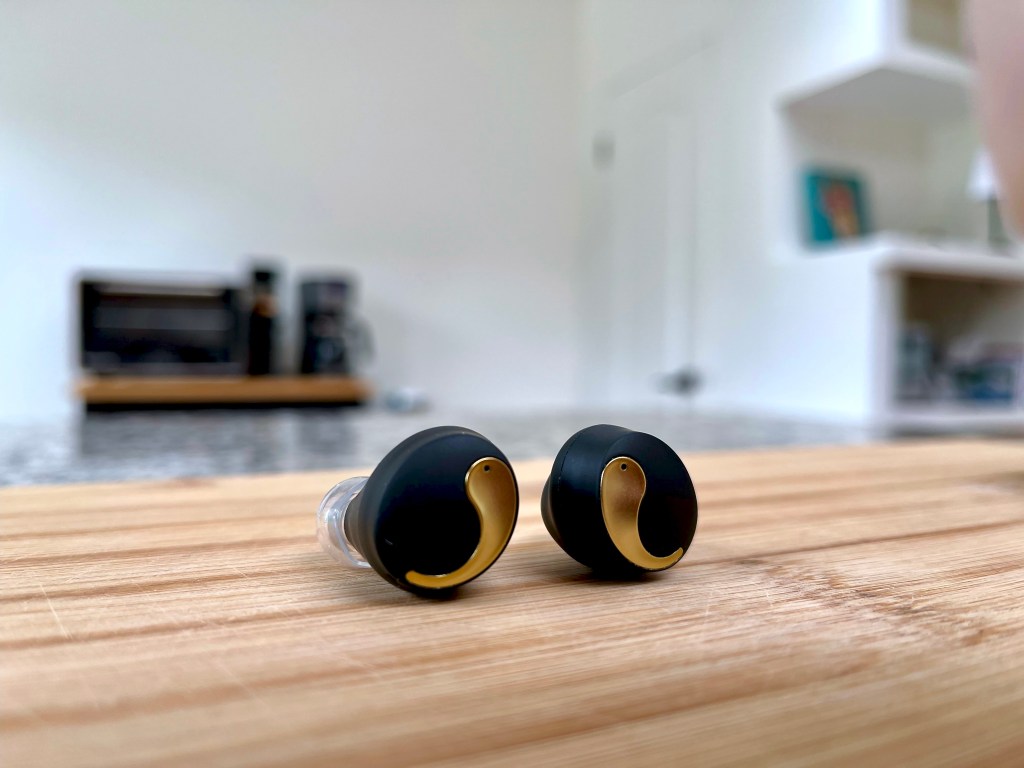
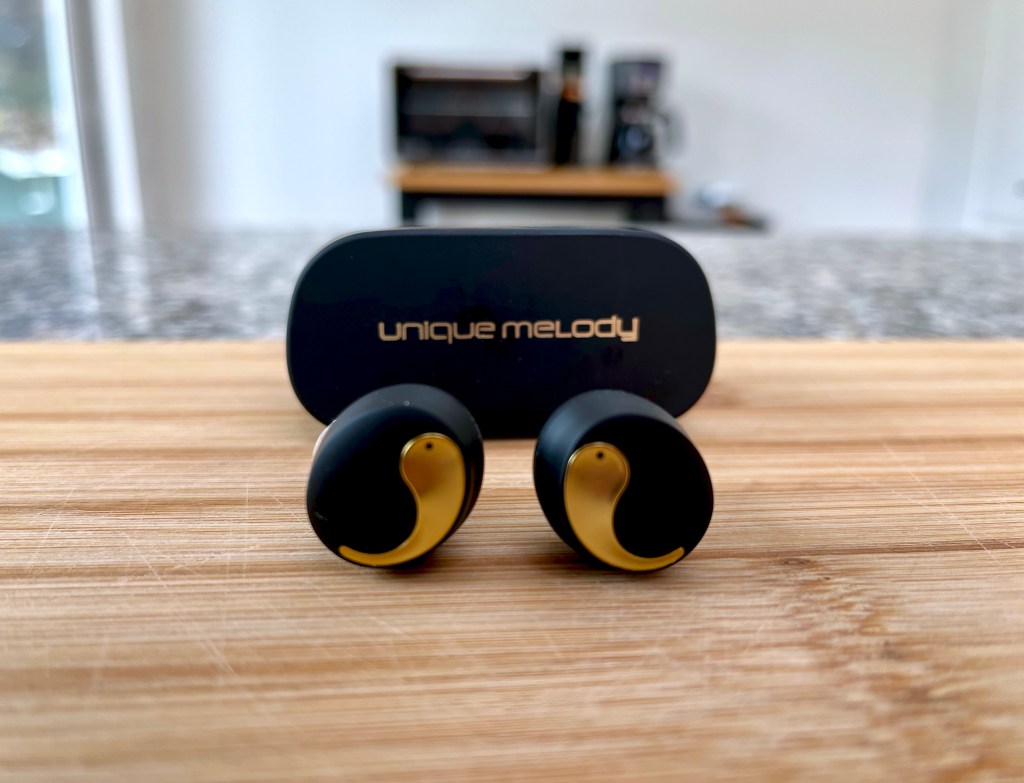
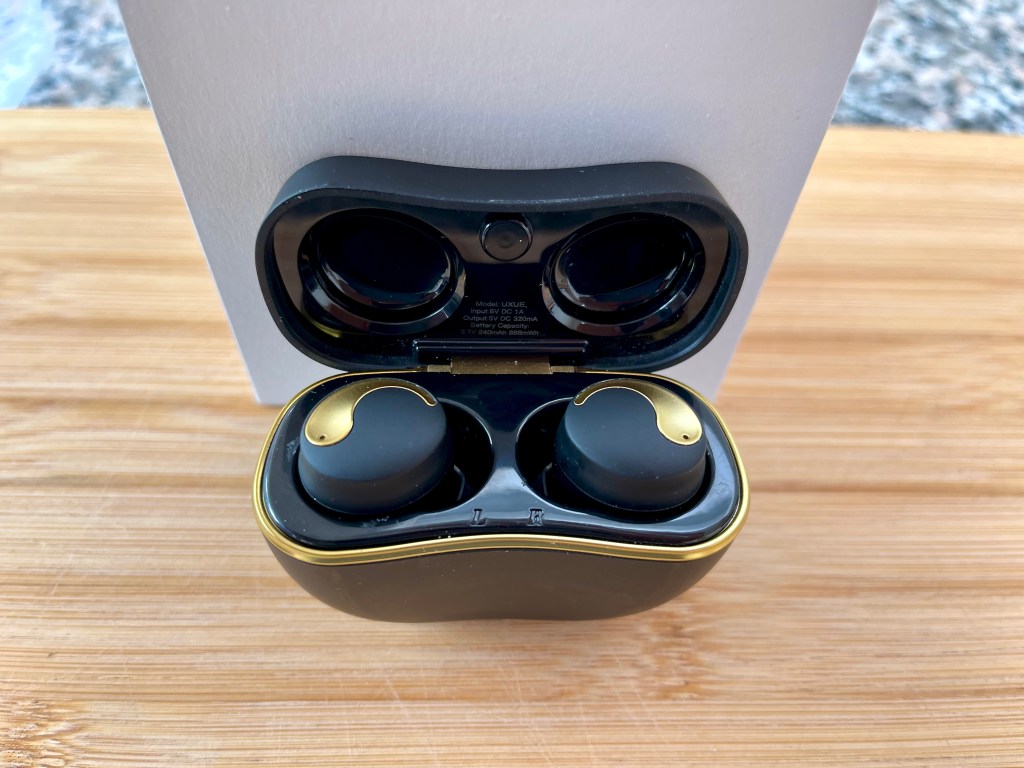
The build quality of the UXUE seems totally in line with other TWS options in this price range. The smooth matte finish is nice in terms of feel, and the fit was entirely fine with my ear shape. I did find that a deeper insertion from using the SpinFit (or similar) tips really did help with comfort, but even using the stock ear tips, I had no issues with comfort. Obviously, everyone’s ears are different, so I’d recommend trying the UXUE out if you can prior to purchasing them, but if not, I would reckon the vast majority of people will get a decent, comfortable fit (especially if you are willing to try out different tip types) The UXUE are made from plastic, but don’t feel “plasticky” and cheap, and I think that is helped by the smooth matte finish that UM has used. I don’t know how the UXUE will fare in terms of build quality over the next x amount of months, but thus far, I have had no issues with them. One thing to mention is that with deeper-inserting tip types, the IEMs will not fit into their charging case. So you will have to remove the tips before putting them in the case to charge. Obviously, with the stock tips, they fit totally fine, and there are no issues in doing so. I think it would be great if UM could change the case to be deeper and thus accepting of multiple ear tip types in whatever their next TWS IEM model ends up being. It would allow more users to keep their tips of preference on the IEMs’ nozzles when charging and moving from A/B. It’s not a big deal, but it would be a small quality-of-life improvement for a lot of users going forward.
App
The UM app is a proprietary program from UM for use with their TWS IEMs. It can be downloaded from Apple App Store, or their own website (https://www.uniquemelody.org/pages/copy-of-um-smart-sound-app-firmware-files) for Android users. The app itself is fairly simple, easy to navigate, and not overly loaded with a bunch of features you don’t need. You can select between the three operational modes of the UXUE (instead of using the touch sensor on the IEMs themselves) and also block touch sensitivity on the IEMs (if you prefer to always use the app for changing things). There is also a “gaming mode” which can be enabled. In the settings area of the App, there is an equalizer with a few presets and a user-selectable graphic EQ with 5 sliders at 32Hz, 125Hz, 500Hz, 2kHz, and 8kHz. I much prefer to use a 3rd party parametric EQ with more functionality, but in a pinch, the App EQ could come in really handy. I can also see users who just need a very simple and easy-to-use EQ finding the one inside the App to be very useful. In the settings area, you can also fully reset the UXUE if you have messed up some settings by accident, as well as adjust the tap settings and access info about the UXUE (user manual, etc)
Comparisons
Hifiman Svanar Wireless: The Hifiman Svanar Wireless is another TWS I have spent a lot of time with. Being similarly priced, it seemed to be a natural comparison to make with the UXUE. In terms of stock tuning with no tweaking via EQ, I prefer the Hifimans. They are a slightly V-shaped, consistent performer that is very easy to listen to and just enjoy. However, with EQ to tweak the sound to my preferences, I would definitely choose the UXUE. It is the more detailed and technically accomplished performer between the two. The Hifimans also slightly outdo the UXUE in terms of overall comfort, but it is not a big enough difference comfort-wise to change my choice in terms of sound quality and performance. In terms of battery life, the Hifimans definitely outperform the UXUE, but this is one of the weaker areas of the UXUE’s overall performance. For an everyday ease of use, no tweak, long battery life model, I would choose the Hifimans. However, if I wanted something that was higher performing, more detailed, and I was ok with keeping an eye on battery level and doing a bit of tweaking via EQ if necessary, I’d definitely choose the UXUE from UM. Both have their strengths and weaknesses; it’s all about your personal use case, for which I’d recommend.
Conclusion
Overall, I’ve really enjoyed getting to know another product from Unique Melody. The MEST MK2 was a standout model in all the IEMs I’ve heard over the years, so it was a real nice change of pace to get to review not only another UM IEM, but a TWS pair. I think the UXUE has a few negatives and shortcomings in its battery life, stock tip selection, and upper mid and lower treble forwardness, but it offsets those negatives with great sub bass presence and low end performance, and the overall detail levels and technical performance that belie its TWS nature. I think they look smart with the smooth matte black finish with the gold accents, and I have had no real issues with comfort over my entire time with them. I would highly recommend exploring 3rd party tip options, especially if you struggle with comfort, or the upper mid-range and treble tuning. I found Spinfits to be the best choice for me and my ears, but you might be different, so trying out a bunch of tips is always a good idea. Overall, I really like the UXUE and think that with a few quality-of-life tweaks, UM’s next TWS IEM could be an even stronger performer.
 Headphones n' Stuff
Leave a comment