Hi All,
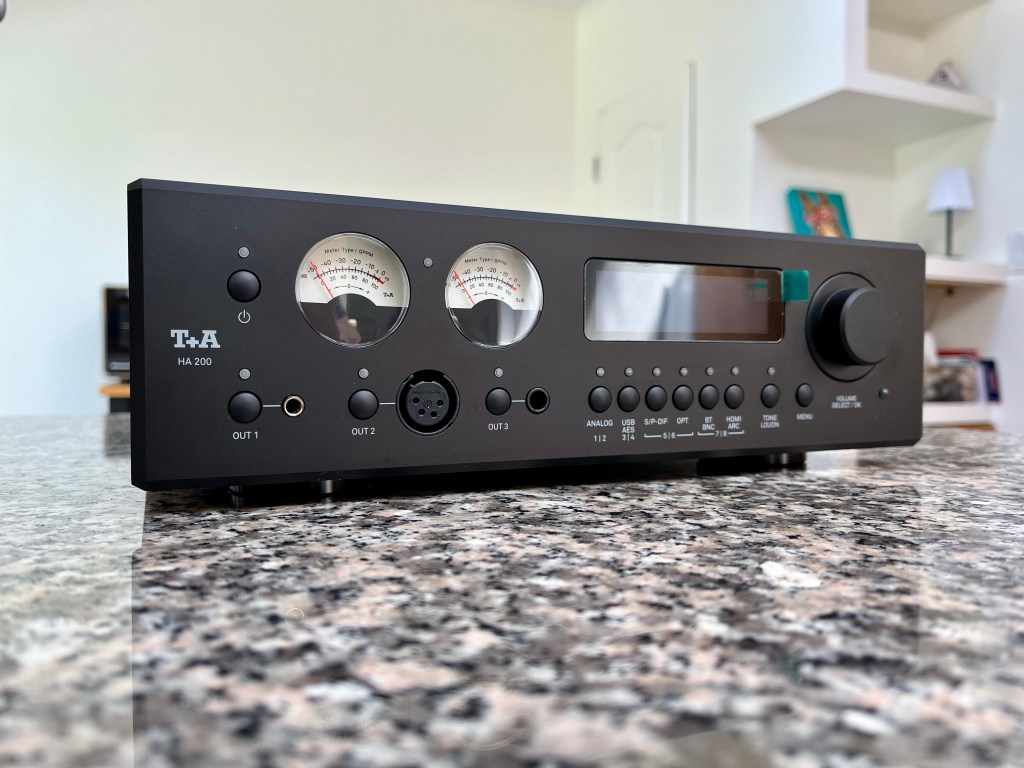
Today, we are taking a look at another piece of gear from T+A in Germany, but this time it’s not a headphone! The T+A HA200 headphone DAC and amplifier. Announced back in 2020, and primarily marketed as a pairing with their Solitaire P and P-SE headphones, the HA200 is an all-in-one headphone DAC/Amp solution, and I believe it was the first release in the current Series 200. Also available in the current day, joining the HA200, are the DAC200, A200 stereo amp, M200 mono amp, and MP200 G3 multi-source player. The basic form is very similar across the entire 200 Series, and all pieces feature trickle-down technology in some form from the flagship T+A line, the HV series.
Going into this review, I had never spent any time with any T+A equipment beyond their Solitaire P and P-SE headphones, so I did not know what to expect. Ultimately, what I have found is that the HA200 largely matches the same qualities that I found the Solitaire P to do, in that it is a very well-rounded piece of equipment, providing excellent performance, whilst also being very easy to use in a variety of applications. Similar to the Solitaire P, it is a very strong performer in most areas, and whilst it may not reach those absolute heights in very specific areas and qualities that some other options of the market do, it is its well-roundedness, and overall performance as a package which makes it compelling.
Features
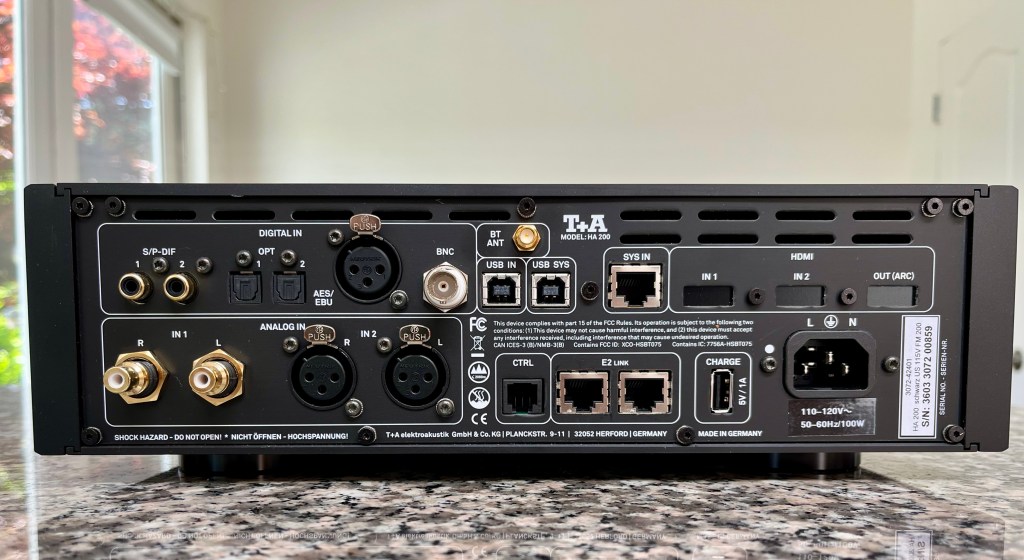
In terms of features, the HA200 is incredibly thorough. There are 3 headphone outputs (1/4”, 4.4mm Pentaconn, and 4 pin XLR) and two analog inputs for use as an amplifier only, with an outboard source (1 pair of RCA, 1 pair of XLR) For use as an all in one DAC/Amp, there are two SPDIF inputs, 2 Optical inputs, an AES input, a BNC input, a USB input for music data, a USB input for firmware updates, two HDMI inputs, 1 HDMI ARC out (the HDMI section is an additional extra add on) as well as an Antenna input and two ethernet inputs (said to be for “future devices.”) One feature I found to be missing was a direct output from the DAC, or preamp enabled RCA and XLR output from the DAC, to use the unit as a straight DAC, or DAC/Pre unit. I think this is due to the fact that if someone wants a 200 series piece of equipment with that functionality, they are much more likely to be purchasing the DAC200, rather than the HA200 for headphone use. Still, it is a function that would have been nice to see on the HA200. One way to work around this would be some form of 4.4mm to dual 3-pin XLR cable, or 4-pin XLR to dual 3-pin XLR cable, using the headphone outputs as a DAC/Pre. This would, in theory, lead to double amp’ing, which isn’t ideal, but it’s worth keeping in mind, should you need to use the unit in that way.
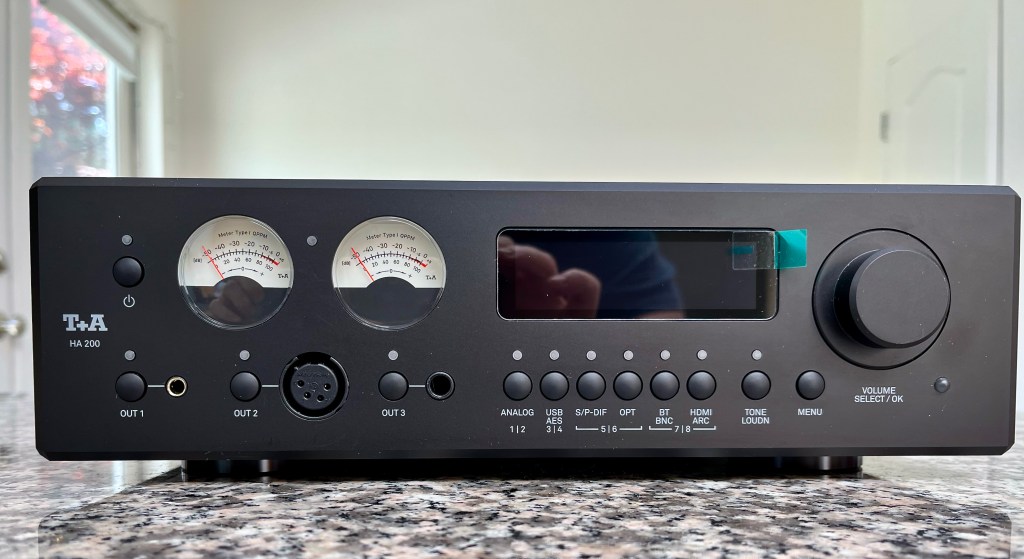
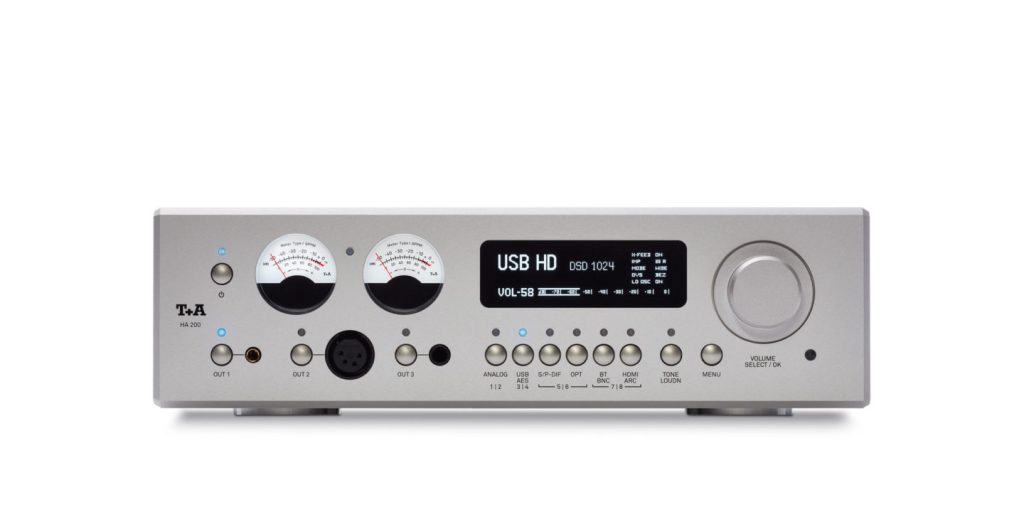
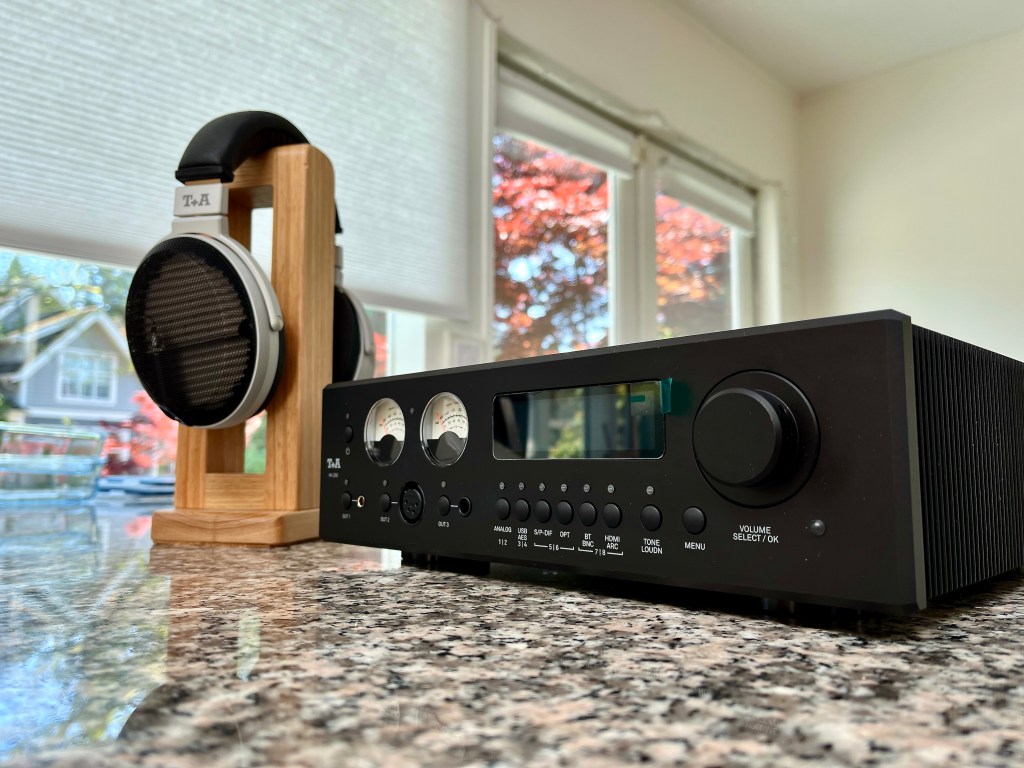
In terms of front panel functionality, there is the power on/off button, 3 buttons to switch between the 3 different headphone outputs, and buttons to switch between all the different inputs. There is also a button to enable/disable the tone control and loudness functions, and a button to access the menu. The menu navigation is incredibly easy to use once you figure out how it works, using the volume knob to do so, both pressing inwards and rotating as needed to navigate through all the functions. In terms of functionality accessed by the menu, the number of things you can tweak is fairly vast. You can change the output impedance to one of 6 settings: 8, 12, 18, 25, 40, and 80ohms. There are 4 different digital filters (two linear FIR types, and two Bezier types) as well as two NOS filters. Also featured are a crossfeed option, as well as treble, bass, and balance adjustments. Another feature is called the “loudness” function, which can be set to 4 different strengths. This feature increases the low and high end at low volume listening levels, in an attempt to give the same perception of sound that you would have at higher volume listening levels, with no adjustments made. There is also a “lowpass” function, which has two settings and is indicated on the display as the “filter” option, which could be confusing if you don’t know it was referring to the lowpass function, and not the digital upsampling filter. One of the lowpass functions cuts everything above 60kHz, and another cuts everything above 120kHz. Another feature on the front panel is the two analog meters, which can be used to display 3 separate functions. The volume scale, the temperature scale of the unit, and measurements of the integrity of the incoming data stream. These meters and all the lights on the front panel can all be adjusted in terms of intensity, and are also able to be adjusted in terms of their display colour. The HA200 also comes with a remote that can control all of the aforementioned features. As you can see, the HA200 has an absolute plethora of options and vast functionality that can be tweaked to you, your headphones, and your preferences in how you like to listen.
Amplifier
I think that the best way to use the HA200 is as an all-in-one unit, utilizing both its DAC and Amp sections simultaneously, but I will speak about them separately. The HA200 does offer the ability to use it as an amp only, but not as a pure DAC or DAC/Pre. The amplifier was actually the most surprising part about my time with the HA200. In terms of power, it puts out about 1.5 watts into 32ohms, yet it comes across as being much more powerful and capable than specs alone would convey. Whether this is due to a clever gain structure, extremely solid current output, highly capable PSU design, operating fully in Class A, or some combination of all those options, I’m honestly not entirely sure. However, I was able to use all of my conventional non-electrostatic headphones up to and including the Hifiman Susvara (83dB/mw sensitivity) with no issues in terms of running into clipping or distortion. Usually when you are using the Susvara as I do with a low end boost and subsequent gain reduction via EQ, the power needs increase, you need *lots* of power and gain to not have any issues, but the HA200 managed it totally fine. I will say it’s not the best I’ve heard the Susvara specifically, and it did come across slightly bright and thin (a common occurrence with less powerful amps and the Susvara), but in terms of not actually having audible distortion or clipping, the HA200 managed entirely fine. In addition, the Susvara was the only headphone that I had that experience with; the rest of my headphones, including the AB1266TC, another fairly difficult to drive headphone, ran incredibly well from the HA200. I can say that in terms of power output, the HA200 is much more capable than it might appear on paper and unless you use incredibly hard to drive headphones, and *only* incredibly hard to drive headphones, I can’t see anyone being disappointed or having issues from a power availability perspective.
In terms of sonic performance, the amplifier section is very good. There is a slight hint of warmth through the low mid range, done tastefully and far from being overbearing. I wouldn’t go as far as saying the HA200 is a warm amplifier, however, and lacks the harmonic richness that you might find in some “Warm” amps, especially if you are into “classic” tube sonic signatures. The low end is powerful, quick, and well defined. However, it’s neutral in terms of bass level; there was no apparent lift or increase in terms of amplitude in the low end. Of course, if you want to use it, you can use the HA200’s built-in tone controls and tweak both the low and high ends to your personal preferences. The treble performance of the HA200 is my favourite part of its sonic performance. Slightly sweet, yet very well defined with high levels of detail and air in the upper treble. The technical performance of the amp section is also very capable, as you would hope from a product with the HA200’s current price tag. It is very detailed overall, with excellent dynamic performance. The soundstage is what I would call natural sounding, it isn’t wide and expansive as some amps can be, whilst also not being claustrophobic and closed in. It seems to just present the music as it is, and the headphones as they are.
Overall, the amplifier of the HA200 is impressive. It comes across as being much more powerful and capable than it appears from its specs on paper, and offers a high-end, detailed, and slightly warm sound signature. Whilst it wouldn’t be my first choice if I were driving very hard to drive headphones and very hard to drive headphones *only*, if you have a collection of headphones spanning a wide range of impedances, sensitivities, and driver types, the HA200 would be an excellent choice. It offers very good basic performance, and then through its vast amount of functionality, you can tweak it further to pair in the best way possible with whatever headphones you happen to be using for any given listening session.
DAC
Now that I’ve spoken about the amplifier section on its own, I will comment on the DAC section. Please keep in mind, these impressions are from using the HA200 as an all in one, as there is no way to *only* use the DAC section. This allows me to make a rough approximation of the DAC section and how it sounds, especially knowing how the amplifier section performs on its own, but as it’s being used as an all-in-one, that clarification was necessary.
The HA200 actually has two entirely independent DAC sections. One for PCM material, and one for DSD. The PCM section utilizes the Burr Brown 1795 (x4) at its core, and the DSD section is a proprietary T+A 1-bit DSD decoder. The PCM section can decode files up to 705.6/768, and the DSD section can decode up to DSD1024. I have zero DSD music files, utilizing Apple Music lossless, as well as local PCM files for all of my listening. However, you can use HQplayer to upsample to DSD, and then send that DSD Data to the HA200 to be converted. I got this working for some of my local files, but had real problems getting it to work with Apple Music (although I’ve had no issues doing this in the past, for some reason I just wasn’t able to get it working well this time around – Not the fault of the HA200, but either myself doing something wrong, or some technical glitch on the part of Apple, or HQplayer.) Interestingly enough, I don’t think that either the DSD or PCM sections is outright superior to the other. Different? Absolutely, but not superior. The PCM section was slightly warmer, more euphonic, and paired really nicely with the amplifier section in a way that was incredibly easy to kick back and simply enjoy some tunes. The DSD section was cleaner and clearer, very slightly more detailed, but with less warmth and slightly higher technical performance. I think it will really depend on your personal preferences, which section you end up using. Do keep in mind that using the DSD section will either require you to have actual DSD files to listen to, or use HQplayer or similar to upsample PCM material to DSD, prior to being sent to the DAC. I would love to spend some time with the DAC200 from the 200 series, as it is very similar in terms of DAC section, just with a focus on use as a DAC primarily, vs a headphone all-in-one. It would be interesting to see if there are any differences sonically speaking, and how it fares in an entirely different primary use case.
Build Quality
The build quality, fit, finish, and look of the HA200 are all exemplary. It is incredibly well put together and feels “high quality.” Both the black and silver finishes look great in my personal opinion, with the black being my personal preference. The machining of the body and finish quality are flawless, and the buttons and volume knob are all satisfying and easy to use. It isn’t a very large piece of equipment, so it will fit on a desktop quite easily, and it isn’t too heavy to be moved around if needed. Overall, T+A has absolutely nailed this aspect of the HA200, but also the other equipment I have used from their company.
Conclusion
As an all-in-one for headphones, the HA200 is an absolute pleasure to use. The two sections combine incredibly well, offering a performance that is very well-rounded and comes together to create a very compelling package for headphone use. It doesn’t really seem to do anything wrong. There are specific use cases where other pieces of equipment would perform better at that *one* specific thing, but the HA200 is more of a complete package. It has incredible build quality, fit, and finish, as well as great sonic performance. I think that if you are a headphone user primarily, with a collection of headphones with wide-ranging specifications and needs in terms of source equipment, and you would like a simple, single-box solution, the T+A is hard to beat. It has an absolutely massive amount of functionality and different ways to tweak and match its performance to different headphones and tastes. I’ve really enjoyed my time getting to know the HA200 , and I definitely recommend it, especially if you are on the hunt for a one-box, simple solution that is still incredibly capable overall. Well done T+A!



Leave a Reply