
Introduction
Hi all,
Today we are talking about a very interesting headphone and amplifier from Soltanus Acoustics of Hungary. Zoltan Mikovity, head of Soltanus actually started out building electrostatic speakers and still offers a model of speaker called the Virtuoso, now in its Mark 2 format. Using the knowledge and lessons learned from his speaker development process, Zoltan then created the Euridiche headphone line. The Euridiche headphone line originally consisted of the Euridiche, the Euridiche 3D, and the Euridiche Minima. Currently, Soltanus is in the process of updating the original line and has released the Euridiche S, the Euridiche S 3D, and is working on the updated Euridiche Minima S. The Euridiche S is the flagship model of the lineup, and is the pair that I have here for review. I also have a Soltanus companion amplifier, the Mezzoforte Mk2, for review, and I will cover that further down the page.

All of Soltanus’s speaker and headphone products are electrostatic but with differences from what is normally seen in the space. Electrostatic headphones are very much a niche within the already fairly small (but growing) niche of headphone audio. The name most commonly associated with electrostatic headphones is Stax headphones of Japan. There are others making electrostatic headphones, such as Hifiman, Audeze, and a few others but it is still relatively uncommon. The difference between Soltanus Acoustics and most electrostatic headphones is their stator design. Most electrostatic headphones use either a perforated metal plate as their stator, or a metal mesh panel, while Soltanus uses cylindrical metal rods (see picture for reference.) These are used to reduce resonances that can happen with the perforated metal sheet stators commonly used. It’s a very different way of creating an electrostatic driver, and I can’t argue with the sonics it produces in any way shape, or form.

The Euridiche S looks very similar to a pair of Audeze headphones, in a way like a combination of the LCD-X with the headband of the LCD-4. I have no issues with this as the driver construction is not planar magnetic, and is even radically different in terms of the usual electrostatic drivers seen on the market. If it was a planar magnetic headphone I think there might be an issue in terms of the aesthetics being so similar, but as it is, it is not a problem. The Euridiche S has a couple of additional features built in. The earpads have a small port at their rear and come with small foam cylinders that can be used to plug the ports. These ports provide a small lift (about 6db) of the lowest sub-bass frequencies. Apart from testing, I left them unplugged over the review period. Their effect is not massive and simply provides a very slight filling out of the lowest bass notes. Plugging the ports didn’t seem to make any changes to the quality of the low end in terms of impact or slam, it simply made the sub-bass more neutral and flat. In addition to the sub-bass ports, the Euridiche has a switch on each side of the headphones behind the cable connectors. These switches have three positions and reduce the upper mids and highs by either 2 dB or 4 dB. I much preferred these switches fully off, but if you are sensitive to upper mids and treble, these would certainly be worth experimenting with.
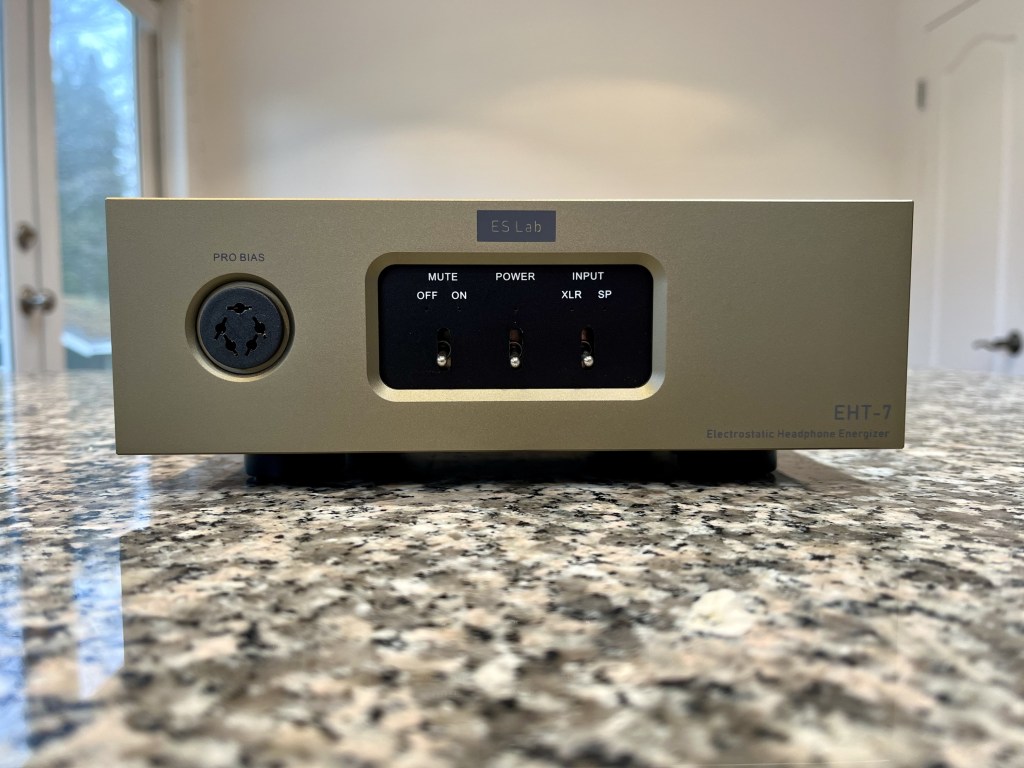
One thing that needs to be mentioned when speaking about the Euridiche S is its sensitivity, in terms of the amplification needed to drive them properly. All of Soltanus’s headphones run at 580V Pro Bias, the same as Stax headphones and most other electrostatic headphones on the market. However, they are less sensitive than most other headphones using 580v Pro bias. This means that they can be run from any pro-bias amplifier, be it from Stax or an aftermarket design. Stax are typically 100dB/100V/1KHz, Euridiche is 97dB/100V/1KHz, which means that the Euridiche needs 40% more voltage to reach the same SPL as a pair of typical Stax headphones. However, I have found they need more voltage than the vast majority of typical electrostatic amplifier designs provide to sound their best, especially if you want to listen at higher volumes. I have a KG Grounded Grid which is more than enough for most electrostatic headphones, but at higher volumes with the Euridiche S, it would begin to struggle and distort. I then tried my Mjolnir Audio SRD-7 which is able to put out more voltage and had much better results but still ran into some distortion with the lowest bass notes at higher volumes. Thankfully, Jody of Brooklyn Audio in Dartmouth NS, the distributor for Canada for Soltanus, sent over the Soltanus Mezzoforte mk2 amplifier. It is a combo amp capable of driving both dynamic and electrostatic headphones and uses beefy output transformers capable of high voltages for the electrostatic section. This was just the ticket for the Euridiche S, and I had *much* better results with the high voltages available. Now, it should be mentioned that for typical electrostatic headphone designs at 580v Pro Bias, you don’t *need* these higher voltages, and you should be careful about both your hearing and your headphones in terms of volume level. However, as long as you are careful with the volume knob, it is entirely ok to use these more sensitive electrostatic headphones with the Mezzoforte Mk2. I will speak more about the amplifier later in this review.

So, with all of that technical information out of the way, how does the Euridiche sound?
Sound
Bass: The Euridiche S has the best low end I have heard from a pair of electrostatic headphones, and better low end than quite a lot planar magnetic headphones. I believe this has been achieved with more space between the stators and the diaphragm (which results in the lower sensitivity of the Euridiche S) but is absolutely worth that trade-off. If you have the port holes unplugged, there is a slight lift in the lowest sub-bass area, and the rest of the bass sounds mostly flat to my ears. I always prefer a more robust low end than strictly neutral, so I experimented with a slight low shelf via EQ as I do with all headphones to some degree, and the Euridiche S took to it extremely well. The bass was incredibly satisfying, especially for an electrostatic headphone. Very tactile, with good amounts of impact and slam. Whilst it doesn’t reach the ultimate tactility and slam that the Abyss 1266TC does, it honestly isn’t far off, and betters headphones like the Hifiman Susvara in this area. The bass is fast and quick, as most electrostatic headphones are, but with a level of impact, and overall quality that usually evades this design type.
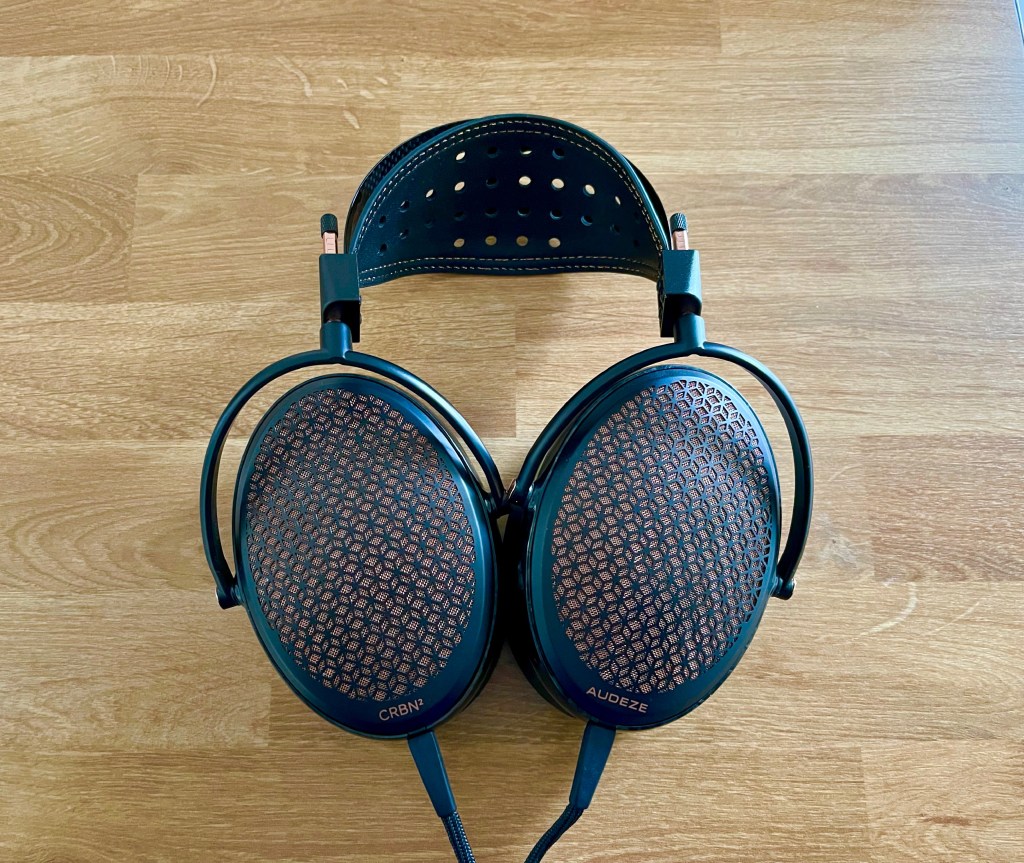
Mids: The low mids of the Euridiche S are very slightly warm and full. I wouldn’t go as far as saying the Euridiche S is a warm and thick-sounding headphone, but there is a slight lift in the low mids which helps give some life to acoustic instruments. I never felt the Euridiche were a V-shaped headphone, and the mid-range certainly doesn’t sound scooped out or pulled back. I would say it is very close to neutral but does give a slight amount of bloom and warmth across low-mid area of the midrange. The upper mids also sounded mostly neutral to me, without being overly forward at 3khz as some headphones have been tuned recently (thinking of the Audeze CRBN specifically here, in terms of electrostatic headphones.) With most headphones, I find I enjoy them more if I tune the mid-range slightly to my personal preferences via EQ, but with the Euridiche I just left them alone entirely. The sense of detail and speed again shines throughout the entire midrange and I had no issues in this area with regards to the technical performance.
Treble: Now, I will speak about the treble of the Euridiche S with the adjustment switches set to the off position. Please keep in mind the high end can be tweaked to be 2 or 4 dB lower, if you are sensitive to treble. The treble is neutral, and in some cases, I actually prefer the treble to be slightly brighter than the stock tuning of the Euridiche. I can happily listen to these headphones all day with no adjustments via EQ to the treble regions, and I never found there were overt spikes that were grating or annoying, even at higher volumes. The treble really does shine with regard to the electrostatic nature of the headphones, it is quick and detailed sounding. For my personal preferences, I’d actually have enjoyed a switch that offered an off position, a 2db increase to the highs, and a 2db decrease, rather than 2 or 4db decreases. However, that’s just my personal preference, and I like a brighter treble response with some types of music.

Technical performance: As long as you have enough voltage available for the Euridiche S, they are a top level, standout performer in terms of technicalities. They are very detailed, up there with the most detailed headphones on the market. The overall sonic picture is very large, so much so that it really surprised me. When you look at the headphones you go in expecting something like an LCD-4, but it is much more open-sounding and airy, whilst still having great bass presence and impact. This is rare, usually, you get one or the other, but in this case, you get both. The Euridiche S has all of the typical hallmarks of good electrostatic headphones, speed, and precise imaging, but combines it with some of the best traits of good planar magnetic headphones in terms of a tactile response, bass presence, and impact. The more I listened to the Euridiche S the more I enjoyed them. Provided you have an amp capable of driving them, turning them up and listening at high volumes was sinfully addicting, and I just ended up getting lost in my tunes. A very good sign.
Build Quality
In terms of looks, as mentioned before, these are very similar to some Audeze headphones. In terms of build quality, they are also very similar. The headband is well-finished, with nice carbon fiber. The cable is thick and supple. The size adjustments work well and aren’t too hard, or too easy to change. The stock pads are incredibly comfortable, and I never had an issue with them in terms of sonics or comfort. The Euridiche S does weigh right around 498 grams, which on some headphones might feel slightly heavy but the Euridiche is incredibly comfortable, and doesn’t feel heavy on the head in any way. I never experienced hot spots, or got tired wearing them for multiple hours. Overall, the Euridiche S’s build quality is very solid, and seems to have everything you need and nothing you don’t. It is certainly better built and uses more premium materials than some headphones which cost substantially more (Hifimans for example.)

Mezzoforte Mk.2
Now, let’s talk about the matching Mezzoforte Mk2. I did speak earlier in the review about the power requirements of the Euridiche S and all of those points still stand. They are difficult to drive, and love more voltage available than normal, especially if you are going to listen at higher volumes. If you are a low-volume listener, you could certainly get away with some of the more powerful typical electrostatic amps, but if you like headroom or the ability to boost the low end via EQ by a bit, the Mezzoforte is the answer. I tried both my Hifiman Shangri-La and the Euridiche S extensively with the Mezzoforte and I really enjoyed the results with both. I know that some of the dogma in the electrostatic community is that amplifiers have to be a direct drive for ultimate quality, but the more I have used transformer output-based solutions the more I have warmed to them. The transformers here in the Mezzoforte were incredibly capable and I never experienced any saturation in the low end even with the hard-to-drive Euridiche S. That is not to say the Mezzoforte is not a standalone amplifier, it is. Soltanus is also able to make a typical transformer interface which they call their “ Electrostatic driver unit” which can be used with standalone speaker amplifiers, similar to an SRD-7 but with the same transformers from the Mezzoforte which are much more capable. The Mezzoforte is also able to drive typical dynamic headphones. In this use case, I found it was mostly useful for fairly easy-to-drive headphones, and it struggled with things like the Hifiman HE6se which are very hard to drive. It is a very nice extra capability to have, but I would primarily use the Mezzoforte for the Euridiche (or other Soltanus headphones) or other electrostatic headphones in your collection. Having that add-on ability to use medium to high sensitivity standard dynamic/planar magnetic headphones is very helpful, but I wouldn’t buy it solely for that use case. The sound of the Mezzoforte is powerful, and detailed, with some slight mid-range richness. There is one tube inside which can be changed to tweak the sound. Zoltan recommends trying the Sylvania 5814A for a more detailed sound with higher technical performance, but even with the stock tube installed, the sound quality is very good.
Comparisons
Hifiman Shangri La: This isn’t a very fair comparison. The Shangri La is a very expensive pair of Halo-tier headphones, and yet, They don’t embarrass the Euridiche S in any way. The Shangri La is slightly more detailed, especially in the micro detail and very slightly more refined sounding, and has a very different type of spacial presentation, but apart from that they are more different than better or worse. The Euridiche S is a much more upfront, first-row type of presentation, while the Shangri la is further from the ear, and sound more like being in a large concert hall. The bass of the Euridiche S is miles better than the Shangrila, with much more tactility and impact. The size of the sound image on the Euridiche S is very large, approaching that of the Shangri la, but closer to the ear and again, more up-front sounding.
Abyss 1266TC: The Euridiche S has similarities to the 1266TC in the low end, and overall. Both present a very energetic and upfront sound signature and are very exciting to listen to. The low end of the Abyss is slightly more forward, with slightly more slam/impact, but the Euridiche’s bass has slightly more texture and nuance to it. The overall detail levels between these two headphones are incredibly similar and I can’t really say if one is more detailed than the other. The 1266TC has a slightly wider soundstage, but the overall image is much bigger and spacious sounding with the Euridiche S. The 1266TC is more focused and specific sounding, whilst the Euridiche is more holistic and prioritizes a larger sonic image. Both are incredibly fun to listen to, and the Euridiche S is the first electrostatic headphone I have heard which comes anywhere close to equaling the 1266TC in the low end, and even just in terms of overall “fun” enjoyment and listening pleasure.
Audeze LCD-4: It has been a while since I owned the LCD-4, but I wanted to compare them here due to the look of the headphones being so similar. Please keep in mind this comparison is being done from memory, not direct back-to-back comparisons. The LCD-4 is a much warmer, slower-sounding headphone, with a much more closed-in sound stage. The Euridiche outperforms it in pretty much every way and is much more to my personal preferences. There is something to be said for the warm, somewhat darker nature of the LCD-4, especially if those are your sonic preferences, but for me, I pretty much prefer every aspect of the Euridiche S.
Hifiman HE6se: The HE6se is a value king, at the 400-500USD it can be bought for, it really does represent some of the best value out there on the market currently in terms of headphones. However, compared to the Euridiche, it struggles to keep up. The Euridiche is a more detailed and technically accomplished headphone, with a slightly lower treble level. The bass of the Euridiche is slightly better in terms of slam and overall quality and has more sub bass presence with the ports unplugged. The Euridiche has a larger sonic image with a wider soundstage. The HE6se is still the king for value however, and that can’t be ignored.

Conclusion
Overall, I have really enjoyed my time with the Soltanus Euridiche and Mezzoforte Mk2. I haven’t felt this enthused about a pair of headphones for a long time. I went into this review not knowing what to expect in any way shape or form, I was simply curious and looking forward to hearing something different. The Euridiche is incredibly fun to listen to, it combines some of the best elements of planar magnetic headphones with some of the best elements of Electrostatic headphones. It is incredibly detailed, has a great low-end response (especially if you are willing to tweak it to your preferences via EQ), and has one of the biggest and most spacious sonic images I have heard outside of the Hifiman Shangri-La. Yet, even though it has that large and spacious sonic image, it has a very upfront, first-row type of presentation. It is exciting to listen to, and the more I listened the more I enjoyed them. The one real caveat to mention is that they need more voltage than average. They do best with a dedicated amp from Soltanus themselves especially if you want to turn up the volume and rock out. Still, with that being said, I feel the Sonic performance of the Euridiche S is worth working around their hard-to-drive nature. The build quality is good, and it’s nice to see a bit of carbon fibre being used for the headband. They feel “premium” and similar to a pair of Audeze headphones. The comfort of the Euridiche S belies its 498g weight, and I could wear them for hours with no comfort issues or hot spots. The pads are very comfortable also, and due to the fabric where they contact the ear, I had no issues with my ears overheating or sweat building up as you might with a fully leather pad.
As long as you keep in mind their harder-to-drive nature, the Euridiche gets a thorough glowing recommendation from me.
Contact info for Soltanus in North America is Jody Crane over at Brooklyn Audio in Dartmouth Nova Scotia. https://www.brooklynaudioinc.com/ For EU/UK head-fi’ers, I’d contact Soltanus directly for information https://www.soltanusacoustics.com/
 Headphones n' Stuff
Leave a reply to Jody Crane Cancel reply