Hi All,
Today, we are taking a look at a new product from Benson Wong of Hong Kong-based electrostatic headphone manufacturer, ES-Labs. I’ve reviewed ES-Labs ES1a and ES2a headphones in the past, and really enjoyed both. In addition to making his own headphones, Benson repairs older electrostatic headphones that have broken down due to the passage of time, and is also knowledgeable about electrostatic amplifiers, and I believe owns an original SRM-T2, which is kind of a neat conversation piece for those of us who are a bit fanatical about headphones.
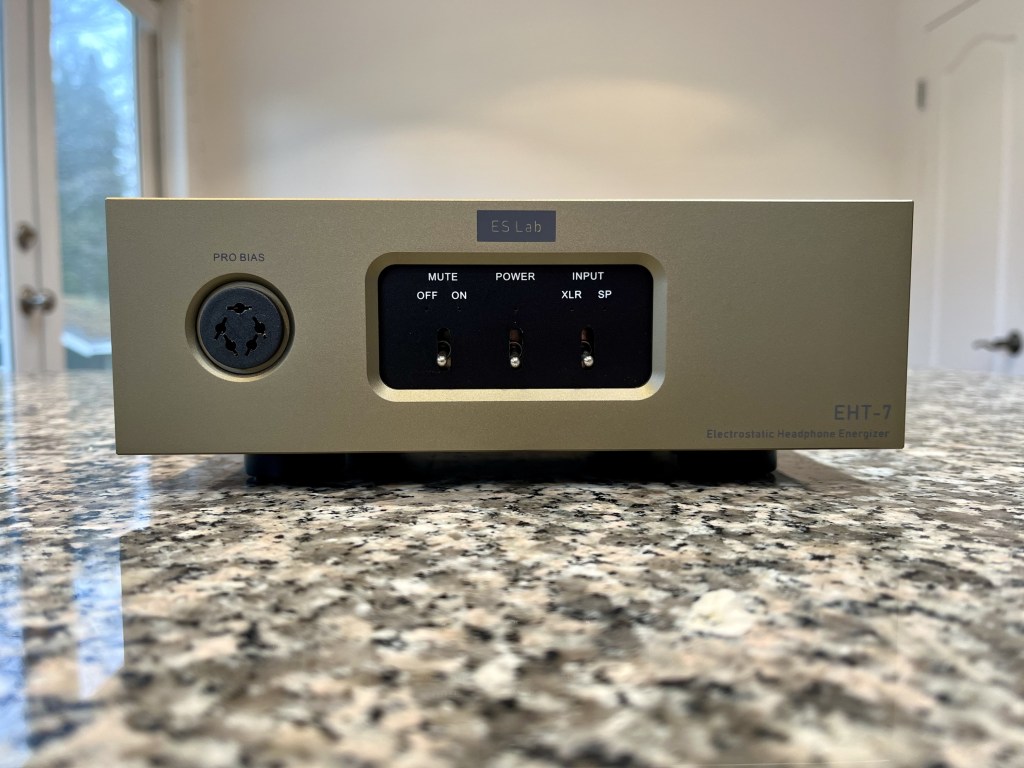
The product we are looking at today is called the EHT-7, an electrostatic transformer interface, also commonly called an energizer, though over the last few years, more people have been calling electrostatic amplifiers energizers, which is not how things have typically been referred to historically and has caused a bit of confusion about what is what . A standalone amplifier is exactly that, an amplifier
A transformer interface, or energizer, simply has two transformers to step the audio signal up to E-stat voltage levels, as well as providing the 580v bias (or 230v bias for older normal bias headphones) It’s not an amplifier, and must be used with a speaker amplifier, or a suitably powerful headphone amplifier (which depends on the transformers being used, their conversion ratio and what input power they need) to provide the audio signal.
Typically, people have seen transformer interfaces or energizers as inferior to standalone e-stat amplifiers, but I think it depends on the transformers being used and the amplifier itself being used in combination with them. After all, people have used output transformers as part of their tube amps for decades, and some of the most sought-after and excellent tube amps on the market are OTC (output transformer coupled) amps (speaking about regular non-e-stat tube headphone and speaker amps here mostly)…..Putting a transformer interface in front of a good speaker amp, especially if you already own one, but want to explore electrostatic headphones, is simply an option that is available and shouldn’t be discounted right off the bat.
With all that being said, it does depend on the transformers that are actually being used, the amplifier being used, and the headphones you are driving, etc, as for the results you will get. With hard-to-drive headphones, and with small, more economical transformers like those from the Stax SRD-7, you can run into the transformers saturating in the low end and distorting or the highs getting a bit harsh at louder volumes. I’ve had this happen with my Mjolnir SRD-7 with harder-to-drive headphones if I use a bass boost. With my Soltanus Acoustics driver unit (another transformer interface), I’ve not run into any issues running it from my Boulder 1161. Extremely clean, and can play very loud even with a bass boost via EQ without saturating the transformer and running into distortion.
That doesn’t mean that transformer interfaces or energizers, whatever you want to call them, are better than direct drive electrostatic amplifiers; they are simply an option that is available and shouldn’t be dismissed as “inferior” simply due to being a transformer-based solution. As with most things, it depends on your setup, your goals, and how you plan to use it
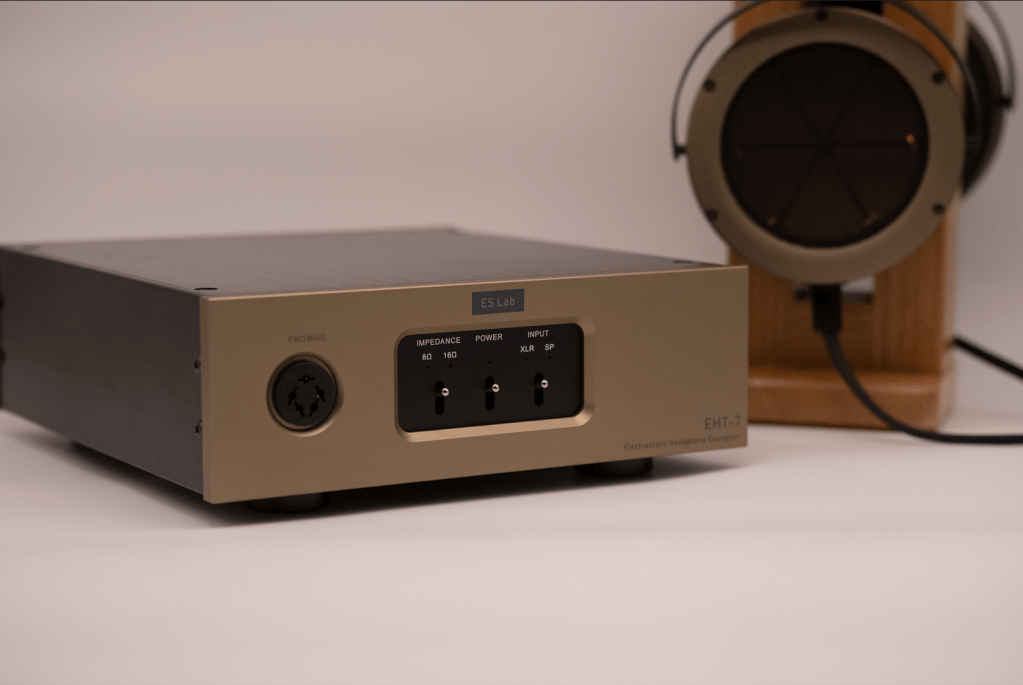
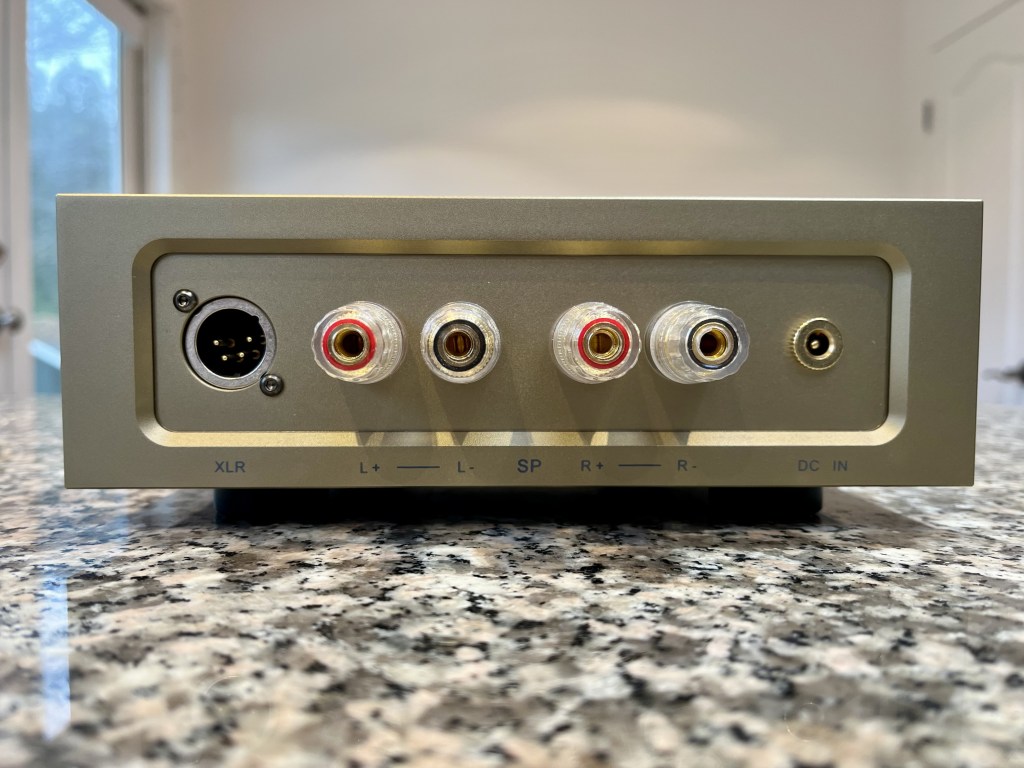
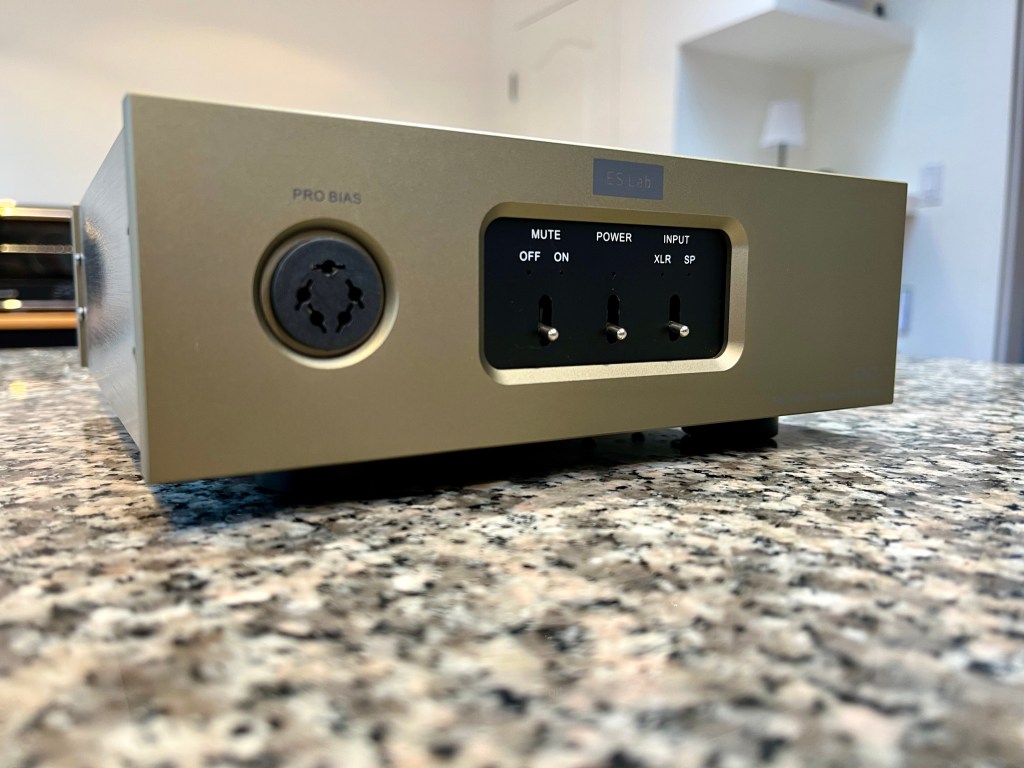
The EHT-7 from ES-Labs is available in two different configurations. One comes with “Japanese” transformers and an 8 or 16 ohm input switch, and another with premium Lundahl transformers and no impedance selector switch. Their MSRP pricing is $6299HKD and $8999HKD, respectively, which works out to around $800 and $1150 USD. On the front of the unit, you have the power switch, the impedance selector (on the JP model), and mute (on the Lundahl model), as well as the speaker or headphone selector. This doesn’t describe the output, but whether you are inputting a signal from a speaker amplifier or a headphone amplifier. On the rear of the device are the power input (12vDC with included power brick), speaker terminals for use with a speaker amplifier, and a 4-pin XLR input, for use with headphone amplifiers. I do know that the EHT-7 can also be modified by Benson for the end user with both Pro Bias (580v) and Standard Bias outputs (230v), allowing the use of older Vintage Stax models.
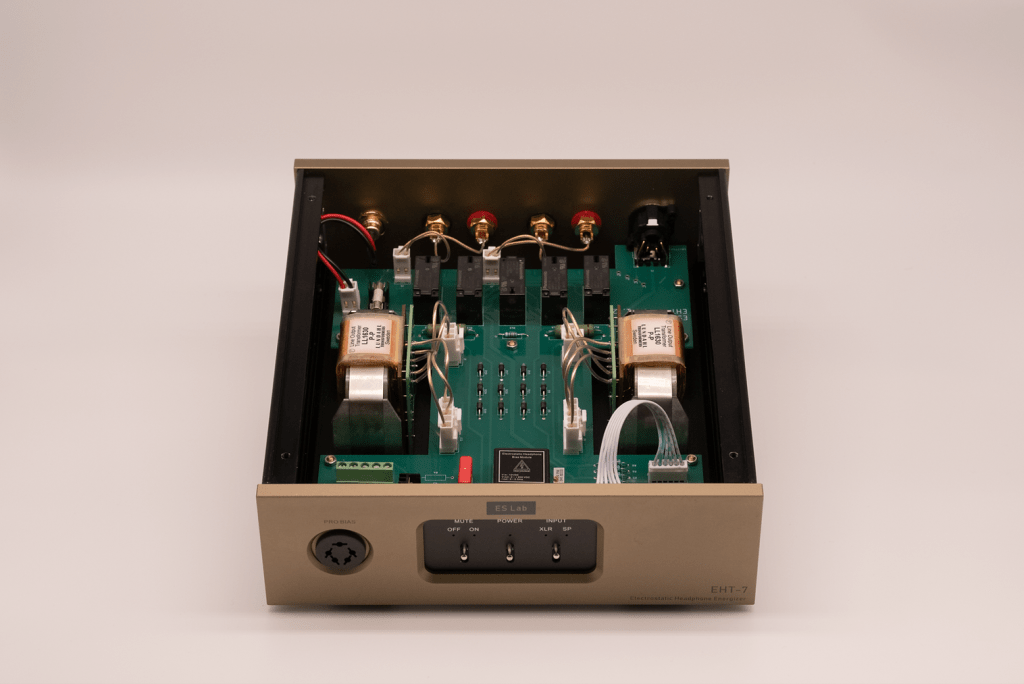
The Japanese transformer version is the best option for use with less powerful amplifiers, due to the winding ratios of the transformers, impedance selector switch, and ability to produce adequate volume levels from a less powerful input. The Lundahl transformer version is recommended to be used with an amplifier capable of 10-100W to perform as intended. I used the Lundahl version with my Boulder 1161 speaker amplifier (200W into 8 ohms), and it performed incredibly well during the testing that I did.
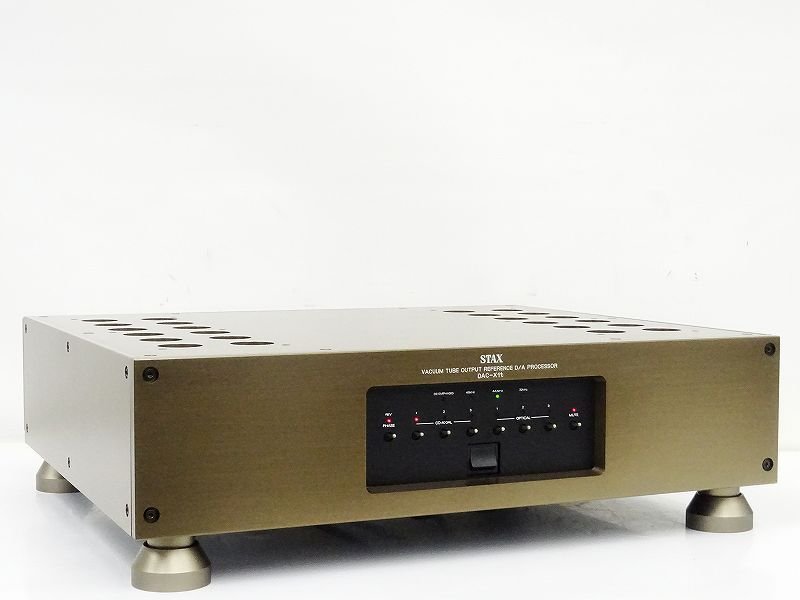
The EHT-7 design is obviously styled after the Stax equipment from their top-of-the-line models of the 1990s, mostly reminding me of a miniaturized version of the DAC-X1T.
In terms of describing the sonic performance of the EHT-7, I’m going to do things a bit differently than I usually do with my reviews, as describing the individual bass/mids/treble, etc., isn’t only going to apply to the EHT-7 itself, but also the choice of the amplifier driving it. I think it would be best to speak about its sonic qualities more generally, and also remind the reader that their results may differ slightly, depending on the other equipment they are using with the unit.
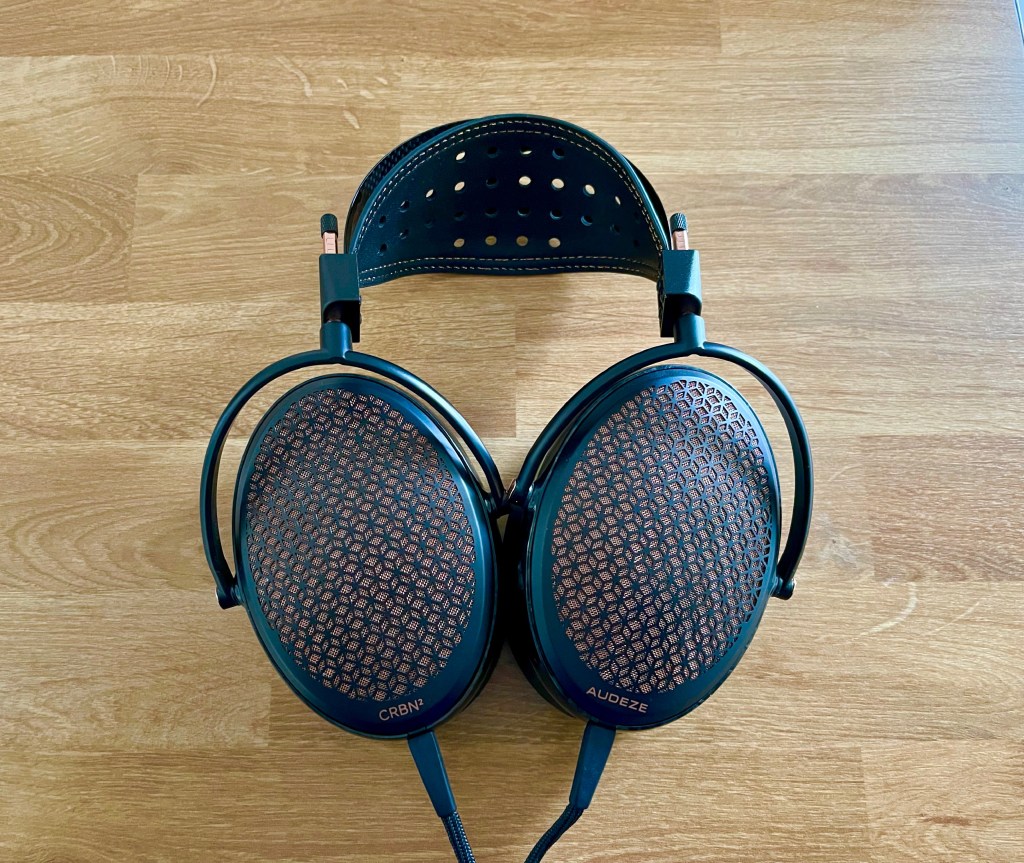
Generally speaking, the EHT-7 was faithful to what it was being fed. After sorting out some hiccups with a different amplifier I was using that actually had something wrong with it, the EHT-7 never had any troubles driving the headphones I tested with it, including the Audeze CRBN2 and Hifiman Shangri-la, which are both on the harder to drive end of electrostatic headphones. I never ran into issues in the low end, distortion, saturation of the transformers, or sub bass roll off. The highs were clear and detailed, and the midrange never came across as being warm artificially or being altered negatively. Overall, if you are running the EHT-7 with an amp that you are happy with the sonic performance of, and it meets your requirements in terms of gain/volume in combination with the EHT-7, I find it really hard to see someone not being happy with the results produced.
Coincidentally, I actually have been on a bit of an energizer/transformer interface exploration over the past couple of years. I own the Mjolnir Audio SRD-7, and the Soltanus Acoustics Driver Unit (mine is sort of a hybrid of their MK1 and MK2 units, having more features than the MK1 but less than the MK2). Interestingly enough, there are some genuine differences between the units due to the different transformers being used. Sadly, I don’t have the version of the Mjolnir SRD-7 that uses the Lundahl transformers (though they are a different model of Lundahl than those found in the EHT-7). The EHT-7 is more capable performance-wise than the base model Mjolnir SRD-7 (which uses repurposed transformers from Stax SRD-7’s) The bass seems to have more range and capability, and can play more cleanly at higher volumes (or lower volumes with a bass increase via EQ, which is more my use case ), and the high end also comes across as being cleaner and more detailed. I’m curious how the Japanese transformer version of the EHT-7 would compare to the base model of the Mjolnir SRD-7, as they are priced similarly, but I can’t comment as I haven’t personally heard it.
In comparison to the Soltanus Driver Unit I have (which, although there are differences across the mk1, mk2, and my mixture of both units, the transformers used are exactly the same), the most capable in terms of extension and performance limitation seems to be the Soltanus, but I don’t think the differences will make a massive difference for most users. For use with the Soltanus headphones prior to the release of the new SX series headphones, which are much more efficient than the previous models, the Soltanus Driver Unit was the only thing I had tried that could drive the Euridiche S cleanly at higher volumes, or lower volumes with a bass boost. The transformers never distorted or had issues at any volume level. However, this amount of capability isn’t strictly necessary for more typical electrostatic headphones that are of a more usual sensitivity rating (read: easier to drive) In terms of sonic performance, and direct comparison with the only aspect changing being the EHT-7 or Soltanus Driver Unit being used, I felt the Soltanus unit was more sonically dense, and had slightly less air and brightness in the high end. The EHT-7 seemed slightly more airy and open in the treble region, with the trade off of slightly less heft in the low end. Between the two units, with headphones like the Audeze CRBN2 or those with a similar sensitivity, the results were different, but not massive, and I would be really happy to own either (depending on the headphones being used.) As long as you aren’t driving something like the original Euridiche headphones from Soltanus, I reckon you would be happy with the EHT-7, especially considering the price difference between the two. However, with the introduction of the new mk2 Driver Unit from Soltanus, it has many more features than the EHT-7, and if a speaker amp is going to be your main amplification for all your headphones both electrostatic and regular, I’d recommend the Soltanus unit for how capable it is in that use case (having various impedance settings, gain adjustments etcf for both electrostatic and non electrostatic headphones..)
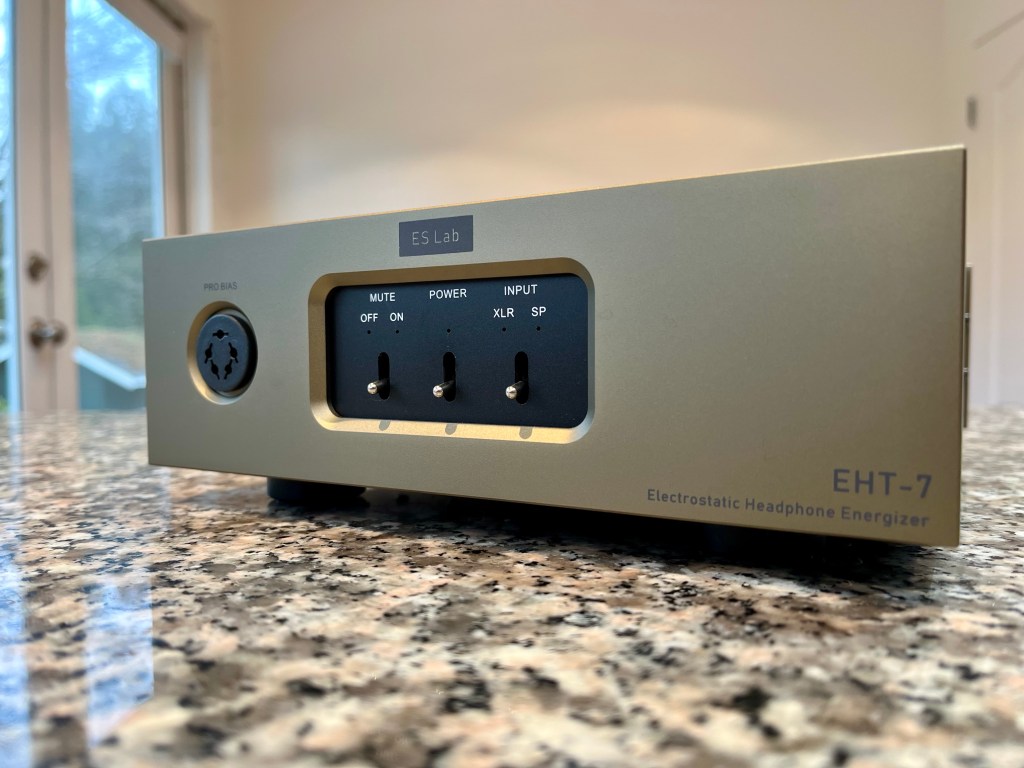
The build quality of the EHT-7 is fantastic. It feels really solid and well put together. It has all the necessary safety features and protections for electrostatic headphones that give you peace of mind during use. In all of my time using the EHT-7, it was dead silent, with no strange hums or issues being picked up (which can happen sometimes with transformers in the mix). I really love the classic vintage Stax design and look that the unit has, and would be more than happy to have it in my stack. One thing I’d also like to mention is that Benson deserves to be commended for not overpricing his gear. Everything he makes is offered at fair MSRP pricing and provides real value for money. In a headphone market that is increasingly mirroring the stratopheric pricing of the speaker side of audiophillia, it deserves to be mentioned.
Overall, I really enjoy energizers, or transformers interfaces, whatever you prefer to call them. As I said, it doesn’t mean that they are better than direct drive amplification, they are simply an option that is available, which is useful, and really makes sense for some people set ups. As long as your are pairing them with an amp that is suitable and will provide you with the performance levels you want (volume etc..) I really think that energizers are a good way to get into electrostatic headphones. A lot of people already have an amp of some form, but the massive costs of electrostatic amplification in addition to the headphone costs keep them from even considering the entire category. Products like the EHT-7 can change that, and can let people try the world of electrostatic headphones with lower barrier of entry. And in my opinion? At least with the Lundahl version of the EHT-7 I have here, you’re not really sacrificing any performance in terms of real world noticeable differences. Will there be measureable differences in terms of slew rate and things if compared with an audio analyzer, against direct drive amplifiers? Yes, most likely, especially if we are speaking about the highest performing of direct drive amplifiers. Yet, in real world use, as long as the amplifier being used in combination with the EHT-7 is of decent quality, I haven’t noticed massive world shaking differences, especially in terms of a first foray into the world of electrostatic headphones.
The EHT-7, just like the ES1a and ES2a before it, gets a thorough recommendation from me. If you are starting out and want to try electrostatic headphones, it’s a great option. If you have a really good speaker amp or a suitably powerful headphone amp and want to try electrostatic headphones, it’s a great option. Perhaps you need a secondary backup option to a direct drive electrostatic amp, or a unit with Standard Bias (after being configured for it by Benson) for use with vintage Stax headphones; it’s a great option. The EHT-7 is fairly priced, built well, sounds great, performs well, and fills a hole in the market. Great job, Benson!

 Headphones n' Stuff
Leave a comment