Hi All,
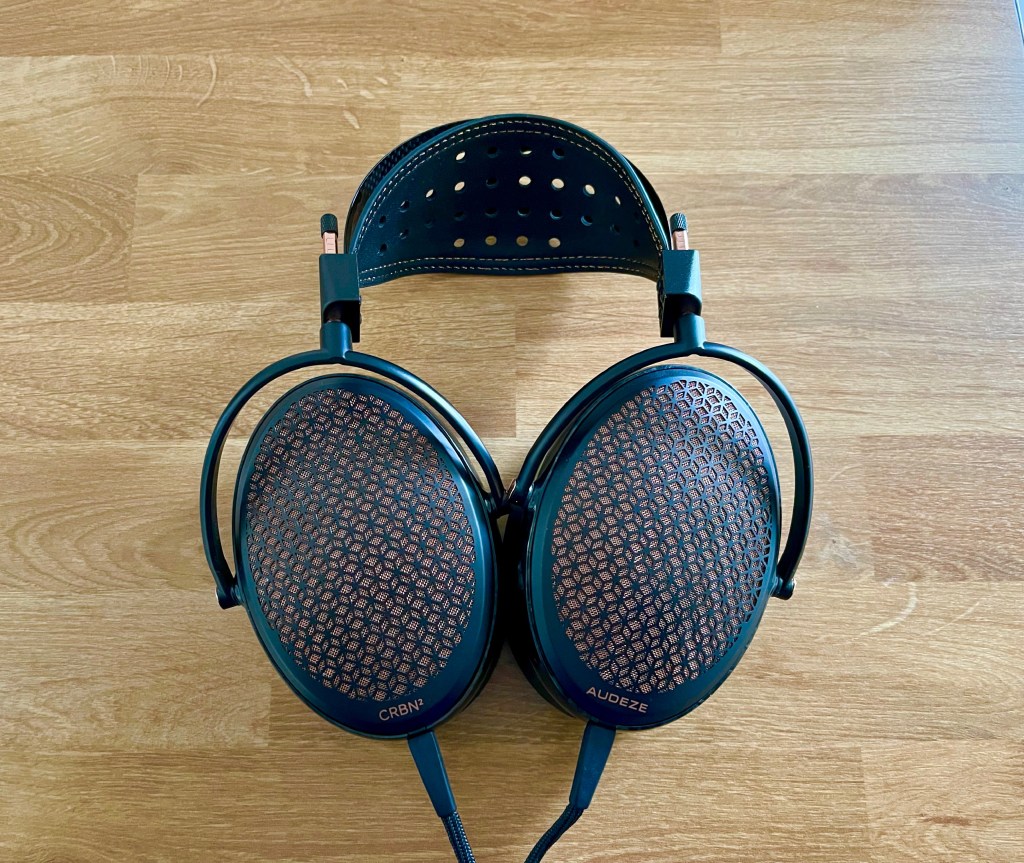
Today, we are taking a look at the current top-of-the-line electrostatic headphone offering from Audeze, the CRBN2. With the very recent release of the new LCD-5S at $4500, the same MSRP as its predecessor, the LCD-5, the CRBN2 clocking in at $6000USD is officially no longer co-flagship with the LCD-5, but the overall flagship headphone from Audeze. The original CRBN from Audeze, released in 2020, had a bit of a bumpy ride early in its life, but matured into a well-thought-out and thoroughly enjoyable headphone with some revisions from Audeze throughout its life span. I was curious to see what Audeze had changed from the original CRBN with the release of the new CRBN2, and after spending 3 months with them, I think the CRBN2 is perhaps what the original CRBN was always supposed to be, as it has matured into a more solid and complete package overall.
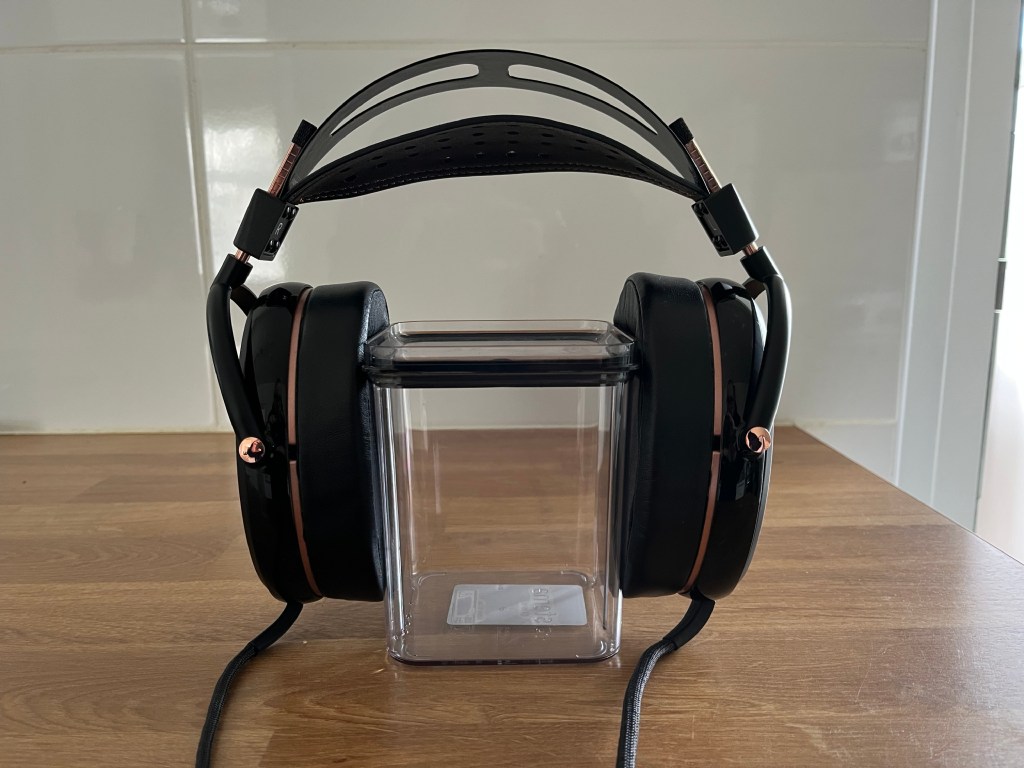
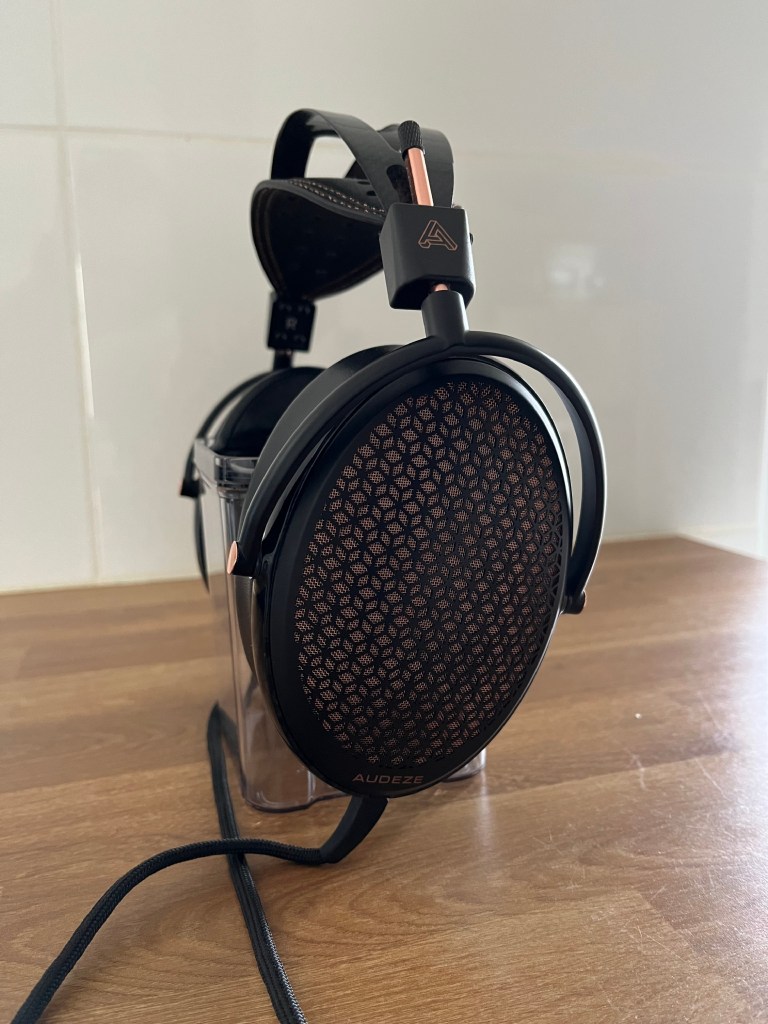
The first change from the original CRBN to the new CRBN2 is the new copper accent colourway. Copper is one of my favourite metallic colour choices, and it was neat to see Audeze go in this direction, vs the Gold mesh featured on the LCD-i4 and LCD-4Z. The overall build and parts used are incredibly similar to the original CRBN, with the exception of the most notable overall feature with the 2’s – Audeze’s new SLAM port feature. Essentially, this is a tuned port to allow for air exchange within the pad’s ear cavity, and also to implement an increase in sub-bass amplitude. The CRBN2 was the first headphone from Audeze to feature this new porting system, but it has now found its way into other headphones such as the Maxwell 2, LCD-S20, and LCD-5S.
This new SLAM porting feature has entirely resolved the number 1 issue with the original CRBN, which was mostly fixed by the revision Audeze did a couple of years into the CRBN’s lifespan. The driver flex, “stax fart,” and subsequent driver film sticking to the stators issue. I wrote about this issue at length in my original CRBN review (seen here https://headphonesnstuff.blog/2023/08/17/audeze-crbn-full-review/). The new SLAM porting system allows air exchange and pressure release from within the ear cavity of the pads when you are wearing the headphones, meaning the driver flex problem is 100% fixed. I haven’t experienced a single instance of driver flex or any of the issues accompanying it. Due to this new SLAM porting feature, the CRBN2 also has a solid bump in the deepest sub bass area from 20-50hz, though it is mostly in the 20-30hz area that the increase is seen.
With the changes from the original CRBN spoken about, let’s take a look at how the CRBN2 sounds.
Bass: As previously mentioned, this is the area that has the most notable changes from the original CRBN, entirely due to the new SLAM porting system. It causes an increase in sub bass amplitude, particularly in the 20-30hz range, but from 20-50hz overall. The vast majority of music doesn’t have a ton of sub bass information in the 20-30hz range, so mostly you will notice differences with some electronica, pipe organ music, and also film sound effects, sub bass rumble, etc…That being said, the couple of dB (ish) increase above 30hz compared to the original CRBN is noticeable and worthy of mention. I still found that I needed to apply a low shelf via EQ to get the bass more in line with my preferences, but that’s far from unusual and something I do with most headphones. The technical quality and performance of the low end of the CRBN2 is remarkably similar to the original CRBN, and also decidedly non-electrostatic sounding. It’s quite meaty and physical-sounding, but not as fast and quick as electrostatic headphones are typically associated with being. It’s almost planar magnetic like in its overall “feel,” which is interesting, and actually a theme that continues across the entirety of the CRBN2’s FR and performance.
Midrange: The midrange of the CRBN2 is incredibly similar to the CRBN1 overall. There is a very slight fullness to the lower midrange, but it is what I would describe as being mostly neutral. I never felt that the CRBN2 was a warm headphone, and certainly far from being anything like warm or syrupy, like an LCD-3 might be. There does seem to be a very slight increase in the 1khz range, which is a very common feature amongst many electrostatic headphones, but it is much less pronounced than on some Stax models. I didn’t feel that it ever contributed to a nasal or grating sound in 1khz area, which can happen if it gets a bit too hot in terms of level. The real issue I found with the CRBN2’s midrange was exactly the same as the issue I had with its predecessor, the CRBN1. The 3khz (roughly) peak. I think that on the CRBN2, this peak is slightly less noticeable due to slightly more low-end and slightly more upper treble, but I still found it to be way too much in terms of level for my ears, making everything sound sharp and overblown. Similar to the CRBN1, simply reducing the 3khz area via EQ solved the problem entirely, and made the headphones much more pleasant to listen to. The midrange of the CRBN2 is incredibly similar to the CRBN1, very detailed but again, not typically “electrostatic” sounding, like something along the line of the SR009 from Stax. There is a sonic density to the mid-range which is somewhat hard to describe, but notable and enjoyable nonetheless. Apart from the 3khz peak, which can be reduced easily via EQ, I really didn’t have any other complaints about the tuning or performance of the CRBN2’s midrange.
Treble: There are some slight changes to the treble presentation of the CRBN2 in comparison to the original CRBN. On the original, there was a slightly stronger presence in the lower treble, and slightly less upper treble and air. These changes are very small, and I actually don’t think that the CRBN2 has changed enough in this area, and would have loved to see Audeze push for a bit more upper treble and air. I think the stock tuning can almost obscure the detail and transparency the CRBN2 is truly capable of, simply by virtue of being a less treble-forward headphone. With that being said, if you happen to be a treble-sensitive listener, the stock tuning of the CRBN2’s treble might be absolutely perfect for you. This lack of upper treble and air does, however, contribute to the perceived higher level of the peak at 3khz, as it’s not being balanced out on the upper end. In most of my listening with the CRBN2, I increased the upper treble area of the FR, and found it greatly increased my listening pleasure. Continuing on from the CRBN1 in how similar they are, there is still a serious amount of detail and transparency in the highs available from the CRBN2’s drivers; it’s just very relaxed about its presentation of it to your ears.
Technical Performance: The CRBN2 is incredibly similar to the CRBN1 in terms of technical performance, detail, and soundstaging. I do feel that it is very slightly more detailed, and that Audeze has managed to extract some more performance from the CRBN2 in comparison to the CRBN1, but it is not a massive generational leap. More like refinements, small improvements, and an increase in the quality of day to day life and use. The increase in subbass is welcome, and the air exchange from the SLAM porting also helps slightly increase the perception of impact and slam in the low end. As mentioned, detail seems to have slightly increased across the board, but by a small amount. The CRBN2 is very similar to the CRBN1 in how it presents sound. It is quite a closed-in and focused-sounding headphone, vs the typical wide-open and airy sonic signature that a lot of electrostatics aim for. It does still retain the very holographic and “3D” nature that the CRBN1 possessed, but lacks a very wide soundstage and a big sonic image. These are trade-offs that need to be made sometimes, but if you are buying the CRBN2, it’s worth taking note that it doesn’t go for the “typical” electrostatic type of sound. It does, however, do that more concentrated, full, meaty, more well-damped sound signature very well.
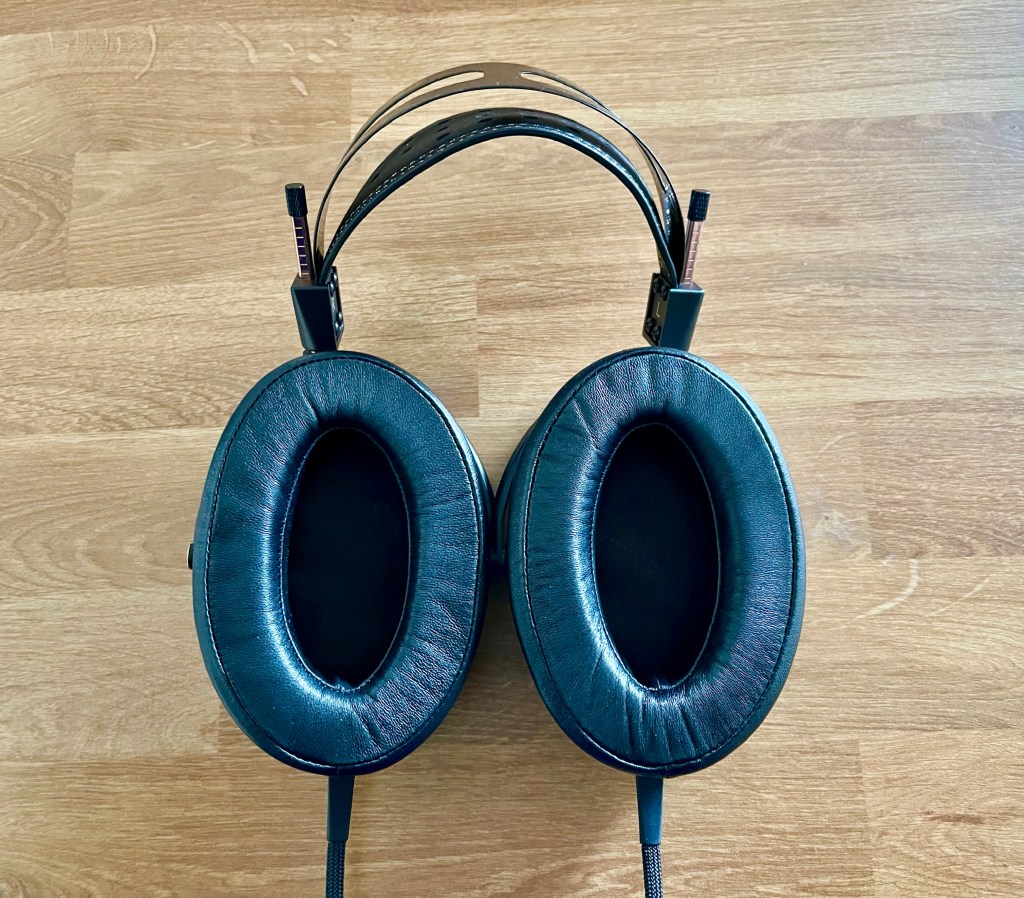
Build quality: The original CRBN’s mid-life revision mostly fixed all the issues with the driver flex problem, and apart from those issues, the CRBN1 was a standout in build and material quality. The CRBN2 is no different. Sumptuous leather pads, full carbon fiber headband, and cups. It feels incredibly solid, is very comfortable, and I love the new copper colourway. The only headphone I can think of that I would say outdoes the CRBN2 in terms of build quality would be the Meze Elite/Empyrean, and that is saying something, as they don’t outdo the CRBN2 by much. Audeze has really nailed this area, both with the original and the CRBN2.
Comparisons:
Abyss 1266TC: The 1266TC is a wider soundstage and slightly more detailed headphone, and still remains the leader in low-end impact and slam. The CRBN has a taller soundstage and comes across as being slightly less detailed, less “wild.”
Hifiman Susvara: The Susvara again is the more detailed and open-sounding headphone, but the CRBN2 has a taller soundstage, more “3d” imaging, and massively beats the Susvara in terms of build quality and materials.
Audeze LCD-5: Though I have not yet heard the new LCD-5S (I’m hoping to at some point), the LCD-5 has a smaller-sounding image, and is more focused sounding with slightly more impact and speed. The CRBN2 has a taller soundstage, is slightly more relaxed in its presentation, and also has the low-end sub-bass bump from the SLAM port system.
Conclusion: I do feel that the jump to a $6000USD MSRP from the originals $4500USD MSRP is a bit of a misstep by Audeze. I think that TOTL headphone pricing is starting to lose it a little bit in general (not just by Audeze, and the CRBN 2 certainly isn’t the worst offender), and perhaps Audeze felt the CRBN2 wouldn’t be taken seriously if they didn’t increase the pricing to be more similar to other options on the market. However, there really aren’t any massive differences in comparison to the original CRBN, and a jump to $5000MSRP might have been more in line with the increase in costs of production. I don’t know, I don’t work at Audeze, and can’t speak for the specifics of the situation, but the fact that the LCD-5S has remained at $4500MSRP seemed like a way to really generate some good will from the community if the CRBN2 had done the same.
With all that being said, I really like the CRBN2 as a product. The build quality and materials are excellent. There are small tweaks and improvements across the entire headphone that make it feel almost as if this is what Audeze was hoping to do with the CRBN1, but just didn’t manage to pull it off entirely back in 2020. The CRBN2 is slightly more detailed, has the new SLAM porting system, which both increases sub bass output and also entirely eliminates the driver flex issues. The slight tweaks to the frequency response are welcome, and an improvement, but I would have loved to see a bit more reduction of the 3khz area and some more treble and upper treble. Thankfully, those FR issues are easily rectified by a little bit of EQ’ing, and once that is done, I thoroughly enjoyed using the CRBN2 for hours on end. They are a great pair of headphones, and I recommend them, especially if you want a pair of electrostatics that are a little bit “different” (in a good way). Well done, Audeze!

 Headphones n' Stuff
Leave a comment