Hi Everyone,
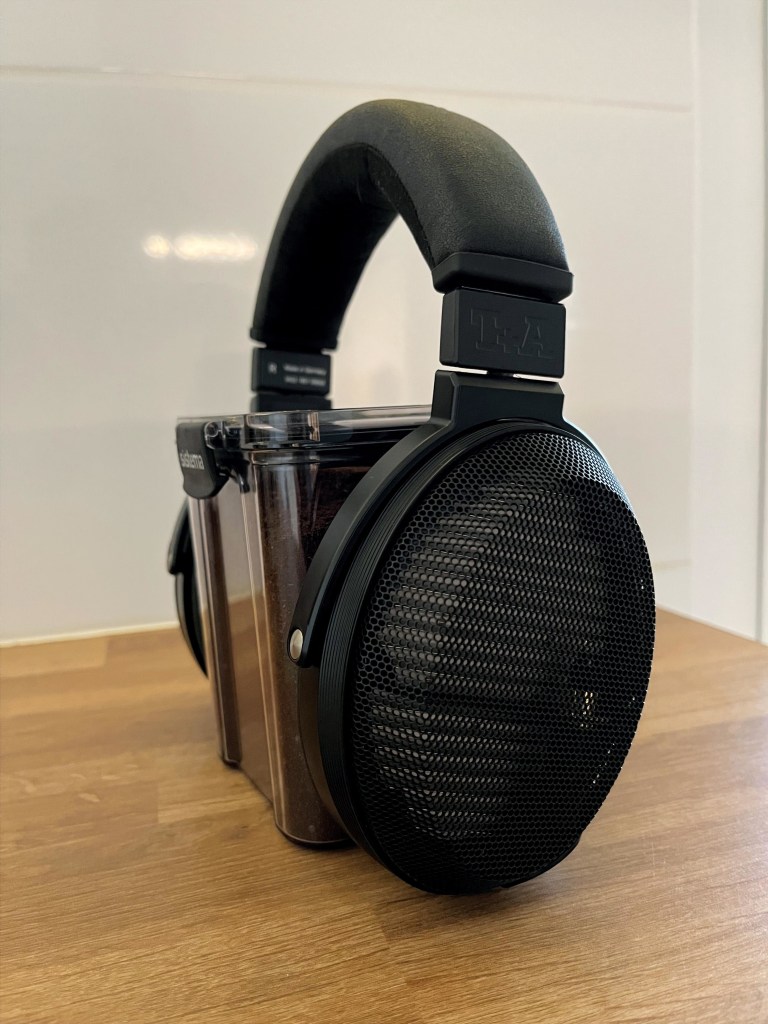
Today, we are taking a look at the sub-flagship headphone from T+A (Theory and Application) of Germany, the Solitaire P-SE. I have a good amount of experience with the current flagship from T+A (the Solitaire P), having owned a pair for a long period, so I was really looking forward to hearing their younger sibling, to see what sort of differences there were between the two, and if the P-SE is able to capture the same magic of the flagship model (if curious, here is a link to my review of the Solitaire P https://headphonesnstuff.blog/2022/05/05/ta-solitaire-p-full-review/ back in 2022)
Over my time owning the Solitaire P, I came to feel that it was one of the best “all rounders” and complete package of a flagship headphone on the market, due to the fact it hit so many individual qualities at a very high level, where some TOTL models will excel incredibly in one or two areas, but make trade off’s in other areas. Although the Solitaire P was beaten in a few areas by other flagships by small margins in things like detail retrieval or soundstage width, it was still an incredibly detailed, fast, impactful and dynamic headphone, whilst also being incredibly easy to drive, playing well from a wide range of source equipment, and also sporting truely top of the line build quality, materials, and craftsmanship.
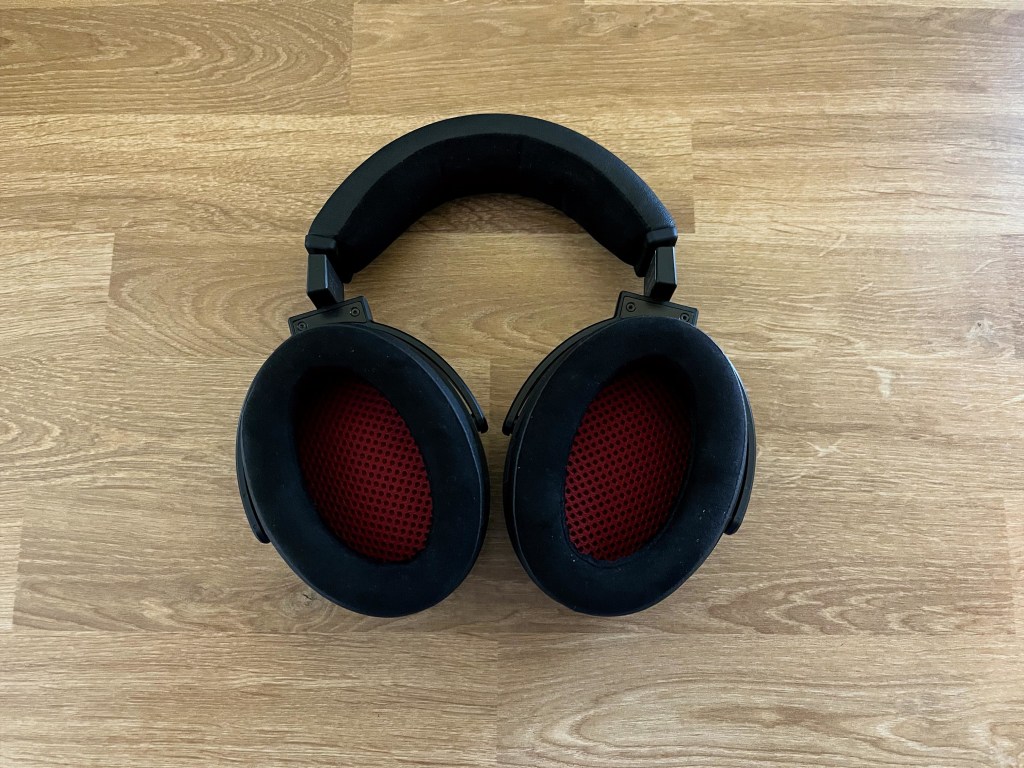
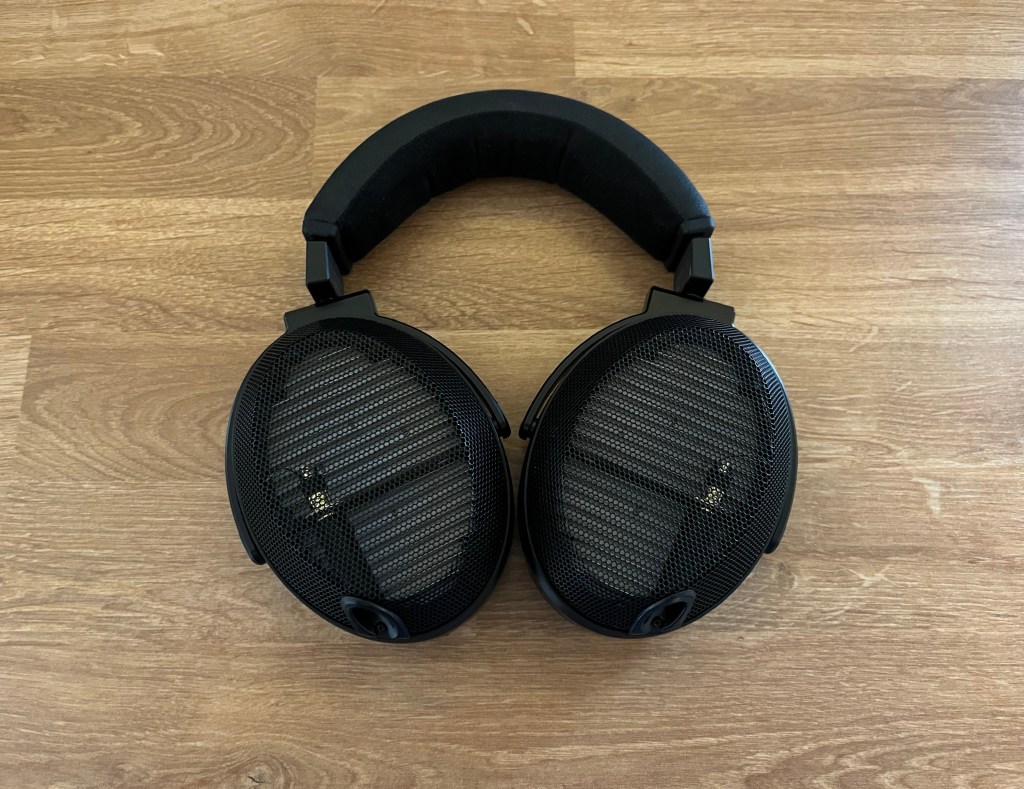
The P-SE, being a more affordable model, does have some changes made to its overall package and sonic performance, but manages to retain a lot of what makes the Solitaire P so compelling. Opening the package upon arrival reveals the same style of packaging as the P’s, well laid out and high quality feeling. As with the P’s, when you order a pair of P-SE, you can choose between your choice of balanced connector cable (2.5mm, 4.4mm, and 4pin XLR) as well as the standard 6.35mm single ended connector cable. I happen to have the 4.4mm cable with me here for the review. The cables are similar to that of the Solitaire P, but do feature a plastic T+A splitter vs the milled aluminum of the P’s. When it comes to the headphones themselves, the overall shape and design seems to be indentical to the Solitaire P. The differences come in the choice of materials, with the P-SE utilizing much more plastic through the build versus the Aluminum of the P’s, and with the pads sporting a different material than the stock Alcantara pads of the P’s. Overall, the “feel” of the build is slightly less high end due to the more extensive use of plastics, but on the other hand, it does lead to less overall weight, which can be a big positive for anyone who is sensitive to wearing heavier headphones. For reference, the Solitaire P-SE weigh in at 440g without the cable, whilst the P’s weight in at a slightly more hefty 530g without their cable, just short of 100 grams more.
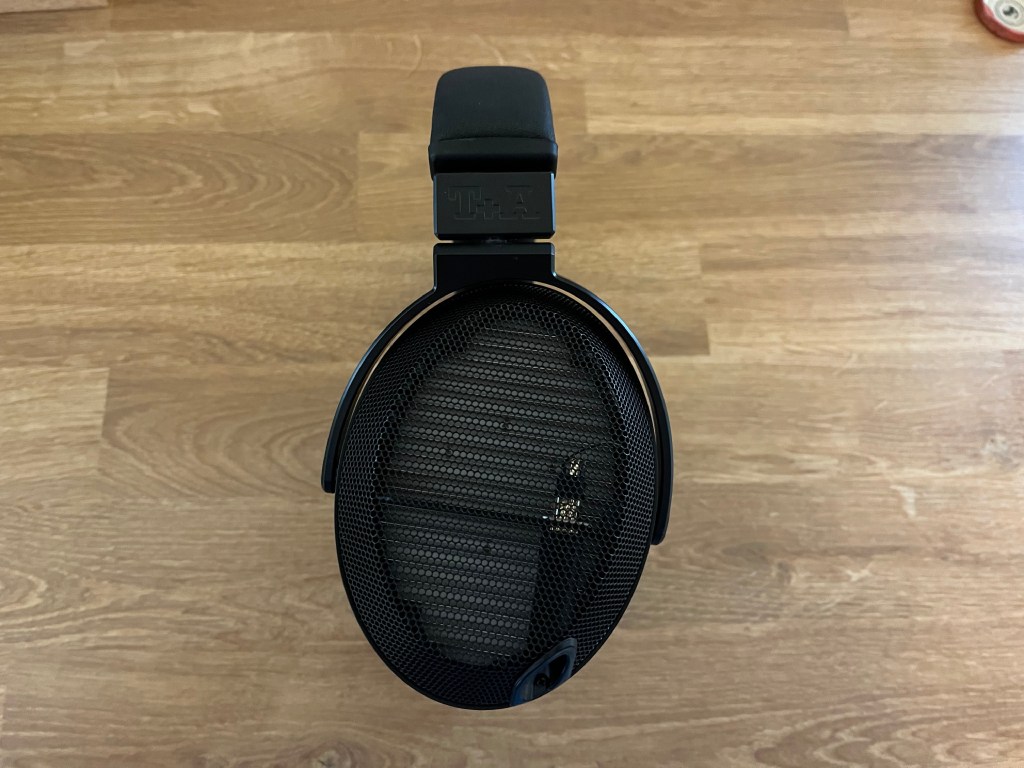
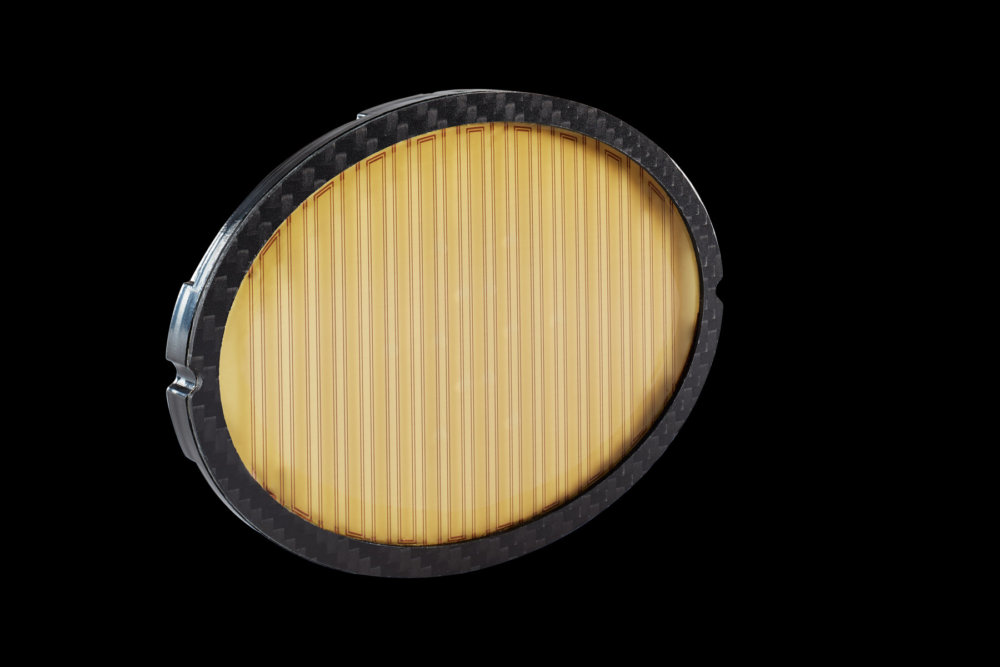
The next major and most important change between the Solitaire P and P-SE is their driver configuration. The Solitaire P uses the current flagship planar magnetic driver from T+A, the TPM 3100, whilst the P-SE uses a derivative called the TPM 2500. Both drivers feature a sensitivity of 101 dB @ 1 kHz, 1V, with the P’s featuring a resistance of 80 ohms, and the P-SE featuring a resistance of 45 ohms. This means that in real-world usage, they are incredibly similar in their perceived level of “how hard to drive are they?” with the P-SE faring slightly better with things like portable source equipment, due to their slight reduction in resistance.
The last real difference between the two models is the most obvious. The Solitaire P features a lighter grey anodized aluminum build with black features, and the P-SE features a much darker navy blue colourway with black features. I actually prefer the colour choices of the P-SE, and would love it if T+A offered the Solitaire P in a similar colourway, or perhaps an all flat black “stealth” type colour option. With all that comparison now out of the way, let’s get into speaking about the P-SE’s sonic performance. I will circle back to a sonic comparison between the two in the comparisons section later in the review.
Bass: The P-SE features a bass response similar to that of many other planar magnetic drivers, in that it is largely flat down to 20hz. In all of my listening, the low end actually came across as possibly being very slightly more than strictly neutral, but it was a small enough difference that I didn’t feel I would say the P-SE has a boosted low end in any way. I am happy to report, however, that the low end doesn’t roll off seriously and responds very well to a slight increase via EQ if you, like me, enjoy more than neutral bass. I do this with virtually all of my headphones to some degree, so it’s not a comment about the P-SE lacking low-end response, simply that I prefer more bass than most stock tunings possess, and that the P-SE responds to it very well. The quality of the bass on the P-SE is also very well done. It is a quick and tactile response, detailed, and similar to, but not quite equalling its older sibling, the Solitaire P. I never found myself wanting or feeling unsatisfied by things like IDM or underground electronica, which makes up a good portion of my listening time. Overall, the low end of the P-SE provides a very good foundation and is well done in general.
Midrange: The midrange of the P-SE is again very similar to that of its older brother, the Solitaire P. From the low midrange up to about the 1khz area, the P-SE is quite a warm headphone in its stock tuning. They are thicker in the low midrange than some of my other headphones, and provide a very tasteful and enjoyable glow to the sound of real instruments. Jazz in particular really excels on the P-SE, especially some of the older Blue Note recordings, which can be a bit honky or thin at times, simply due to the limitations of the technology at the time. If you tend to prefer colder-sounding mids, or listen to a lot of music like electronica or similar, you could certainly try slightly lowering the low mid range via EQ, but I simply left things as is for all of my testing. Past the 1khz range, there is a bit of a pulling back of the upper mids, helping create space, but not so much that you lose impact and leave things sounding slightly hollow. Thankfully, the 3khz area of the FR is not boosted in a way similar to Audeze’s LCD-5, and I found it to be just about right for my personal preferences, though I am somewhat sensitive to this area being boosted. Overall, the slightly increased low mids, creating an overall tone which is warmer than some others with a slight glow to it, combined with the sense of space and depth, really contribute to a very pleasing and easy listen with the P-SE.
Treble: The treble of the Solitaire P-SE was one area I was particularly looking forward to hearing. Though I really enjoyed their older sibling, the Solitaire P, I always found them a bit dark and lacking treble energy for my personal preferences. I tend to like slightly more treble than most people, so I would simply tweak the high end via EQ to be more in line with what I personally enjoy, which is an easy fix and made the headphones more enjoyable. I should note that I never tried the ultrawide pads with the P’s, and that may have changed my opinion, so I remain open to that possibility. The treble of the P-SE is indeed slightly more pronounced than the P’s especially in the upper treble. I found this to be a welcome change, but also found it to be a bit peaky with certain music at higher volumes. There seemed to be peaks around the 6khz and 8khz (roughly) regions, that although the slightly more energetic treble in an overall sense was a welcome change, the peaks could get a bit piercing with things like heavy metal and rock at higher volumes. I was able to slightly bring down the peaks with EQ whilst also slightly increasing the treble region overall, and that did lead to a much more pleasing listening experience. If you don’t listen at high volumes, I doubt you would have any issues, but if you do, I would recommend trying out a little bit of EQ to tame the peaks if they became bothersome. In their stock tuning, the treble of the P-SE would definitely be up the alley of many, and although it’s a bit peaky in certain areas with certain music at higher volumes, it’s far from being a treble-heavy tuning, so I would guess that most will have no issues whatsoever.
Technical Performance: One of the main standouts of the flagship Solitaire P was its technical performance, whilst also being incredibly easy to drive and featuring great build quality. I don’t think it would be fair to expect the expect the P-SE to have the exact same level of performance at nearly half the cost of the P’s, but I was curious what T+A had managed to cook up. The P-SE remains a very competitive headphone with regards to its technical performance, beating most of its competitors in the sub flagship class, but does definitely make some concessions in comparison to its sibling the Solitaire P. Slightly less detail, slightly less speed, and similar but slightly less impact in the low end. I think a natural comparison to the P-SE if the Hifiman HE1000 Unveiled, which I have sadly not had a chance to hear. However, I do own the Hifiman HE1000se, which retailed at $3500USD originally, and is a sub flagship class high end planar magnetic headphone, in the same way the P-SE are. In comparison, the HE1000se does have slightly more microdetail, and a much more open “floaty” sound signature. However, the P-SE comes across as being more macro detailed, punchier, with a more concentrated and direct sound. Both very high performance in technical terms, but with a very different approach to tuning and overall sound signature.
With regards to the soundstage of the P-SE, it is incredibly similar to the Solitaire P. It is not the widest, most open soundstage, which I do think is done by design, but it has incredible depth and presents a very “3D” type of sonic picture. I’ve never heard a headphone present the sonic image in the way both the P and P-SE do, being so incredibly deep and three-dimensional, but also not wide open and large front to back. Perhaps it is due to the enclosure size, the physical location of the driver to the ear, and the angle of the enclosure, in combination with the damping of the driver and the more closed-in nature of the enclosure despite remaining an open-backed headphone. Overall, the technical performance of the Solitaire P-SE is very competitive, very in line with the subflagship’s realms highest performers, and presents sound in a very unique way.
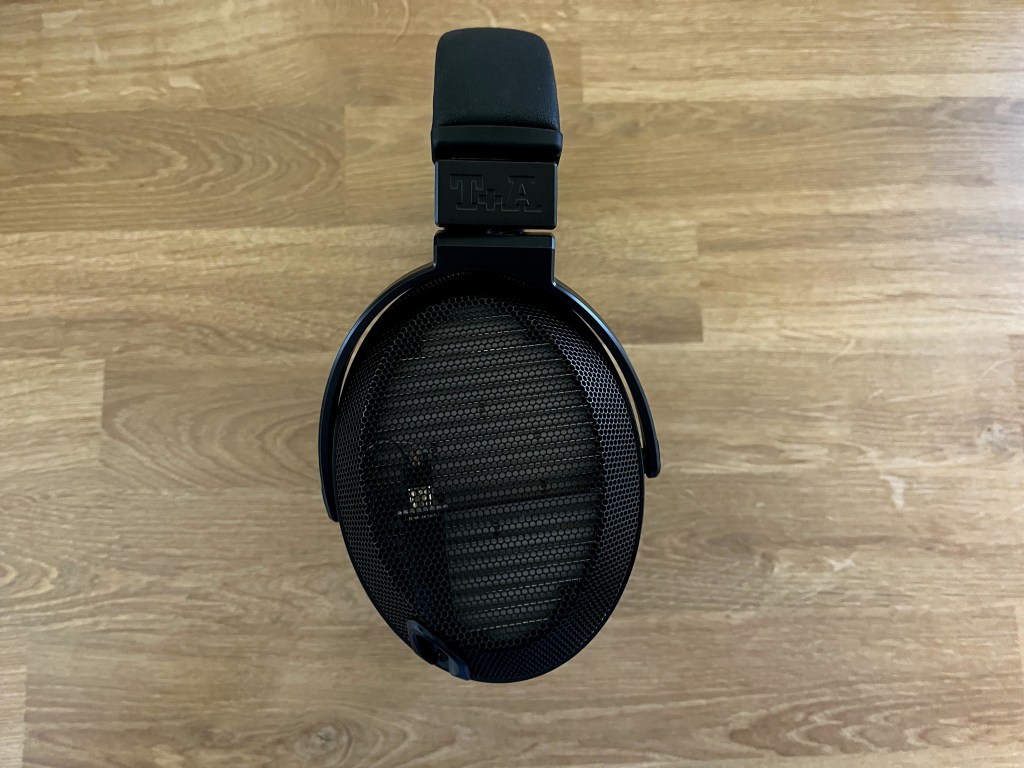
Build Quality and Comfort: The Solitaire P-SE feels very well built, well put together, and well engineered, with two caveats. The more extensive use of plastics throughout the headphone to reduce build complexity and costs to enable a lower end user price was always going to lead to a product that feels slightly less “premium.” It’s sadly unavoidable. With that said, the P-SE still feels like a high-end product, with great care and attention put into its build, and also its accessories and packaging. It just doesn’t feel as premium as the Solitaire P, which admittedly you would hope, given the vast difference in retail pricing.
The next caveat is the headband. During my ownership of the Solitaire P, and in my original review, I was quite happy with the headband design. However, over time, and now having spent a few months with the P-SE, I think T+A should consider a revision of the Solitaire line’s headband, or if they are working on a “V2” of the line, consider moving to a new solution. I’ve mostly found that the headband’s black part is not wide enough and eventually digs into the head over an hour or so, becoming somewhat uncomfortable. I found myself imagining the P-SE with a suspension-style headband, perhaps similar to Meze Audio’s on the Empyrean and Elite headphones (a class-leading headband), and how amazing a combination it would be with the Solitaire P-SE (and P) sound signature and build. The earcups and pads of the P-SE are very comfortable, and I have no issues with them whatsoever. It is simply the headband I have issues with, and I would love to see what the incredibly talented engineering and design team at T+A can come up with. The talent to do so is certainly there within their team; simply look at the rest of their product line as proof.
Comparisons
Abyss 1266 TC: Perhaps not a fair comparison, as the Solitaire P is the more natural competitor here, but there are some similarities to the 1266TC in terms of the low-end tactile nature and impact/slam. The P-SE excels in this area, and whilst not being as extremely physical as the 1266TC, it’s worth noting that there are some parallels being drawn. The 1266TC is more detailed and has a much wider soundstage, but the P-SE is slightly deeper and “3d” sounding.
Hifiman HE1000se: A very fair comparison given the similarity in pricing originally. The P-SE have a similarly flat response in the low end as would be expected, but have more punch and dynamics in comparison to the Hifimans. The HE1000se are slightly more microdetailed, with the P-SE having slightly more macrodetail. The HE1000se does the standard Hifiman signature – wide, open, and airy sound signature, whilst the P-SE sounds more concentrated, punchy, dynamic, and deep. The build quality on the P-SE is also higher, though the HE1000se’s headband is much more comfortable, albeit simple.
Meze Empyrean 1: This is not a very fair comparison, as there is now the Empyrean 2 on the market, but sadly, I have not heard them yet, so I am falling back to the V1 for comparison. The Empyreans, even in their V1 form, were class leaders in terms of build quality and comfort, so they do have the edge on the Solitaire P-SE here, especially the headband. However, the P-SE wins in terms of sonic and technical performance across the board, especially in terms of detail for the price.
T+A Solitaire P: This is the most natural comparison for the Solitaire P-SE, though you do have to keep in mind that the the Solitaire P costs almost double the price at MSRP. I have spoken about the comparison between these two quite a bit throughout the review, but the bottom line is that the Solitaire P is a more mature, detailed, headphone with slightly less upper treble energy and a smoother response overall. It features much more premium materials throughout its build, and feels the part of a flagship headphone. The P-SE however captures much of the magic of the P’s, retaining very similar low end punch and responsivness, a warm low mid range. The two headphones also share a very similar spatial presentation, with a concentrated, deep , and “3d” sonic image.
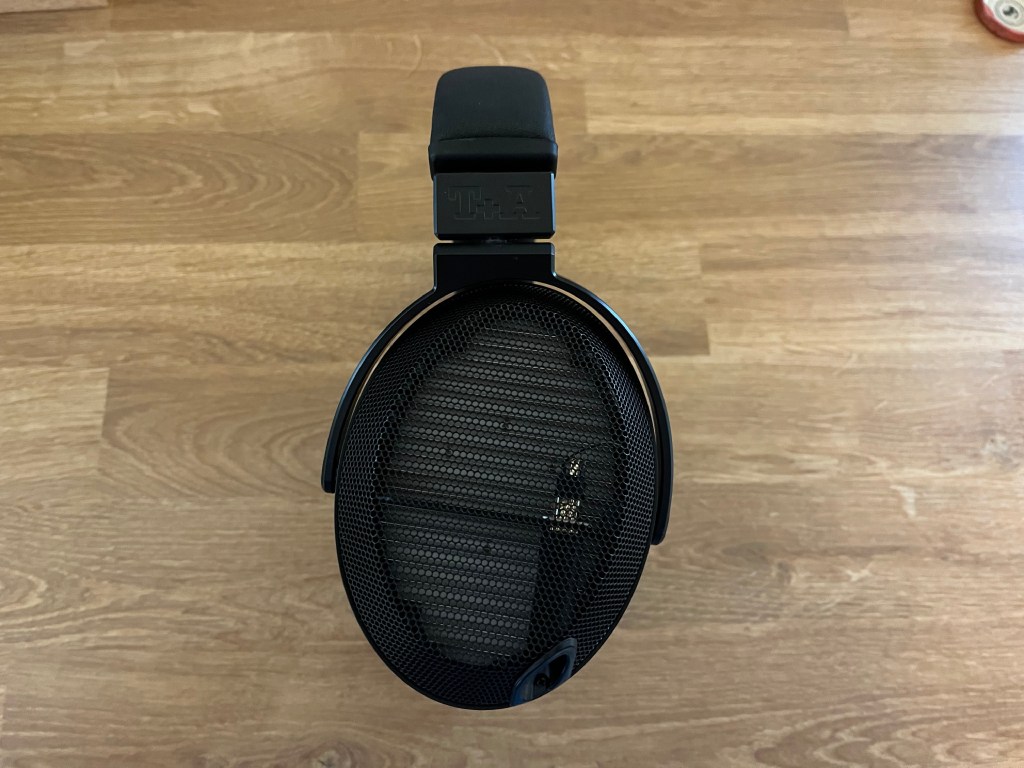
Conclusion: Overall, I have thoroughly enjoyed the last few months I have spent with the T+A Solitaire P-SE. Having owned the Solitaire P for a long period, it was super to get to know their younger sibling, and I was really impressed with how much T+A was able to distill into the much more affordable package that is the P-SE. The P-SE is a very concentrated-sounding and impactful headphone, slightly warm, with great depth to its soundstaging and a very “3d” sonic image. The build quality, whilst not as premium feeling as the Solitaire P, is still very well done, and in combination with the packing and overall presentation, feels very fitting with its MSRP pricing and in comparison to the rest of the market. Although I did find some areas of the treble a bit peaky at higher volumes, it was easily solved with a slight bit of tweaking via EQ, and I do think most people likely wouldn’t notice it or have any issues. The only real thing I can say I did have an issue with is the headband design, struggling with comfort during longer listening sessions. I really think that T+A could cook up a much better, more comfortable solution if they issued a revision to the Solitaire line, or perhaps if they are already working on a “V2” Solitaire line up it could be included in the new model (and to be clear, I have no knowledge if they are or are not doing such a thing in terms of a V2 Solitaire line up.)
The Solitaire P-SE are a seriously good pair of headphones, and a very complete overall package. They sound great, they are easy to drive, well built, and with a different headband solution, could be incredibly comfortable. Overall, well done T+A!

 Headphones n' Stuff
Leave a comment