
Introduction
Hi Guys,
Today we are taking a look at Chord Electronics flagship DAC, the Digital to Analogue veritas in extremis, or really, the DAVE. I have quite a bit of history with the DAVE, having owned it twice in the past. It is a long standing favourite in terms of high end DACs, especially within the head-fi community, and for good reason. Though there are rumours of a new ULTIMA series DAC being worked on by Rob Watts and Chord, the DAVE is, as of writing this review, still Chords current top model for D/A conversion. The technology used by Rob Watts and Chord for their DAC’s has been written about ad nauseam, so it’s not something I will go into in depth with this review. The long and short of it is Rob Watts has been slowly working on and improving his particular model for D/A conversion over the past few decades, utilizing an FPGA for custom coding and conversion algorithms, driving a pulse array system so achieve the actual conversion from digital signals to analogue. It’s a unique approach that eschews the more common DAC chips seen in many DAC’s, for something proprietary and only available to Chord. Of course, there are other companies doing their own version of D/A conversion not using off the shelf chips, the FPGA/Pulse array method simply being one of many different ways of doing so, and the one that Rob Watts and Chord Electronics feel is the best.
The DAVE is an older model of DAC nowadays, having been released back in 2015. I will only write about the DAVE itself in this review. However, it is commonly used in combination with Chord’s Mscaler, another Rob Watts designed product, which is a dedicated upsampled in a separate case. This mscaler increases the tap length filter count available to 1 million from the DAVEs stock 164.000 tap length filter, and offers higher sample rates and improved upscaling algorithms. Although I have not personally spent a lot of time with the MScaler, some feel it is mandatory and offers serious improvement, and some feel they get no positive benefit from it whatsoever. I want to focus on the DAVE as a stock component in this review, but do keep in mind that the Mscaler exists, and may offer higher performance in comparison to the bone stock DAVE.
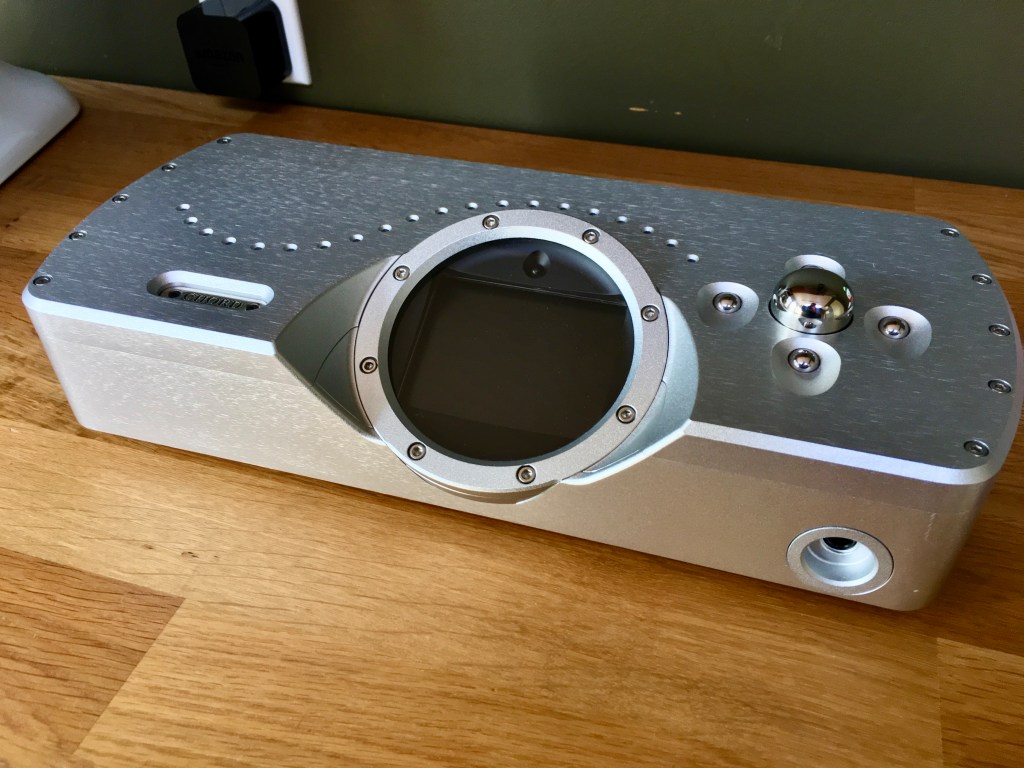
The DAVE has AES, USB, DUAL BNC (for use with the Mscaler) and dual optical inputs. It has RCA and XLR outputs, with a 1/4 headphone output on the front of the unit. Similar to the Hugo TT2 from Chord, the DAVE drives the headphone output (and preamp function) directly from the DAC output, vs the typical setup where the DAC output would convert to analog, and then a separate amplifier circuit would be used to amplify that signal for the headphone (or preamp) output. The reason Rob Watts designs his outputs in this fashion is in an effort to achieve the ultimate in transparency from headphone and DAC/Pre outputs. Cutting out the middle man (the amplifier circuit) in an effort to do so.
The DAVE features a HF filter which can be turned on or off, which reduces the highest frequency area (near 20khz) but I usually used the DAC with this feature turned off.
Bass
The bass of the DAVE in terms of level is what I would consider very neutral. I never found it to be elevated, or recessed. This is a theme across the entire frequency band of the DAVE. It is a very composed and deft sounding low end, though it slightly lacks in terms of low end impact and slam. There are other DACs whichh excel in this area over the DAVE, but they usually make concessions to do so in other areas where the DAVE excels, so it simply depends on what you are looking for an value in a DAC. The speed of the low end with the DAVE is impressive, and I never found it to get confused or smeared sounding with very fast passages or complicated bass lines. If you like a low end from your DAC which is elevated over neutral, I would recommend a different DAC, or if you prefer as much slam as possible from the DAC, there are also better options than the DAVE. However, if you want something neutral, especially if you value clarity, speed and control in the lows, the DAVE would be an incredibly good choice.
Mid Range
The midrange of the DAVE is very neutral. It is certainly not a warm DAC through the low midrange, and there is no perceived thickness or bloat through this area. The middle and upper mids are also very neutral, and I never found there to be any sharp peaks in the upper mids or nasal qualities in vocal performances. This strikes me as par for the course with the DAVE. It is an incredibly even keeled sounding DAC, and about as neutral as you can be in terms of source. If you happen to be looking for a thicker sounding, or warmer DAC in the low mids, the DAVE isn’t the best choice in my opinion, as there are other DACs that do those particular qualities better.
Treble
The treble performance of the DAVE is again, very neutral. I’ve never found it to be overly sharp, or recessed in any way. Very detailed and open sounding, the treble of the DAVE is one of its standout features. This is also an area that people note some improvements with the Mscaler, but again, this review is speaking purely about the DAVE as a standalone unit. The DAVE straddles the line between being clear, clean and precise with its treble presentation, and going too far, ending up sounding sharp and harsh. I really enjoy the DAVEs treble presentation, and think it is probably the biggest standout in terms of its tonal performance.

Technical Performance
The technical performance of the DAVE is incredibly well done. Although it doesn’t reach the absolute heights that something like the EMM labs DA2v2 does in terms of technical performance, it is incredibly detailed, with very solid dynamics and imaging across the entire frequency spectrum. Again, some feel the technical performance of the DAVE can be increased with the Mscaler, but this review is focusing sole on the DAVE. I do find that the one thing the DAVE is slightly shy on is sheer dynamic impact and slam, with something like the Rockna Wavedream outdoing the DAVE in this area. However, the DAVE excels in being more of an all rounder, doing very well in all areas rather than a standout in one particular one. It has seriously impressive detail levels overall, especially for what is now a ten year old product. The sound staging of the DAVE is also incredibly well done when listening with headphones, with pinpoint imaging performance and a somewhat rounded sounding soundstage.
Using the DAVE as a single all in one unit for headphones is also very much possible, given you are using headphones with a fairly high sensitivity rating. The “amp” which is really just the DACs output stage, puts out around 1.4 watts, and works well with moderately easy to drive headphones. For harder to drive headphones, let alone something like the Hifiman Susvara, I would seriously recommend considering purchasing a separate amplifier. Whatever you might lose in “ultimate” transparency, is made up for in terms of drive and ease of powering harder to drive headphones. I have used the DAVE extensively as an all in one, and also with an amplifier, and found my preference to almost always be the latter combination.
The build quality of the DAVE is absolutely excellent. Fully milled from aluminum, with the distinctive CHORAL (a chord product line) style shell, the DAVE feels very well built. Both units that I have owned were exactly the same, and never put a foot wrong. I have had no issues with them, and they both ran extremely well. It isn’t the biggest, a more ostentatious of audio products (though I suppose the looks are an acquired taste – I like them) but it is very well put together, and feels “well built.”
Conclusion
Overall, the CHORD DAVE is a heck of a DAC. Even a decade after its introduction, it remains a standout performer, and is still a mainstay in high end audio systems the world over. Although I don’t personally own a DAVE anymore, there is always an itch in the back of my mind, asking me to buy another. It is a standout performer in an overall sense. It is very neutral, even keeled, and doesn’t draw attention to itself in any one particular area. There is a very solid used market for the DAVE due to the fact there are many out there after a decade, and although still expensive, represents a solid value at the used pricing it is currently available at. The DAVE is one of the hifi pieces that I have owned over the years which stands out in my memory the most, and I miss owning it. I wouldn’t hesitate to recommend checking out the DAVE if you are looking for a neutral DAC with great technical performance, especially if you don’t mind buying used. Two thumbs up from me!
 Headphones n' Stuff
Leave a comment