Introduction
Hi Guys,
Today we are taking a look at the fairly recently released DAC/Amp combo unit from iFi, the Neo iDSD 2. I reviewed the first Neo iDSD a couple of years ago, so I was looking forward to hearing how the second incarnation had changed and how it stacked up compared to its predecessor. For the rest of this review, I’ll refer to the unit as the Neo 2.
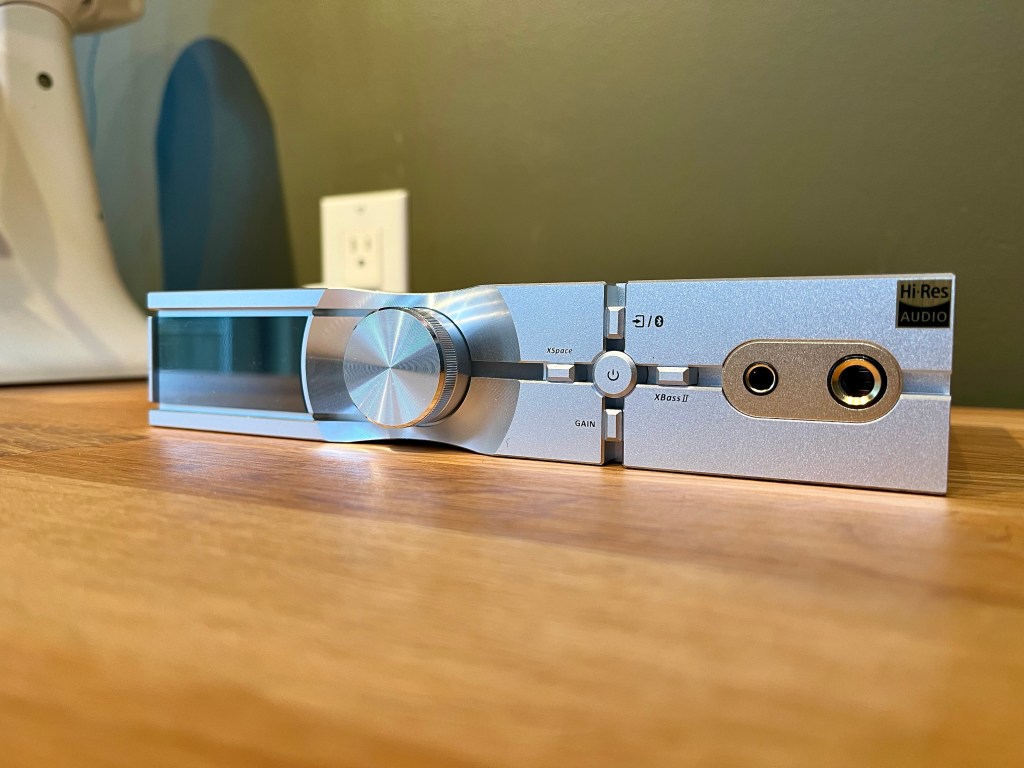
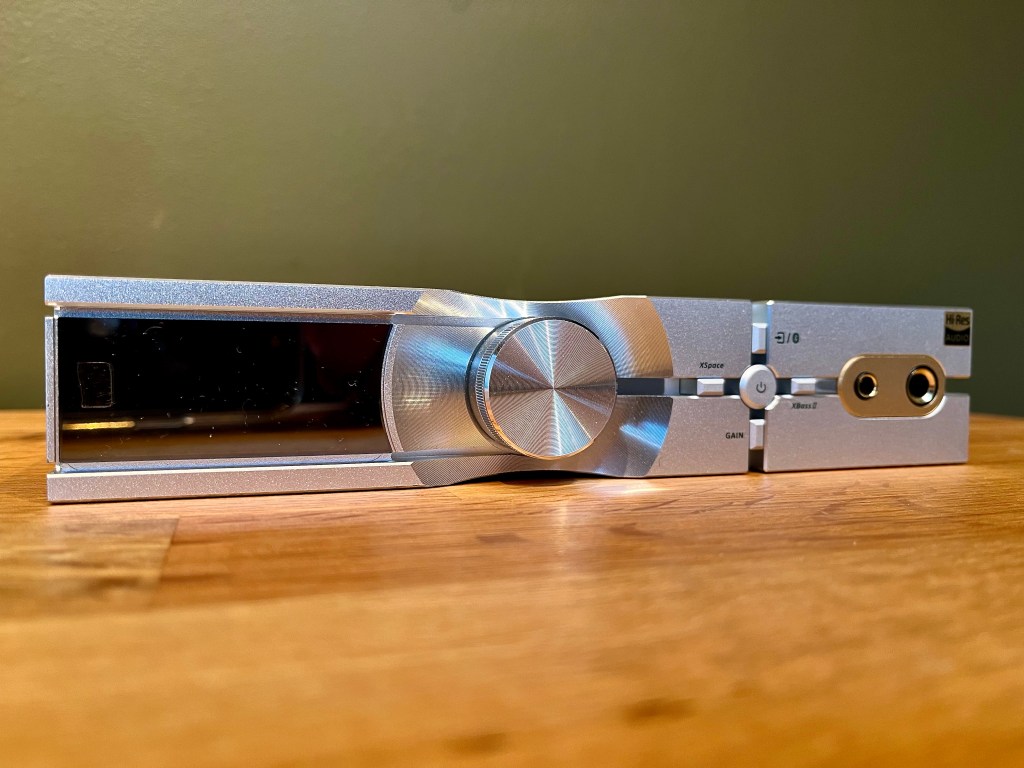
The Neo 2 has some big changes in comparison to the Neo 1, but in terms of looks, it is fairly similar. It can be used either horizontally or vertically, which is handy for tight spaces on desks, and has an upgraded display compared to the original model. The most notable feature change for the Neo 2 is a vastly more robust headphone amplifier section. I think this amplifier section must be very closely related to the amplifier section in the iDSD Diablo 2, with very similar output power and sonics. iFi lists the output power in a similar fashion to their other products in terms of peak output, and RMS output, and from the balanced output (4.4mm) you are looking at 5551mw at 32ohms peak and 2,832mw at 32ohms RMS. The Neo 2 also features aptX lossless Bluetooth, as well as iFi Xbass and 3D sound features, though these are now called XSpace and Xbass 2 on this unit. On the rear of the unit, you have RCA outputs and full-size XLR outputs. In terms of inputs, there is a 3.5mm analog input for using only the amplifier section, a SPDIF optical input, a SPDIF coaxial input, a USB input, a BNC clock sync input, and a DC 9V power input. On the front of the unit, there are a few more buttons than the Neo 1, allowing you to toggle gain, Xbass 2, XSpace, and Bluetooth features. There are also the 4.4mm headphones output and the 6.35mm headphone output.

I’ve done a ton of testing with this unit both as a headphone amplifier, as a DAC and as a DAC/Amp combo unit. I will do three sections following addressing the performance in each area.
DAC
As a DAC only, the Neo IDSD is a very capable unit. Although you don’t have the tube section and all of the extra features of the Pro iDSD, the Neo 2 does nicely improve on other iFi units like the ZenDAC. As a DAC only, the Neo 2 does sound very slightly warm in the low mid-range, with good clarity across the entire frequency response. The treble has a small amount of sparkle to it, but I wouldn’t describe it as bright or possessing spikes that can be grating over time. One thing that is nice about the Neo 2 as a DAC is it can also be used as a preamp with variable volume control. This allows slightly more freedom with the use case of the unit and can be used as a DAC/Pre into a standalone power amplifier if needed. Overall detail levels as a pure DAC are totally within what should be expected from a unit of this price point, and perhaps slightly beyond. In terms of overall performance as a DAC compared to the Neo 1, the Neo 2 is very similar. With that being said, I do still feel that the Neo series does make a better case for its use as a DAC/Amp combo unit, and this particularly applies to the Neo 2 given the improved head amp section with this incarnation. The DAC section of the Neo 2 features the standard filter options that most iFi DACs have – Standard, Bit Perfect, Minimum, and GTO. I prefer the GTO filter, which is short for Gibbs Transient-Optimised. Since I first heard this filter on the original Pro iDSD, it has been my favourite option of the iFi filter types. It seems to have the best balance between all the options and helps keep a clear incisive leading edge of all the notes, which helps things sound a bit cleaner and more detailed. I would recommend trying all the various filters, however, and going with the one that you feel works best for your ears.
Amp
As an amp only, the Neo 2 is incredibly similar to the iDSD Diablo 2, which I reviewed recently. Although I wasn’t a huge fan of that unit in an overall sense, it didn’t really have anything to do with the overall sonic performance of the Diablo 2, and due to that, I’m very happy to see the Neo 2 utilizing what I am guessing is a very similar headamp section. It is much more powerful than the Neo 1. With the Diablo 2 in combination with the LCD-5, due to its uncharacteristically low impedance (14 ohms), I ran into the current protection of the Diablo 2 from the 4.4mm output. This never happened with the Neo 2 on the 4.4mm output, and I think this might have to do with the fact it is running from a 9v wallwart, vs a 5v wallwart/battery in the Diablo 2. The Neo 2 headamp section has a very neutral presentation verging on bright in the treble. It is very solid in terms of impact, drive, and detail levels. I definitely felt the amplifier section was slightly more detailed than the Neo 1’s headamp section. Another thing to mention is the variable gain levels. You can use iFi’s ieMatch (-12dB) with sensitive IEMs, and then there are regular gain levels of 0dB, 9dB, and 16dB. On the Neo 2, these settings are called Normal, Turbo, and Nitro. As with the Diablo 2 review, I am hoping iFi standardizes their gain naming conventions, perhaps returning to normal, high, and turbo. “Nitro” which used to be called Turbo, on the Diablo 2 is 18dB, but on the Neo 2, it’s 16 dB, so it can all get a bit confusing. The Neo 2’s headamp section will comfortably drive most headphones on the market, though if you want to push the volume high with something like the HE6, or Susvara, you might start running into its limits. Those are pretty unusual use-case scenarios for the Neo 2 however, and with pretty much all other headphones you will be totally fine in terms of power and gain. the Neo 2’s amplifier section is very solid in performance, and I could certainly see someone using it as their only source for headphones, especially if their desk space is limited.
DAC/Amp
In my opinion, this is the use case where the Neo 2 really shines. The very neutral, almost bright amplifier section combines with the slightly warm DAC section and ends up with a very pleasing balanced frequency response. There is a small amount of sparkle in the treble, and a little bit of warmth in the low end. It’s a very easy-going sound signature, and it is incredibly easy to enjoy. I never found myself thinking it was overly analytical or boring, as some setups can be. The detail levels and technical performance are totally in line with a product of this price point, but the unit also has all of the typical features iFi products have, which helps make them real Swiss army knives in terms of usability. When you combine this with the much more powerful headamp section of the Neo 2 vs the Neo 1, there really isn’t much this unit can’t do, and it sounds good doing it!
Build Quality
The build quality of the Neo 2 is pretty much exactly the same as the Neo 1. A metal shell that feels well put together. I had zero problems over my time with the unit, and it doesn’t feel flimsy or like it will break at any moment. I really do like the ability to use it either lying horizontally or vertically, and I think that vertical use will be especially helpful for those who have limited desktop real estate available.
Settings/Bluetooth
I am very much a fan of wired use of DACs and Amps, but the Neo 2 does have aptX Lossless Bluetooth. I did give this a try for a week and I thought it worked well. I didn’t have any problems with pairing my devices, which was all fairly self-explanatory after the first time you do it. The sound quality was also really good for Bluetooth, though I do still think I heard some difference between a wired connection and the Bluetooth option. Perhaps that was in my head however, I’m certainly open to that being true. I think for most people, this will be a personal preference, and for some, the lack of cables and clutter will outweigh any possible difference in sonic quality. It is certainly worth trying out, and seeing what you think of the feature. The XBass 2 feature has a couple different settings to try. There is Xbass, which is just a bass boost, great for those who enjoy a more than neutral bass response. There is Xbass Presence, which increases the upper midrange. It helps add more smack to snare drums, brings out vocals, but can also be too much and make things a bit shouty. This isn’t a feature I particularly enjoy, but I know some people will absolutely love it, I would recommend trying it out and seeing what you think. Then there is Xbass + Presence, which enables both settings. There is also iFi’s 3D setting, which is called XSpace on the Neo2. This is a form of crossfeed, which can help with hard-panned recordings and old mono recordings. I’m not a fan of it on more modern recordings, as I feel it does the opposite of expanding the sound, but I know that some people really enjoy this take on crossfeed, so again, I’d recommend trying it out and seeing what you personally think.

Conclusion
Now, in my iDSD Diablo 2 review, I wasn’t very complimentary and wasn’t a huge fan of the unit. The Neo 2 is a much better piece of equipment in my opinion. It wasn’t that the sonic performance of the Diablo 2 was poor, and I mentioned that in that review. I felt it cost too much at MSRP and did not offer a real tangible improvement over its predecessor. Thankfully, with the Neo 2, none of those concerns are present. The Neo 2 is retailing at $899USD, which whilst not cheap, is less of a jump than the Diablo 2 at its new $1399MSRP. I’d have loved to see the Neo 2 priced at $799USD, but $899 is ok. The Neo 2 also offers refinements in terms of the features offered, the DAC performance being similar but slightly better than the Neo 1. Most importantly the headphone amplifier section of the Neo 2 is a massive improvement over the Neo 1, and that alone justifies its creation as a new product. If you are a user who simply wants a small, transportable, well-built, somewhat more affordable, desktop DAC/Amp unit for headphones, the Neo 2 is incredibly compelling. If you combine that with the fact it can be used as a DAC/Preamp into a pair of powered desktop monitors, it really makes a case for its use as an all-in-one sound center for a desktop setup that doesn’t break the bank (too badly at least.) Overall, I think the Neo 2 is a good addition to iFi’s product range. Apart from the gain naming scheme, there isn’t much I didn’t like about the Neo 2. I hope iFi continues with this sort of improvements to their lineup, and that the Diablo 2 was a blip on the radar because pieces of gear like the Neo 2 are where iFi shines brightest, in my humble opinion. Good stuff iFi!

 Headphones n' Stuff
Leave a comment