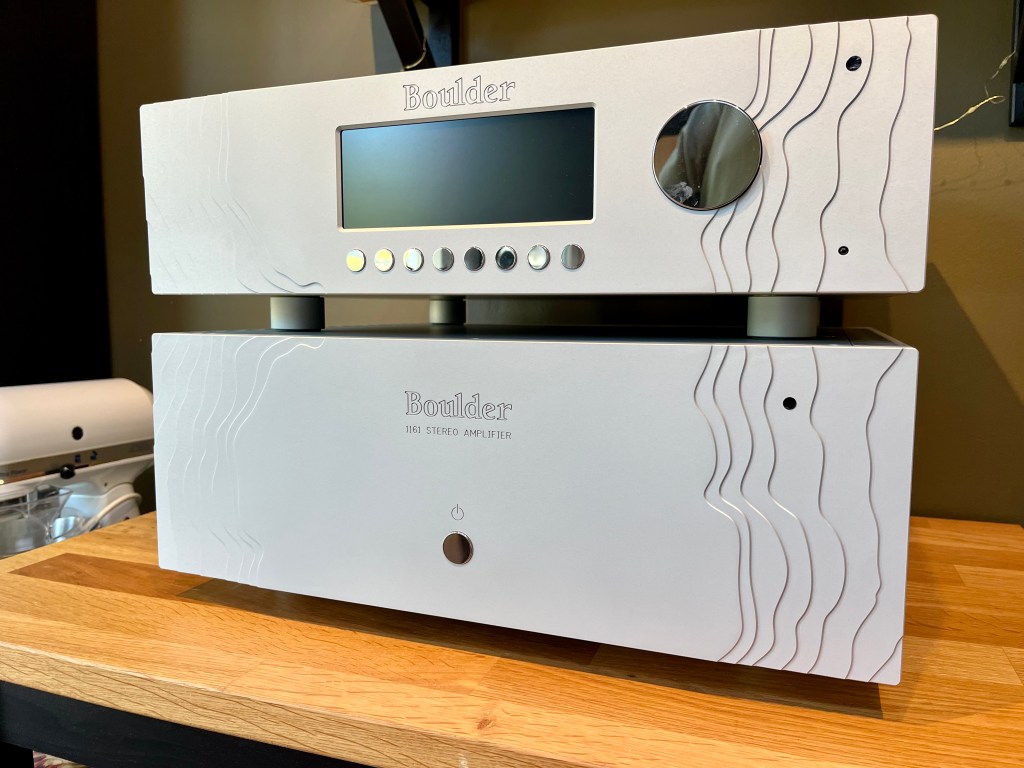
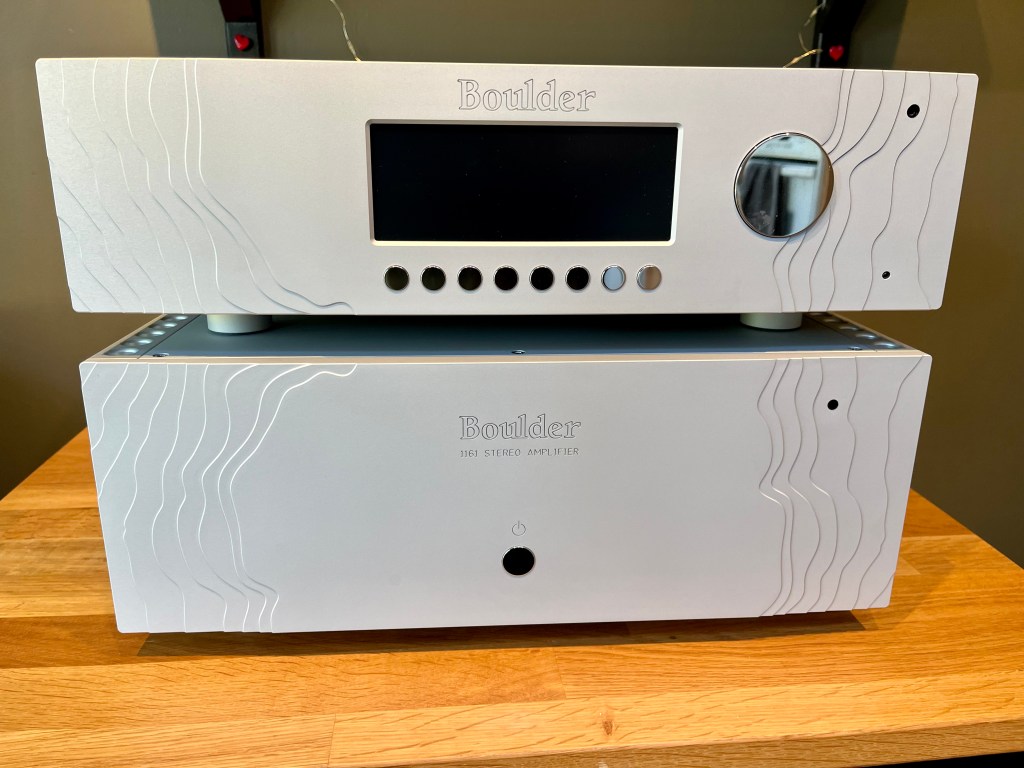
Hi Guys, today we are taking a look at not one, but two pieces of equipment from Colorado’s Boulder Amplifiers. I will copy the little blurb about Boulder Amplifiers themselves from my 866 below, as that hasn’t changed in the time between these reviews.
“Boulder Amplifiers is a company that was originally based in Boulder Colorado, hence their name. However, nowadays they are based in their new manufacturing facilities in Louisville Colorado. Boulder has a long history dating back to the mid-1980s and got its start manufacturing equipment for studio use. They slowly expanded into audiophile equipment and haven’t looked back since. The name Boulder seems to have become synonymous with very high quality, and yes, expensive, audio equipment. They build everything in-house from what I understand and have 5 different current product lines. The 500 series, 800 series, 1000 series, 2000 series, and 3000 series. I would highly recommend going to their website (www.boulderamp.com) to peruse their offerings, from a tiny phono stage to absolutely massive monoblocks that require a dedicated power line (the 3050’s.) “
I have previously owned and reviewed their 800 series integrated amplifiers, the 866. Today’s pieces which I am writing about are actually from the series above the 800 series, the 1000 series. The 1000 series features four pieces of gear currently, the 1110 preamp, the 1108 Phono preamp, the 1161 amplifier, and the larger 1160 amplifier. The differences between the 1161 and 1160 amplifiers are purely size, weight, and output power. As far as I understand the sonics are supposed to be the same, but I have not heard an 1160 directly to compare. I was really curious how the separate components from the line above the 800 series would sound in comparison to the integrated 866 which I owned and really enjoyed for a couple of years. Is the 1000 series better? Yes, unquestionably in my experience. There are tons of similarities between the two in terms of sonics but also some key differences that I will do my best to detail as we go on from here.
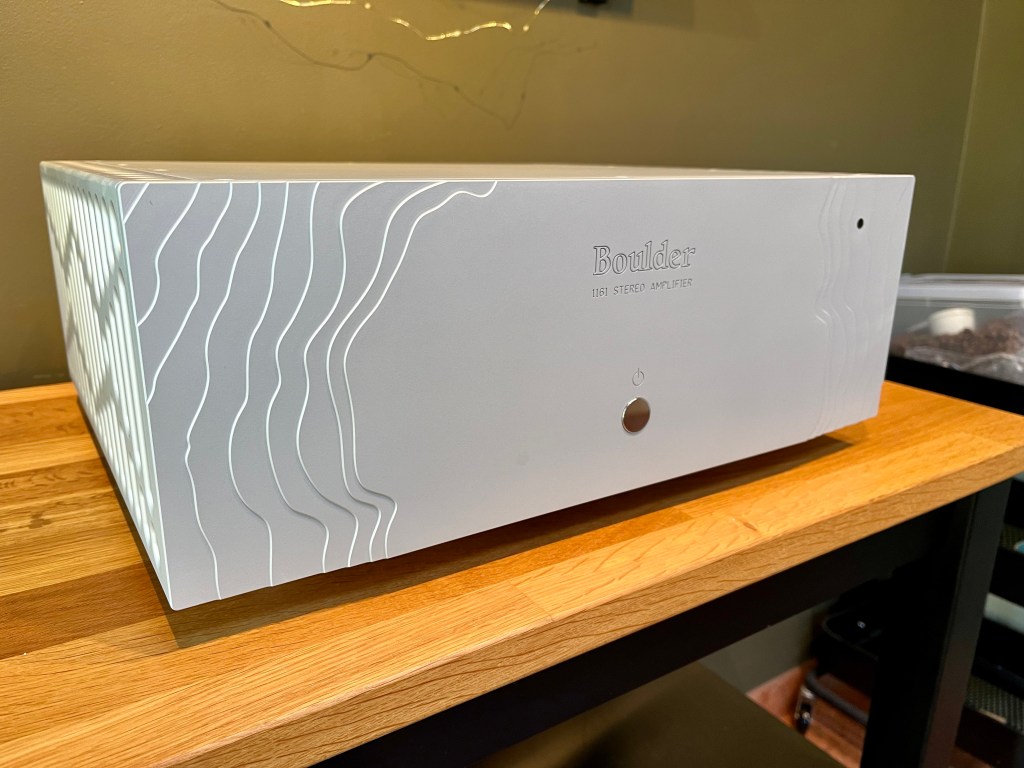
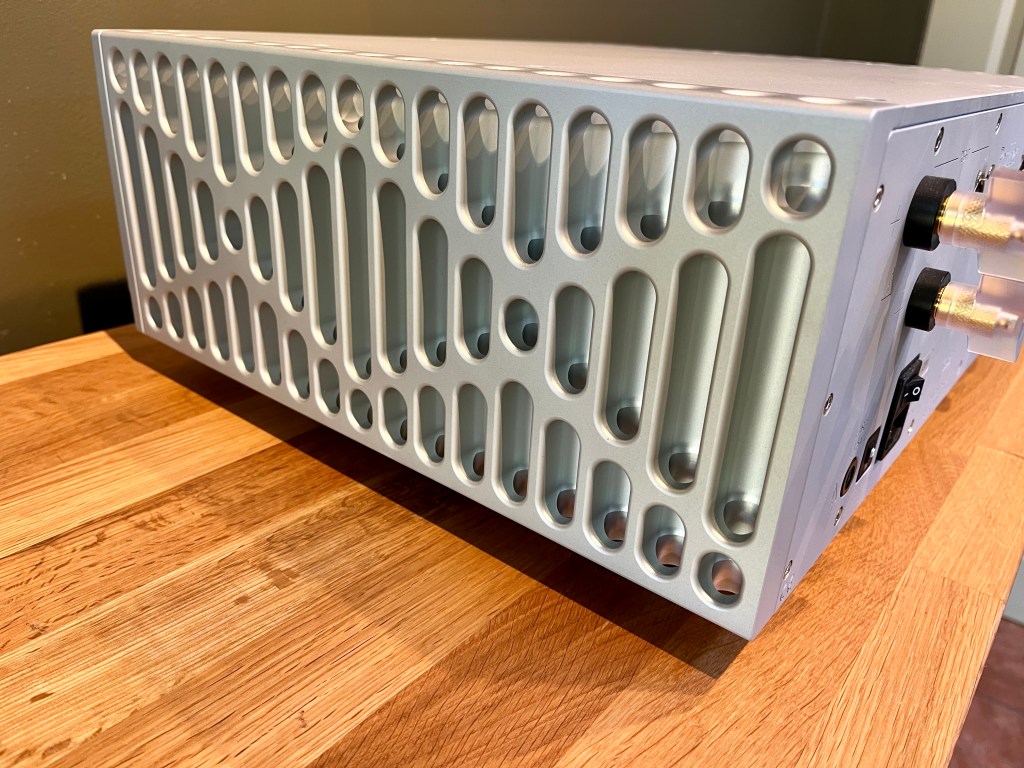
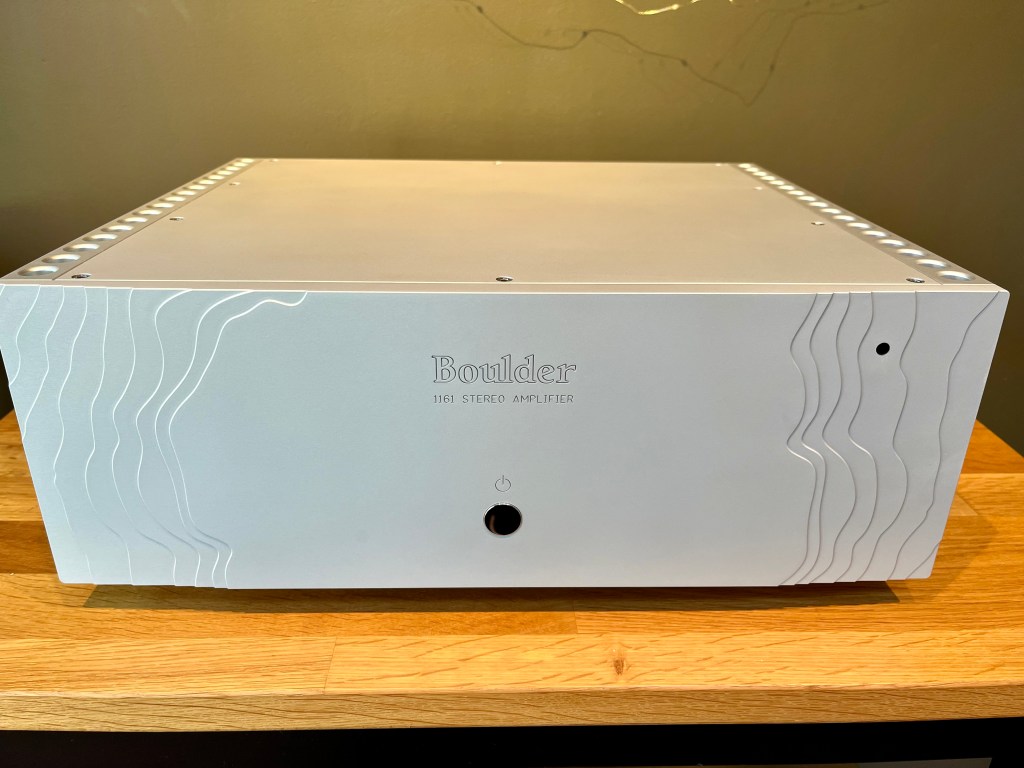
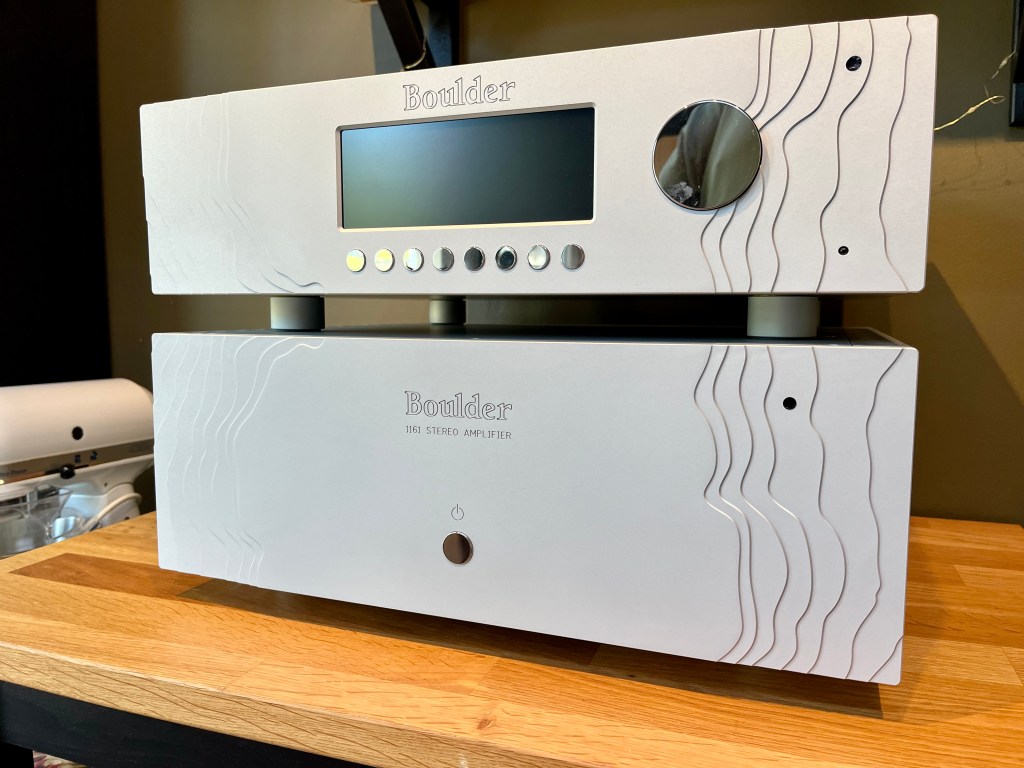
The 1110 and 1161 arrived together in two separate cardboard boxes (each piece was double-boxed also.) Thankfully, due to their smaller size compared to the larger 1160 amplifier which weighs 135lbs unboxed, the 1110 and 1161 don’t need wooden crates for shipping. This simplifies things a bit and also reduces costs in terms of shipping. One key thing it also means is that for moving the equipment, it can be done by a single person. I reckon I would need a second pair of hands to move the 1160, and it would make things a bit more complicated if ever needing to move the amp for cable swaps, etc…The build quality and look of the 1110&1161 are very similar, and exemplary. They are both incredibly solid and well-built feeling. The lines on the front plate of both the preamp and the amp are actually a section of topography of Flagstaff mountain in Colorado, a nice nod to the company’s origins. The heat sink pattern on the amplifier is much more similar to the 2000 series and 3000 series than its 800 series siblings. The preamp does have the pattern on the side, but no actual heatsinks, I suppose as it doesn’t get very warm at all due to being a preamp vs an amplifier. The amplifier never gets hot (at least in my experience) and tends to settle around “warm to the touch” when under use.
The 1110 has 5 inputs, two main outputs, and a set of auxiliary outputs. It comes with a solid aluminum block remote control which is very hefty and easy to use. The volume control on the preamp itself is digitally controlled but analog-based, using a limitless spinning chrome “knob” (disk, really.) You have to be careful with this as it does spin very easily and you could end up with more volume than you expected very quickly. After a few uses, you get used to it and it is easily controlled. You can also set volume limits in the settings of the 1110 if you want to be extra careful about going too high in terms of volume. I think for most users, the remote control will be used vs the actual front panel of the preamp, and this will be a nonissue, but I thought it would be best to mention it, just in case.
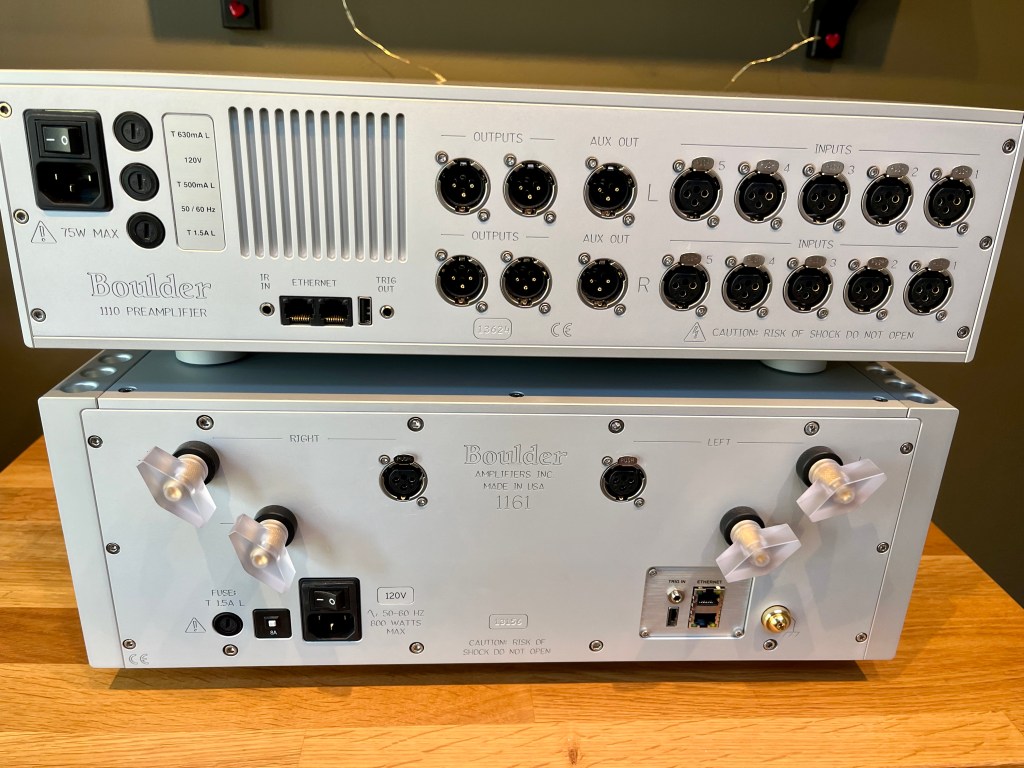
The 1161 is a bit simpler in terms of inputs and outputs. It has one pair of XLR inputs and a pair of both left and right speaker terminals. Basically, everything you need, and nothing you don’t. You can easily use a pair of RCA to XLR adapters if you would like to use a single-ended preamp with the 1161, perhaps something tube-based or similar. On the front, there is a simple on/off button, and that is it. I personally really like how simple and classy the front panel looks, but I understand looks are subjective.

Now that we have covered the basics of the units, let’s talk about the most important part, the sonic performance. In all my testing, I found that the overall tonal balance and technical performance were incredibly similar between the two units, so I will describe them both in this section. If there are specifics about an individual unit, I will do my best to mention them.
In terms of tonal balance, the 1110/1161 are incredibly similar to the 866. I would describe them as being dead on neutral. However, as I mentioned in my 866 review, I mean truly neutral. I think that when a piece of gear is described as being neutral it can conjure up thoughts of being bright or cold, which the Boulders most certainly are not. I simply mean that there is no bass bloat, no overbearing highs, or overly warm mids. There is no real impact in terms of adding musicality or harmonic richness. If those are qualities you prefer, I would recommend going for a different preamp and amplifier combo.
The bass of 1110/1161 is incredibly fast, and even more hard-hitting than their 866 sibling. It has a combination of deftness and and speed that I have not personally heard before, from any equipment. Again, in terms of bass level, it is not bass light nor boomy and bloated, simply neutral, quick, precise, and hits like a Mack truck. The midrange of the 1110/1161 is very similar to the bass in terms of speed and neutrality. As mentioned previously, there is no real character in terms of added warmth or harmonic richness that you might get with some equipment. The mids are simply presented as they are, with the overall technical performance, detail, and speed that the 1110/1161 have in an overall sense. One thing I would really like to try out in the future would be a more “romantic” and warm tube preamplifier in combination with the 1161 amplifier, as I think that could also be a very interesting combination for a different flavour of sound. However, I think that as a solid-state reference pairing goes, the mids of the 1110/1161 are pretty much exactly how you would want them to be. The treble of the 1110/1161 is massively extended, and has great air in the upper treble, but is also not overblown or bright in any way. It walks the very fine line between a darker and slightly blunted tonality, and being too much, coming across as bright and grating. This lends itself to an overall extremely detailed treble region, which also helps transients come across as being quick and precise.
Now that we have talked about the overall tonal balance, I’ll try to detail the areas where there are some differences between the 1110/1161 and the 866 integrated. As mentioned previously, the overall tonal balance is incredibly similar. The differences come from the technical performance and whilst being positive improvements, do require a bit more consideration. The 1110/1161 are bigger and slightly grander sounding than the 866. The bass in particular is quicker and hits harder. The overall detail levels are increased compared to the 866. In particular, the sense of transparency is increased with the 1110/1161 combo. What I found is that for poorer recordings, or when using brighter headphones or speakers, you can notice those attributes more. In this sense, I found the 866 slightly more easygoing, and more user-friendly. I think that if you are considering moving to the 1000 series or above, these are probably going to be positive attributes that help you gain more insight into your music. However, if you just want a much more affordable option, that is going to sound good with everything and require less consideration about the rest of your system, the 866 integrated remains an incredibly compelling option. The 1110/1161 are without a doubt the most competent, detailed, transparent, and neutral equipment I have personally had the pleasure of using.
The 1161’s power rating is as follows
- CONTINUOUS POWER; 8, 4, 2 OHMS -150w
- PEAK POWER, 8 OHMS – 200W
- PEAK POWER, 4 OHMS – 350W
- PEAK POWER, 2 OHMS – 450W
I think that for most speakers this will be okay, but if you do have harder-to-drive speakers, the big brother, the 1160, doubles the amount of power available. The only considerations there would be increased cost, size, and weight. Although I have not heard the 1160 directly, I am led to believe the sonics are incredibly similar, the only difference being the amount of power available for harder-to-drive speakers.
I have used the 1110/1161 to drive a few different sets of speakers and headphones (read the note below regarding headphone usage) and the pair remained the same across all transducers I used them with. Incredibly competent and unfazed by whatever load I presented them with.
In terms of using headphones with the 1110/1161, please do take into account that this is primarily a speaker amplifier and as such does have more power and gain available than the average headphone amplifier. This is great for some of the hard-to-drive headphones on the market these days. You will need a spade to female 4pin XLR adapter, and careful use of the volume control until you get things figured out in terms of levels. With all those caveats being mentioned, with headphones like the Hifiman Susvara, the Abyss 1266TC, or similar, I haven’t heard them sound better. I am really curious how the new ModHouse Tungstens would sound, as I reckon they are probably the hardest-to-drive planar magnetic headphones available currently. You can certainly also use easier-to-drive headphones with the 1110/1160 but if they are incredibly sensitive, you may run into some low-level hiss due to the higher gain vs a traditional headphone amp. Still, I would recommend giving it a try if you are a headphone user, but again, do just be careful especially initially with the volume control.
Overall, my time with the 1110/1161 has been superb. The 866 integrated from Boulder was at the time the best amplification I had the pleasure of using and remains an incredibly compelling and excellent integrated solution. If the 1000 series is within your budget range, and you value neutrality, speed, and detail, I can’t think of anything I would recommend higher that I have personally heard. The 1161 does have enough power for most amplification uses, but if you happen to have a particularly hard-to-drive pair of speakers, there is always the 1160 as an option if need be. The 1110/1161 are both incredibly well built and look terrific (and I even usually prefer black gear!) Overall, I can’t recommend the 1110/1161 combination, and Boulder Amplifiers itself as a brand highly enough. Very well done Boulder!

 Headphones n' Stuff
Leave a comment