Hi Guys,
Please see bottom of review for 2025 update – Warranty, repairs.
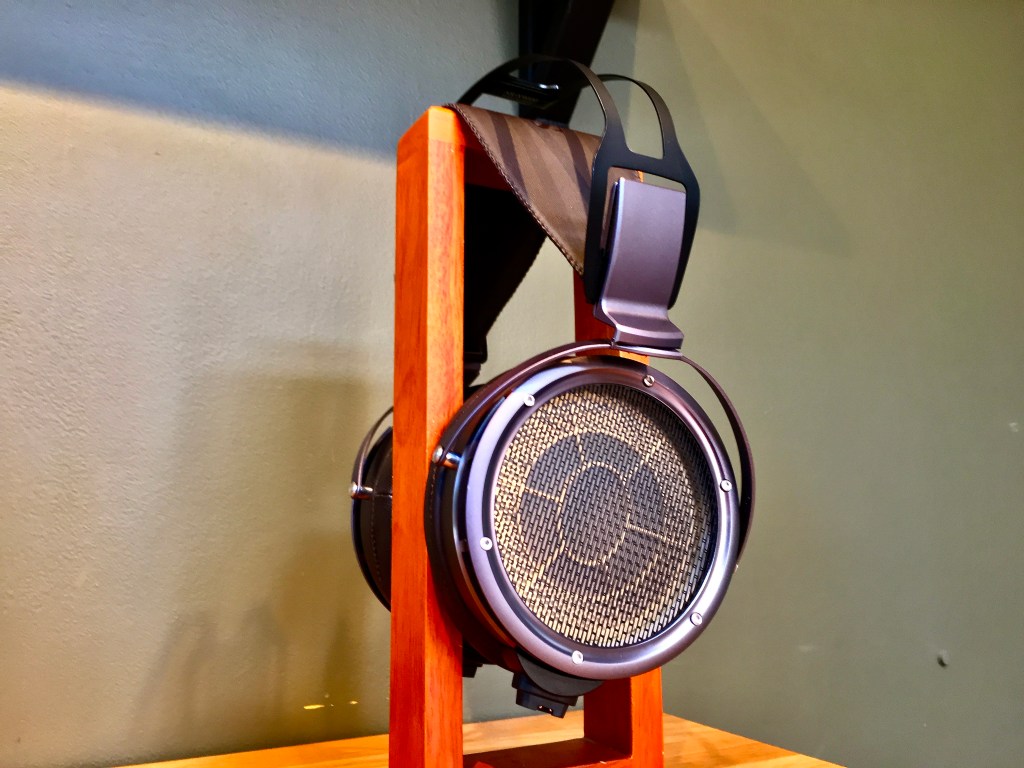
Today we are talking about Stax Headphones new flagship model, the SR-X9000. For the rest of this review, I’ll just refer to it as the X9000.
The X9000 is the very long anticipated replacement for the SR009 and SR009S, the previous flagships from Stax. With such a long history and such a dedicated cult following, a new flagship from Stax is a big deal, at least in terms of the headphone hobby. I remember people speculating what would be next ,even back in 2014/2015, and now today, in 2022 we have the X9000. The X9000 was released back in September of 2021, but I think Stax has been a bit overwhelmed with orders, and is struggling to fulfill the demand from the community. Wait times as of right now are very long, and there are still people who ordered back in October/November 2021 (currently July 2022) waiting for their headphones to arrive. With that being said, there does seem to have been a few more shipments arriving lately, so if you are reading this and still waiting for your pair, I hope you will have them soon.
The X9000 builds upon the “omega” legacy, which started with the original SR-Omega, back in 1993. Then there was the SR007, the SR007mk2, the SR009, and the SR009S. I have not heard the original Omega from 1993, which does have a cult following of its own, but I have heard all the others. The X9000, to me, is not really an upgrade of any one particular Stax Flagship, nor is it a mix of SR007 and SR009. It is sort of doing its own thing. I have done a lot of comparative listening, and the X9000 is absolutely my favourite Stax headphone I have heard thus far, minus one caveat I will mention a bit later.

The bass of the X9000 has been surprising. Not so much in its overall level, though it does have more bass than the SR009. It has a bit less in terms of quantity than the SR007, with the Sr007 sounding fuller and warmer, with a bit more mid bass. The X9000 has the best quality of bass I have heard from Stax. It’s very fast, with more impact than is usually associated with something like the SR009. Admittedly, it does not have the impact or slam that the Abyss 1266TC has, but not much does to be honest. In terms of level, I could certainly enjoy the X9000 in its stock tuning, but did find a +3db low shelve brought it more in line with my personal preferences. I never found myself wanting more from the low end performance of the X9000, and its sub bass was also quite impressive for an electrostatic design.
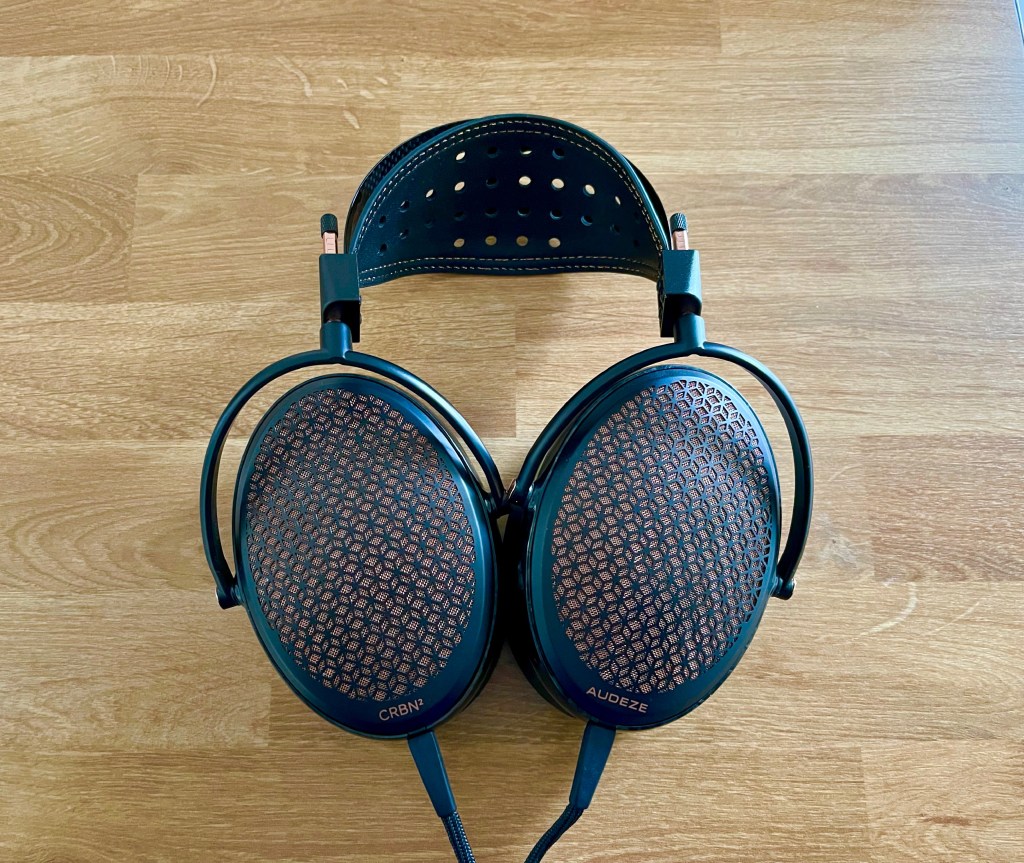
With regards to the X9000’s midrange, Stax seems to have err’d on the side of slight warmth, and a forgiving nature in the low mids, much less so than the SR007, but more so than the SR009. Now, this brings me to the caveat I mentioned earlier. In the first couple days of listening with the X9000, there was something that just wasn’t sitting right with my ears, and was annoying me at anything above a medium listening level. It was the peak at 3khz. I just couldn’t get on with it, and ended up lowering it by 3.5db via EQ, and the X9000 went from being frustrating to listen to (because I could tell it was a very accomplished headphone) to being one of the best I have heard, period. Now, to make a quick comparison, the Audeze CRBN has an even bigger peak at 3khz, and I found I was not able to rectify them with EQ to be in line with my preferences. There are a lot of people out there who enjoy the stock tuning of Audeze’s CRBN, so you may hear the X9000 and be totally ok with its peak at 3khz. Perhaps I am just sensitive to this area, and you may not be.
The treble of the X9000 is not dark, nor is it bright. It seems to me to be leaning towards a relaxed presentation, neutral-ish, but leaning towards dark rather than bright. Given peoples issues with the somewhat bright treble of the SR009, this tuning decision makes sense. I wouldn’t say the X9000 itself is actually a very laid back headphone, its still relatively forward sounding, and it doesn’t strike me that it is masking detail by being overly dark. The treble and leading edges or notes are fairly incisive sounding and I never founding myself wincing at cymbals hits or shrill vocals when listening at spirited volumes.
Now, for me personally, what made the X9000 really standout was its technical performance. I have seen some impressions that felt it didn’t really improve over the SR009 in this area, and I have to be honest, I feel completely the opposite. I have listened extensively back to back with the SR009, and the X9000 really has taken a big step forward. Pretty much every single metric has been improved over the previous flagship. The sonic image is much bigger, and the soundstage is wider. The overall detail levels are again improved in comparison to the SR009. Imaging is also improved over the SR009, which is surprising as I always felt that was one of the SR009’s strong points. I have a suspicion the ear pad design of the X9000 may be contributing to the overall larger sonic picture, as well as the larger driver. Stax really does seem to have managed to improve the drivers performance compared to their previous flagship models, so in that sense, the ten year wait between the SR009 and X9000 was worth it.
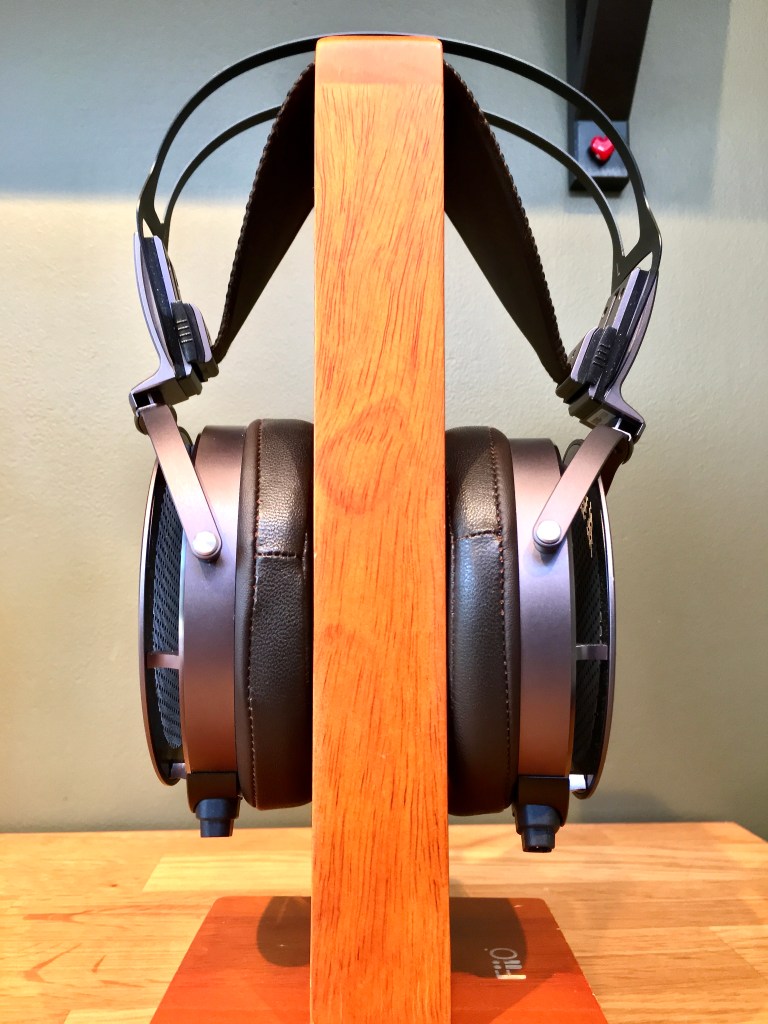
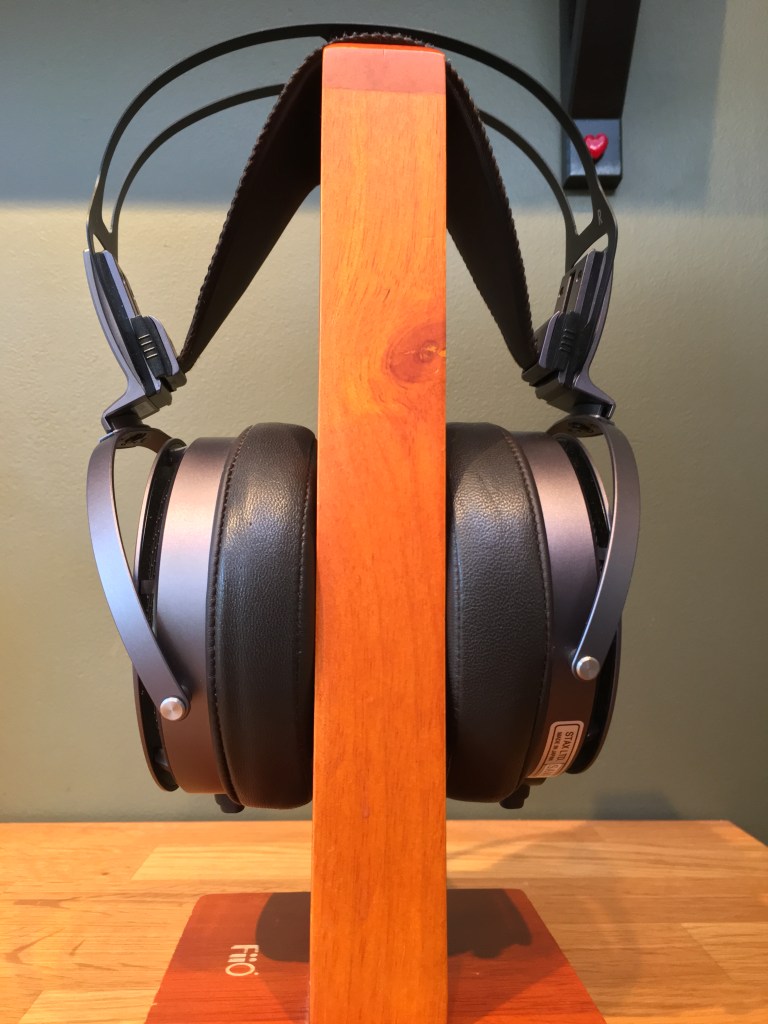
In terms of build quality, the materials used, and overall feel, the X9000 is on par with the best I have come across. It is a lightweight and extremely comfortable headphone, and also feels more premium than the other Stax headphones. The leather of the ear pads feels very nice and “high quality.” This is one area I felt Stax could improve upon previously, and I have to admit that for the MSRP, the X9000 certainly feel as if they are made to that standard. In comparison, something like the Hifiman Shangri-La lacks in this area, but the X9000 has really delivered on its promises of being a high end flagship in terms of build quality. The X9000 also comes in a nicely done pawlonia wood box, and the overall package feels well put together, and again, of a “premium” nature.
One comparison that makes a lot of sense is to compare the X9000 to the Hifiman Shangri-La Sr. Both are flagship electrostatic models, though as I mentioned previously the build of the X9000 is certainly superior between the two. However, sonically speaking, its a much closer battle. The X9000 has a similar “large” sonic image to the Shangri-La, with the Shangri-La having a taller soundstage,but the width between the two being similar. The overall detail levels are very similar but I would give the edge to the Shangri-La by about 5’ish %. The Shangri-la is a slightly brighter, and also more forward sounding overall, with a sharper leading edge to notes. There is a sense of delicacy and air that the Shangri-La has that the X9000 doesn’t. With that being said, the X9000’s tonal balance works very well for some music, more so than the Shangri-La. If you are concerned with budget, the X9000 is the obvious choice ($6200MSRP vs $18,0000MSRP) because it comes incredibly close to the SR in over technical performance whilst also performing better with some forms of music.
In comparison to the Abyss 1266TC, these are actually two very complimentary headphones. The Abyss has this raw energy, slam, visceral quality that I have still yet to hear a headphone match. It is also a very detailed headphone with a highly capable technical performance, though I do think the X9000 may slightly beat it on the detail front, but the difference is incredibly small. I could honestly see someone deciding upon these two headphones as a pair of complementary flagships to own.

Overall? The Stax SR-X9000 has taken a long time to arrive, but I do believe it’s been worth the wait. It’s the most complete and competent Stax headphone I have personally heard (keeping in mind I have not heard the original omega.) Stax seems to have listened to customers complaints about their previous headphones and done their best to address them. The somewhat lean and bright sounding SR009 has been fixed, and the somewhat overly warm and lacklustre build quality of the SR007 has also been addressed. That’s not to say the SR-X9000 is without fault, as I do find it has too much energy in the 3khz range, which is thankfully easily fixed by a tiny tweak with EQ. Once that has been done, the SR-X9000 has comfortably made it into my top 3 personal favourite headphones. The Abyss 1266TC, The Hifiman Shangri-La SR, and the SR-X9000. I look forward to seeing what Stax comes up with for the next flagship, see you in a decade or so 🙂
2025 Update – It has been a few years since I reviewed the Stax SR-X9000. Their sound still makes them one of the best headphones on the market, however, there are issues that need to be mentioned. There are repeated reports of channel imbalance with the X9000 to the point it is not simply normal failure rates. Usually this wouldn’t be a problem, however, the Stax X9000, a flagship costing over $6000USD comes with a 1 year warranty (in the EU, 2 years as far as I understand due to EU regulations.) Out of warranty repair costs for the drivers are ludicrously expensive and borderline anti consumer, especially for a product with a known common flaw (driver imbalance.)
I personally had been looking at purchasing a used pair of Stax X9000 and inquired about repair costs if a driver imbalance occurred.
Servicing in Japan USD 2,270 + delivery cost + local taxes and duties in Canada
Servicing in China USD 1,910 + delivery cost + local taxes and duties in Canada
(these costs may have increased since I inquired, given a fellow head-fier being quoted $3000USD after shipping, Which is about $4000CAD.)
Even going by what I was quoted, I would be looking at well north of $3000 Canadian dollars if I was to purchase an X9000 that ended up needing repairs, and whats worse is that the same would apply if I were to buy a new pair, needing repair after only one year. Usually companies will work with their customers and keep repair costs as reasonable as possible outside warranty, especially on flagship models, that is not the case here. Whats worse? The repaired drivers don’t even come with an extended year of warranty.
I will quote the most recent experience from the head-fi Stax X9000 thread, from @SolarCetacean who is on his second imbalance repair (quote adjusted to remove unrelated non essential info.)
“My X9000 has been away for a bit over a week on repair. Again. This time, it was due to an extreme channel imbalance where the left side was some 10 dB quieter than the right side. I had gotten this X9000 repaired for a bass channel imbalance at the beginning of the year and now, barely 4 months after getting it back in mid-February, it’s gone bad. The imbalance came on very suddenly, over the course of two days, and it gradually worsened the longer I had it plugged in.
Before sending it in, the initial cost estimate for repair (plus shipping) that Stax Headphones in HK quoted for me was US$3000 since it is out of warranty. They noted that since it is so soon since I had my unit repaired the first time, they will try to negotiate a lower bill with Stax Japan, but they cannot guarantee anything. I’m certainly annoyed about the driver failure, and even more annoyed by Stax’s attitude towards non-Stax amps.”
and later on in the thread
“alota said: sorry but you don’t have a warranty on the new drivers they installed for you? It’s absurd that they install new drivers, even if it’s within the warranty period, and then it’s your problem. This is not a correct procedure on the part of Stax, especially for such an expensive product
@solarcetacean – No, there was no extension to the warranty when they replaced the drivers. In fact, when they were going to ship it back to me, they were saying that it was now (in February) out of warranty, even though I had shipped it back to them for repair in December, which was well within the warranty period. Justin at HeadAmp (who had gotten me in contact with Stax for the repair) stepped in to point out that my unit had been sent in during the warranty period, and they backed down.
” – end quote.
Its worth mentioning that if you use a non stax brand amplifier, your warranty is also void (with all their headphones.)
I’m assuming that the costs of repair are also problematic (but I would hope at least somewhat less) with their other models, but I don’t have direct information about them so won’t comment about it here.
With this update I’m not intending to create drama, or spark a war, I’m simply trying to share updated information that I believe is pertinent to those looking at purchasing a pair of Stax X9000.
My personal opinion is that the warranty period should be at least 3 years as standard, and repair costs should be much lower outside of the warranty period, especially for original owners. Replaced drivers should also come with a fully renewed warranty.
If money is no object to you and you don’t mind paying the associated costs with fixing the X9000 should something go wrong, they are still a wonderful sounding pair of headphones, and I wouldn’t hesitate to recommend them based on sonic quality alone. However, beyond that, they are now very hard to recommend. The known driver imbalance issues, astronomic repair costs, and warranty period issues all make it very hard to do so.

 Headphones n' Stuff
Leave a comment